Australia’s plan to ban children from social media proves popular and problematic

Advertisement

Advertise with us

MELBOURNE, Australia (AP) — How do you protect children from the harms of social media? Politically, the answer appears simple in Australia, as legislation tackling the problem moves quickly through the Parliament. Practically, however, the solution could be far more difficult.

Read this article for free:


or

Already have an account? Log in here »

To continue reading, please subscribe:

Subscribe and receive a limited-edition Free Press branded hat or tote.

Digital Subscription

One year of digital access for only $205*

  • Enjoy unlimited reading on winnipegfreepress.com
  • Read the E-Edition, our digital replica newspaper
  • Access News Break, our award-winning app
  • Play interactive puzzles

*First annual payment billed as $205.00 + GST for one year. This annual subscription will automatically renew at $233.00 + GST every 52 weeks (10% off the regular annual price of $259.35). Offer available to new and qualified returning subscribers only. Cancel any time.

To continue reading, please subscribe:

Add Free Press access to your Brandon Sun subscription for only an additional

$1 for the first 4 weeks*

  • Enjoy unlimited reading on winnipegfreepress.com
  • Read the E-Edition, our digital replica newspaper
  • Access News Break, our award-winning app
  • Play interactive puzzles
Start now

*Your next Brandon Sun subscription payment will increase by $1.00 and you will be charged $17.95 plus GST for four weeks. After four weeks, your payment will increase to $24.95 plus GST every four weeks.

Hey there, time traveller!
This article was published 26/11/2024 (671 days ago), so information in it may no longer be current.

MELBOURNE, Australia (AP) — How do you protect children from the harms of social media? Politically, the answer appears simple in Australia, as legislation tackling the problem moves quickly through the Parliament. Practically, however, the solution could be far more difficult.

The Australian government’s plan to ban children from social media platforms including X, TikTok, Facebook and Instagram until their 16th birthdays is politically popular. The opposition party says it would have done the same after winning elections due within months if the government hadn’t moved first.

The leaders of all eight Australian states and mainland territories have unanimously backed the plan, although Tasmania, the smallest state, would have preferred the threshold was set at 14.
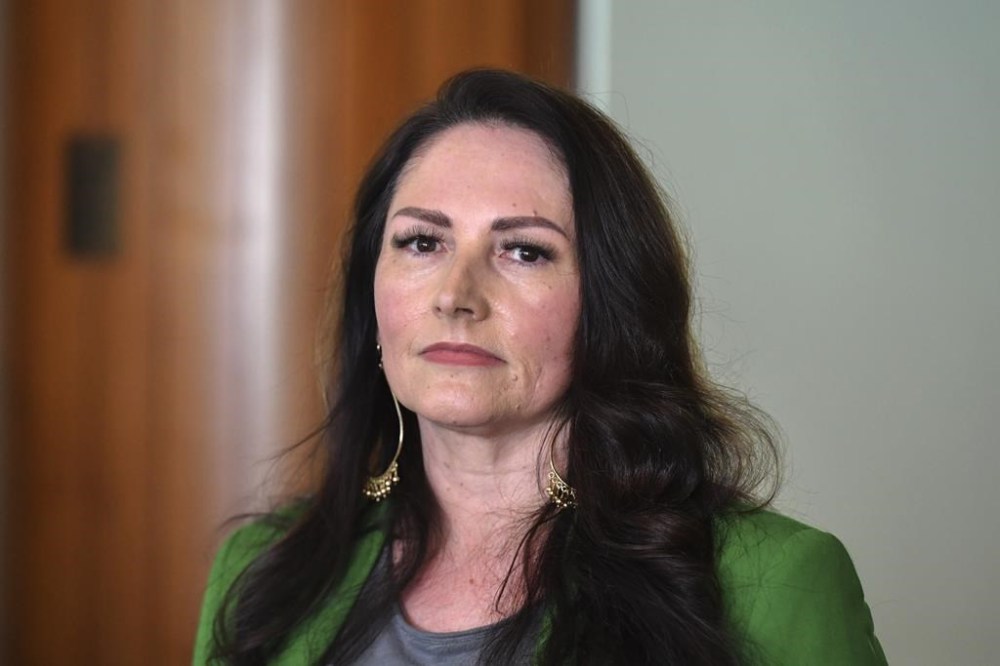
Online safety advocate Sonya Ryan attends a press conference at Parliament House in Canberra, Australia on June 15, 2021. Ryan knows from personal tragedy how dangerous social media can be for children. (Mick Tsikas/AAP Image via AP)

But a vocal assortment of experts in the fields of technology and child welfare have responded with alarm. More than 140 such experts signed an open letter to Prime Minister Anthony Albanese condemning the 16-year age limit as “too blunt an instrument to address risks effectively.”

Australia’s House of Representatives on Wednesday passed a bill that would ban children younger than 16 years old from social media. That leaves it up to the Senate to finalize the world-first law.

There’s widespread backing for the law that would make platforms including TikTok, Facebook, Snapchat, Reddit, X and Instagram liable for fines of up to 50 million Australian dollars ($33 million) for systemic failures to prevent young children from holding accounts.

Here’s a look at how some Australians are viewing the issue.

The concerned teen

Leo Puglisi, a 17-year-old Melbourne student who founded online streaming service 6 News Australia at the age of 11, worries that lawmakers imposing the ban don’t understand social media as well as young people at home in the digital age.

“With respect to the government and prime minister, they didn’t grow up in the social media age, they’re not growing up in the social media age, and what a lot of people are failing to understand here is that, like it or not, social media is a part of people’s daily lives,” Leo said.

“It’s part of their communities, it’s part of work, it’s part of entertainment, it’s where they watch content – young people aren’t listening to the radio or reading newspapers or watching free-to-air TV – and so it can’t be ignored. The reality is this ban, if implemented, is just kicking the can down the road for when a young person goes on social media,” Leo added.
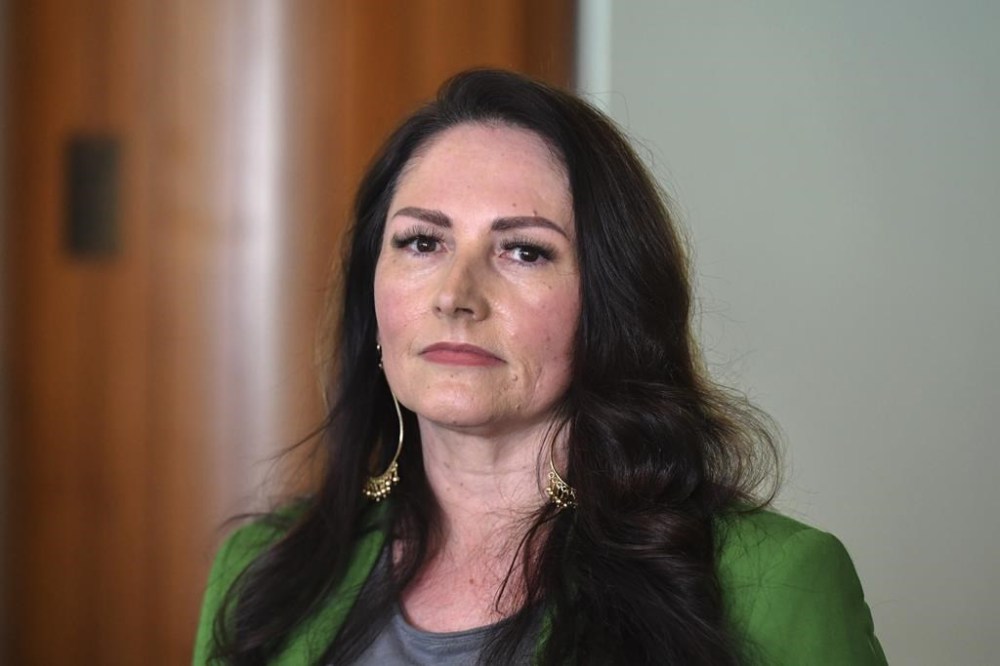
Online safety advocate Sonya Ryan attends a press conference at Parliament House in Canberra, Australia on June 15, 2021. Ryan knows from personal tragedy how dangerous social media can be for children. (Mick Tsikas/AAP Image via AP)

Leo has been applauded for his work online. He was a finalist in his home state Victoria’s nomination for the Young Australian of the Year award, which will be announced in January. His nomination bid credits his platform with “fostering a new generation of informed, critical thinkers.”

The grieving mom-turned-activist

One of the proposal’s supporters, cyber safety campaigner Sonya Ryan, knows personally how dangerous social media can be for children.

Her 15-year-old daughter Carly Ryan was murdered in 2007 in South Australia state by a 50-year-old pedophile who pretended to be a teenager online. In a grim milestone of the digital age, Carly was the first person in Australia to be killed by an online predator.

“Kids are being exposed to harmful pornography, they’re being fed misinformation, there are body image issues, there’s sextortion, online predators, bullying. There are so many different harms for them to try and manage and kids just don’t have the skills or the life experience to be able to manage those well,” Sonya Ryan said.

“The result of that is we’re losing our kids. Not only what happened to Carly, predatory behavior, but also we’re seeing an alarming rise in suicide of young people,” she added.

Sonya Ryan is part of a group advising the government on a national strategy to prevent and respond to child sexual abuse in Australia.
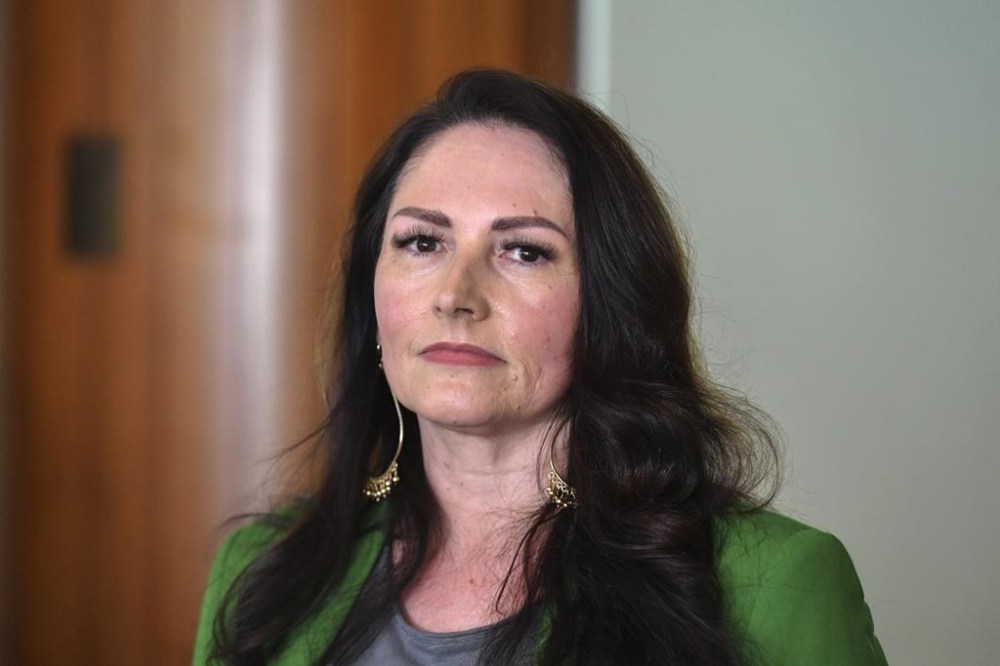
Online safety advocate Sonya Ryan attends a press conference at Parliament House in Canberra, Australia on June 15, 2021. Ryan knows from personal tragedy how dangerous social media can be for children. (Mick Tsikas/AAP Image via AP)

She wholeheartedly supports Australia setting the social media age limit at 16.

“We’re not going to get this perfect,” she said. “We have to make sure that there are mechanisms in place to deal with what we already have which is an anxious generation and an addicted generation of children to social media.”

A major concern for social media users of all ages is the legislation’s potential privacy implications.

Age estimation technology has proved inaccurate, so digital identification appears to be the most likely option for assuring a user is at least 16.

The skeptical internet expert

Tama Leaver, professor of internet studies at Curtin University, fears that the government will make the platforms hold the users’ identification data.

The government has already said the onus will be on the platforms, rather than on children or their parents, to ensure everyone meets the age limit.

“The worst possible outcome seems to be the one that the government may be inadvertently pushing towards, which would be that the social media platforms themselves would end up being the identity arbiter,” Leaver said.

In this October 2023 photo provided by the Holdsworth family, Wayne Holdsworth sits with his son Mac on a family holiday in Hawaii. (Maggie Holdsworth via AP)

“They would be the holder of identity documents which would be absolutely terrible because they have a fairly poor track record so far of holding on to personal data well,” he added.

The platforms will have a year once the legislation has become law to work out how the ban can be implemented.

Ryan, who divides her time between Adelaide in South Australia and Fort Worth, Texas, said privacy concerns should not stand in the way of removing children from social media.

“What is the cost if we don’t? If we don’t put the safety of our children ahead of profit and privacy?” she asked.

Report Error Submit a Tip

More Stories

Discrediting independent media is the game plan

Editorial 4 minute read Preview

Discrediting independent media is the game plan

Editorial 4 minute read 2:00 AM CDT

United States President Donald Trump’s decision to bar several news organizations from White House briefings is, thanks to a court decision, teetering on the edge of collapse.

Will this defeat send the president into a rage? There is actually evidence that Trump knew this was going to be the outcome when he ordered the ban.

A federal court judge in Washington (and a Trump appointee, for the record) issued an injunction on Thursday arguing the swift decision to bar CNN, MS Now and Politico from the White House was likely unconstitutional. The judge ordered the White House to restore credentials to the three news organizations immediately.

Was this just the latest in a string of judicial defeats suffered by the Trump administration as it seeks to undermine, unravel and otherwise work around long-standing legal and administrative canons of the American government? No, not really.

Read
2:00 AM CDT

Province invests $3.8M in culinary arts training facility for francophone high school students

Kelly-Anne Riess 3 minute read Preview

Province invests $3.8M in culinary arts training facility for francophone high school students

Kelly-Anne Riess 3 minute read Yesterday at 12:10 PM CDT

A new dedicated culinary arts training facility will give francophone high school students a place to learn the trade in French.

The Manitoba government announced this week that it is providing $3.8 million toward the purchase of a property at 170 Marion St. and beginning design work for its renovation.

The facility will be the first dedicated vocational education site operated by Division scolaire franco-manitobaine, and the first fully French-language culinary arts program for Grade 11 and 12 students, preparing them for work in the restaurant and service sector.

“French-language education is a fundamental part of Manitoba’s identity and strength,” Education Minister Tracy Schmidt said in a news release. “It is an exciting step that will help strengthen both the francophone community and our skilled workforce.”

Read
Yesterday at 12:10 PM CDT

Restaurants ‘under pressure’

Gabrielle Piché 5 minute read Preview

Restaurants ‘under pressure’

Gabrielle Piché 5 minute read Friday, Sep. 25, 2026

Happy hour outings are on Jackie Piggott’s calendar — but even those are fewer.

She and her husband might visit a restaurant once a month. It’s a change over the past year: earlier, they may go twice, thrice or weekly.

“It’s something that we’ve talked about, my husband and myself, just because the pricing is so expensive,” Piggott said, stopping during a grocery run in St. Vital. “It’s also better for our health.”

She’s in the majority: a new Restaurants Canada report found 80 per cent of Canadians are eating out less frequently because of higher living costs, up from 75 per cent in 2025.

Read
Friday, Sep. 25, 2026

Signs of local neo-Nazi recruiting efforts spark concern

Conrad Sweatman 7 minute read Preview

Signs of local neo-Nazi recruiting efforts spark concern

Conrad Sweatman 7 minute read Saturday, Sep. 26, 2026

A far-right canvassing push in Manitoba this month is raising concerns among Winnipeg residents.

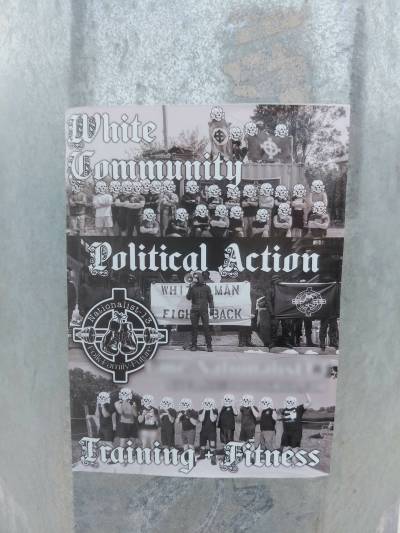
Stickers promoting Nationalist-13, a men’s-only neo-Nazi group also known as NS-13 based primarily in Hamilton, Ont., have appeared in Winnipeg and parts of southern Manitoba. The stickers bear national socialist branding and messages such as “White Man, Fight Back” and “White Community, Political Action, Training and Fitness.”

Winnipeg writer Jess Woolford recently encountered an NS-13 poster on Pembina Highway.

“It was appalling,” Woolford said. “It has the Nazi death heads covering people’s faces. It was pretty disturbing to come across this … I just didn’t expect to see it so blatantly displayed in my neighbourhood.”

Read
Saturday, Sep. 26, 2026

Today’s horoscope

Georgia Nicols 4 minute read Preview

Today’s horoscope

Georgia Nicols 4 minute read Yesterday at 2:00 AM CDT

MOON ALERT: There are no restrictions to shopping or important decisions. The moon is in Aries.

ARIES (March 21-April 19)

This is a wonderful, energetic day. The moon in your sign is dancing with lucky Jupiter promoting domestic peace and happiness. It’s a great day for business. But your top choice will be to socialize, enjoy fun activities with kids, check out sporting events or slip away on a vacation. .

TAURUS (April 20-May 20)

Read
Yesterday at 2:00 AM CDT

Local Muslims, Indigenous people hold interfaith event

Malak Abas 3 minute read Preview

Local Muslims, Indigenous people hold interfaith event

Malak Abas 3 minute read Yesterday at 6:42 PM CDT

Bannock with wild rice and samosas with halal beef stew were served in equal measure as Indigenous and Muslim Winnipeggers sought common ground at an interfaith event discussing truth and reconciliation Sunday.

The Islamic Social Services Association’s second annual Muslim-Indigenous Solidarity event recognized Orange Shirt Day through conversations with elders, shared prayers and crafting.

Organizer Shahina Siddiqui said many of the people attending the gathering, held at Canadian Mennonite University, share the traumatic impacts of colonialism.

Siddiqui said she herself had attended a Catholic day school in her home country of Pakistan, where she and other students were forced to speak English, and were hurt if they didn’t. Many Muslim-majority countries, she said, have been harmed by colonialism.

Read
Yesterday at 6:42 PM CDT