Gulf of Whatnow? Trump’s geographic renaming plans leave mapmakers pondering what to do next
Advertisement
Read this article for free:
or
Already have an account? Log in here »
To continue reading, please subscribe:

Digital Subscription
One year of digital access for only $205*
- Enjoy unlimited reading on winnipegfreepress.com
- Read the E-Edition, our digital replica newspaper
- Access News Break, our award-winning app
- Play interactive puzzles
*First annual payment billed as $205.00 + GST for one year. This annual subscription will automatically renew at $233.00 + GST every 52 weeks (10% off the regular annual price of $259.35). Offer available to new and qualified returning subscribers only. Cancel any time.
To continue reading, please subscribe:
Add Free Press access to your Brandon Sun subscription for only an additional
$1 for the first 4 weeks*
- Enjoy unlimited reading on winnipegfreepress.com
- Read the E-Edition, our digital replica newspaper
- Access News Break, our award-winning app
- Play interactive puzzles
*Your next Brandon Sun subscription payment will increase by $1.00 and you will be charged $17.95 plus GST for four weeks. After four weeks, your payment will increase to $24.95 plus GST every four weeks.
Read unlimited articles for free today:
or
Already have an account? Log in here »
Hey there, time traveller!
This article was published 23/01/2025 (607 days ago), so information in it may no longer be current.
What’s in a name change, after all?
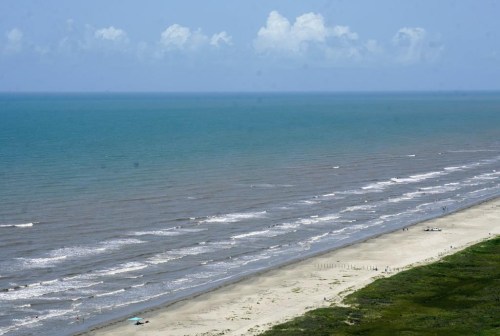
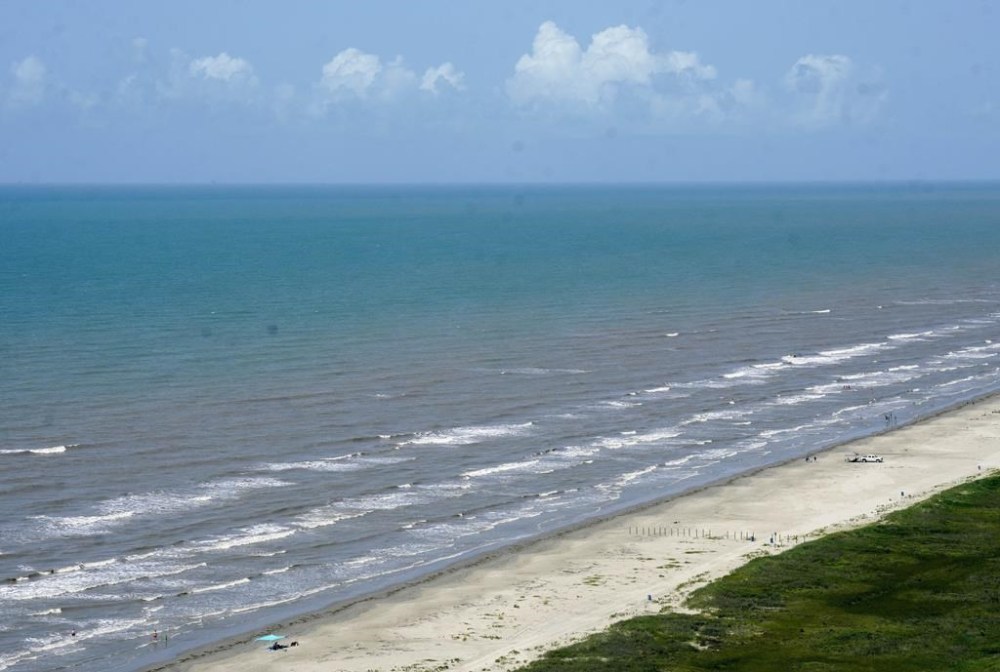
The water bordered by the Southern United States, Mexico and Cuba will be critical to shipping lanes and vacationers whether it’s called the Gulf of Mexico, as it has been for four centuries, or the Gulf of America, as President Donald Trump ordered this week. North America’s highest mountain peak will still loom above Alaska whether it’s called Denali, as ordered by former President Barack Obama in 2015, or changed back to Mt. McKinley as Trump also decreed.
But Trump’s territorial assertions, in line with his “America First” worldview, sparked a round of rethinking by mapmakers and teachers, snark on social media and sarcasm by at least one other world leader. And though Florida Gov. Ron DeSantis put the Trumpian “Gulf of America” on an official document and some other gulf-adjacent states were considering doing the same, it was not clear how many others would follow Trump’s lead.
Mexican President Claudia Sheinbaum joked that if Trump went ahead with the renaming, her country would rename North America “Mexican America.” On Tuesday, she toned it down: “For us and for the entire world it will continue to be called the Gulf of Mexico.”
The politics of maps are undeniable
Map lines are inherently political. After all, they’re representations of the places that are important to human beings — and those priorities can be delicate and contentious, even more so in a globalized world where multiple nations often share the same maps.
There’s no agreed-upon scheme to name boundaries and features across the Earth.
“Denali” is the mountain’s preferred name for Alaska Natives, while “McKinley” is a tribute to President William McKinley, designated in the late 19th century by a gold prospector. China sees Taiwan as its own territory, and the countries surrounding what the United States calls the South China Sea have multiple names for the same body of water.
The Persian Gulf has been widely known by that name since the 16th century, although usage of “Gulf” and “Arabian Gulf” is dominant in many countries in the Middle East. The government of Iran — formerly Persia — threatened to sue Google in 2012 over the company’s decision not to label the body of water at all on its maps. Many Arab countries don’t recognize Israel and instead call it Palestine. And in many official releases, Israel calls the occupied West Bank by its biblical name, “Judea and Samaria.”
Americans and Mexicans diverge on what to call another key body of water, the river that forms the border between Texas and the Mexican states of Chihuahua, Coahuila, Nuevo Leon and Tamaulipas. Americans call it the Rio Grande; Mexicans call it the Rio Bravo.
Trump’s executive order — titled “Restoring Names That Honor American Greatness” — concludes thusly: “It is in the national interest to promote the extraordinary heritage of our Nation and ensure future generations of American citizens celebrate the legacy of our American heroes. The naming of our national treasures, including breathtaking natural wonders and historic works of art, should honor the contributions of visionary and patriotic Americans in our Nation’s rich past.”
But what to call the gulf with the 3,700-mile coastline?
“It is, I suppose, an internationally recognized sea, but (to be honest), a situation like this has never come up before so I need to confirm the appropriate convention,” said Peter Bellerby, who said he was talking over the issue with the cartographers at his London company, Bellerby & Co. Globemakers. “If, for instance, he wanted to change the Atlantic Ocean to the American Ocean, we would probably just ignore it.”
For some, it’s decision time
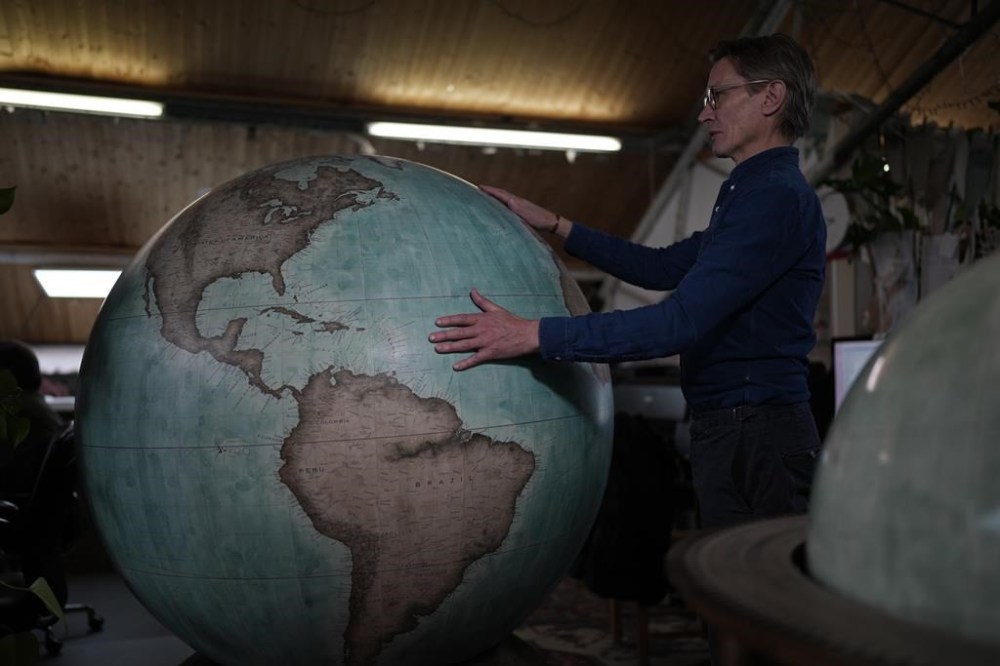
As of Thursday afternooon, map applications for Google and Apple still called the mountain and the gulf by their old names. Spokespersons for those platforms did not immediately respond to emailed questions.
A spokesperson for National Geographic, one of the most prominent map makers in the U.S., said this week that the company does not comment on individual cases and referred questions to a statement on its web site, which reads in part that it “strives to be apolitical, to consult multiple authoritative sources, and to make independent decisions based on extensive research.” National Geographic also has a policy of including explanatory notes for place names in dispute, citing as an example a body of water between Japan and the Korean peninsula, referred to as the Sea of Japan by the Japanese and the East Sea by Koreans.
The Associated Press, which disseminates news around the world to multiple audiences, will refer to the Gulf of Mexico by its original name while acknowledging the name Gulf of America. AP will, however, use the name Mount McKinley instead of Denali; the area lies solely in the United States and as president, Trump has the authority to change federal geographical names within the country.
And at the Interior Department, a spokesman said Thursday that staff are working to comply with the president’s executive order quickly.
In discussion on social media, one thread noted that the Sears Tower in Chicago was renamed the Willis Tower in 2009, though it’s still commonly known by its original moniker. Pennsylvania’s capital, Harrisburg, renamed its Market Street to Martin Luther King Boulevard and then switched back to Market Street several years later — with loud complaints both times. In 2017, New York’s Tappan Zee Bridge was renamed for the late Gov. Mario Cuomo to great controversy. The new name appears on maps, but “no one calls it that,” noted another user.
“Are we going to start teaching this as the name of the body of water?” asked one Reddit poster on Tuesday.
“I guess you can tell students that SOME PEOPLE want to rename this body of water the Gulf of America, but everyone else in the world calls it the Gulf of Mexico,” came one answer. “Cover all your bases — they know the reality-based name, but also the wannabe name as well.”
Wrote another user: “I’ll call it the Gulf of America when I’m forced to call the Tappan Zee the Mario Cuomo Bridge, which is to say never.”
Related Articles
Alaska US senators introduce bill that would again designate North America's tallest peak as Denali
Advertisement Advertise With Us
Advertisement Advertise With Us