Trump tariffs worry US shoppers who buy groceries at Asian supermarkets
Advertisement
Read this article for free:
or
Already have an account? Log in here »
To continue reading, please subscribe:

Digital Subscription
One year of digital access for only $205*
- Enjoy unlimited reading on winnipegfreepress.com
- Read the E-Edition, our digital replica newspaper
- Access News Break, our award-winning app
- Play interactive puzzles
*First annual payment billed as $205.00 + GST for one year. This annual subscription will automatically renew at $233.00 + GST every 52 weeks (10% off the regular annual price of $259.35). Offer available to new and qualified returning subscribers only. Cancel any time.
To continue reading, please subscribe:
Add Free Press access to your Brandon Sun subscription for only an additional
$1 for the first 4 weeks*
- Enjoy unlimited reading on winnipegfreepress.com
- Read the E-Edition, our digital replica newspaper
- Access News Break, our award-winning app
- Play interactive puzzles
*Your next Brandon Sun subscription payment will increase by $1.00 and you will be charged $17.95 plus GST for four weeks. After four weeks, your payment will increase to $24.95 plus GST every four weeks.
Read unlimited articles for free today:
or
Already have an account? Log in here »
Hey there, time traveller!
This article was published 09/04/2025 (548 days ago), so information in it may no longer be current.
LOS ANGELES (AP) — Loyal customers of Asian supermarkets and other grocery stores that specialize in selling imported food heaved a collective sigh of dismay when President Donald Trump announced extra-high U.S. tariffs on goods from dozens of countries.
What would happen to prices at 99 Ranch Market and H Mart?, wondered Asian Americans and immigrants who shop at the two American chains for preferred brands like Japan’s Kewpie mayonnaise and China’s Pearl River light soy sauce.
“We’re all going to be crying in H Mart,” a TikTok user commiserated, referencing the title of a bestselling memoir by Korean American musician Michelle Zauner as other posters shared videos of their “pre-tariff hauls” from Asian supermarkets.
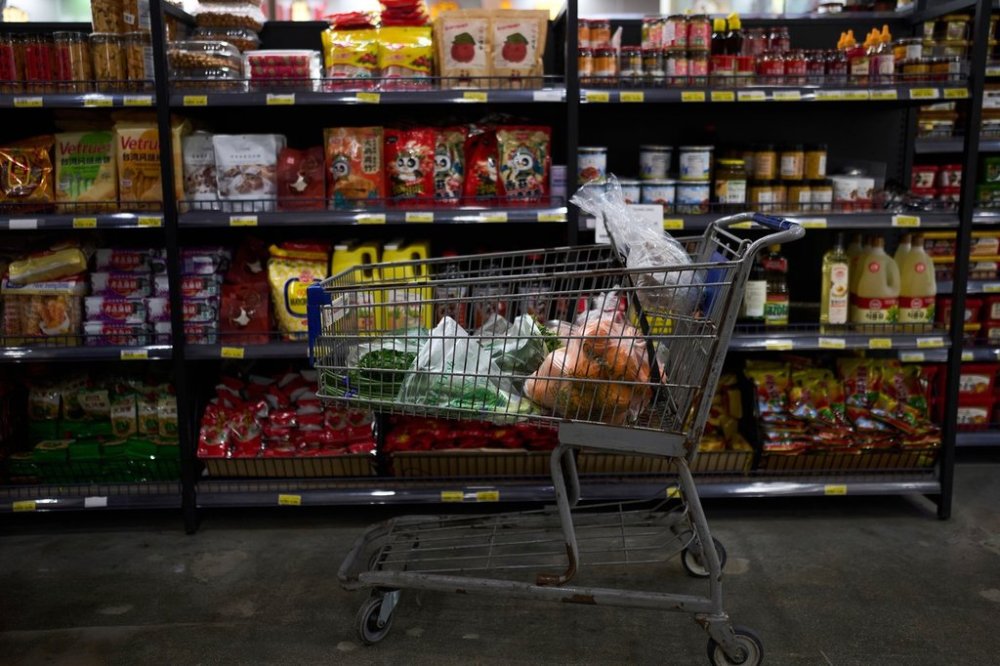
The steeper tariff rates Trump set for imports from nations he accused of unfair trade practices took effect first thing Wednesday along with a 10% baseline tax on products from the rest of the world. Less than 14 hours later, the president paused the individually set tariffs for every country except China for 90 days.
Several countries in Asia had some of the largest “reciprocal” levies, including South Korea (25%), Vietnam (47%) and Cambodia (49%). After China approved counter-tariffs and said it would fight a U.S. trade war “to the end,” Trump raised the rate on Chinese goods to 104% and then to 125%.
Shopping for a taste of home
At a 99 Ranch Market less than a mile from the UCLA campus, one of the California-based chain’s 58 stores, regular shopper Artis Chitchamnueng said he won’t be able to go anywhere else to find the foods he likes if prices skyrocket.
“I think (Trump’s) just like playing a lot of like mind games of just trying to like take control of the market and stuff like that,” Chitchamnueng, a part-time worker and entrepreneur, said. Many customers have said on social media they don’t know if they will be able to continue doing their routine grocery shopping at 99 Ranch Market.
Even if mainstream grocers stock some of the same items, a lot of imported items are less expensive at the specialty supermarkets. An 18-ounce bottle of Lee Kum Kee Panda oyster sauce, for example, retails for $3.99 at 99 Ranch. The websites for Safeway and Walmart list the same bottle for $4.79 and $10.45, respectively.
The stores stocking a wide range of noodles, dried vegetables, herbs and skin care products from China, Japan, South Korea, Thailand and Vietnam can be a source of comfort for immigrants and foreign students craving the tastes of home.
Tony He, an international student at UCLA, said Trump’s tariff policies confused him but he would continue shopping at 99 Ranch to get his groceries if prices increase. “As long as I need Asian food, I usually come here,” He said.
American tastes grow beyond the ‘ethnic food’ aisle
Shopping for culturally specific foods, drinks and condiments in the U.S. has come a long way from the once-meager offerings found in the “ethnic food” aisles of American supermarkets. International supermarkets and small grocery stores across the country generated $55.8 billion in revenue last year, according to market research firm IBISWorld.
The sector has recorded an annual growth rate of roughly 3% since 2019, and an IBISWorld forecast predicted revenue for grocery stores with international brands would go up to over $64 billion by 2029.
Analysts attribute the increase in demand to the growth of Asian and Hispanic immigrant populations, as well as to the tastes of younger consumers who enjoy experiencing new flavors. Mass market stores and brands increasingly have stocked or created Americanized versions of Asian products to ride the trend.
The specialty rice used for sushi that mainstream supermarkets sell also is usually imported from South Korea, China or Japan, noted Nancy Qian, a professor of economics at Northwestern University’s Kellogg School of Management. She thinks tariffs may lead consumers to find alternatives for their favorite brands.
“When my parents first came to America in the ’80s from China, they couldn’t really get the same type of rice as they did in China, So they switched to a different type of rice,” Qian said. “I think families and restaurants and people, they’ll do what it takes to make ends meet. And they’ll substitute foods. They’ll buy new foods.”
South Asian grocery stores prepare for higher costs
Independent shops that are integral to smaller Asian American communities also braced for a hit. The owner of Not Just Spices, a tiny South Asian grocery in Providence, Rhode Island, said he was concerned about rising costs for staple products such as basmati rice from India and Pakistan, or the smaller-grained Kalijira rice from his native Bangladesh.
The import duties that kicked in before Trump announced the 90-day delay including a tariff of 37% on goods from Bangladesh, 26% on neighboring India’s products, 29% on items from Pakistan and a whopping 44% on imports from the island country of Sri Lanka, known for its cinnamon and other spices.
Mohammed Islam, who has run Not Just Spices since 1998, trusts his customers won’t blame him if the tariffs affect supplies and he has to raise prices.
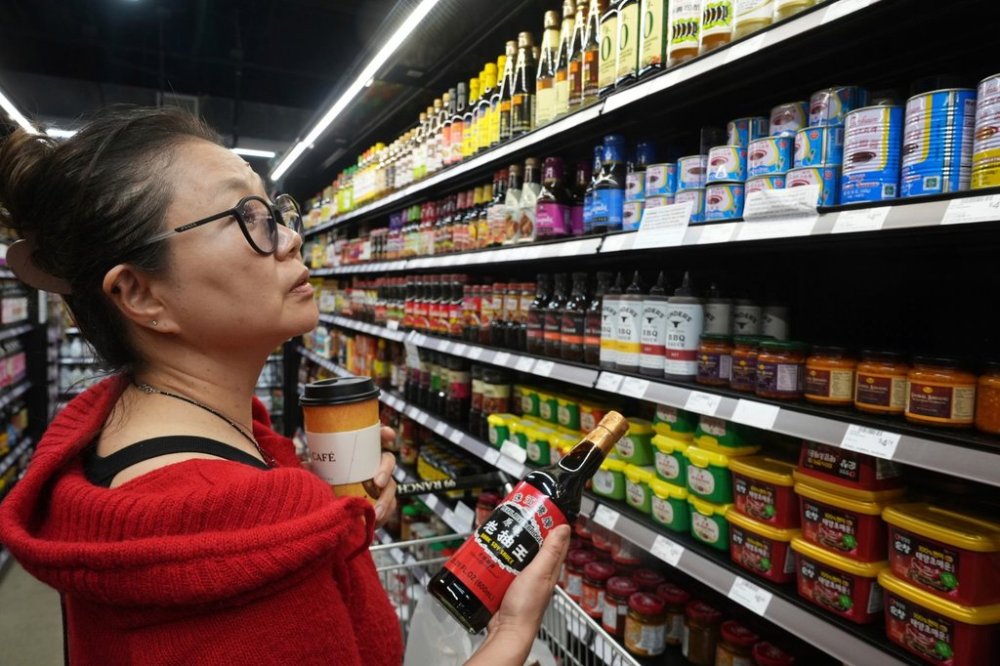
“People don’t complain because it’s already in the news,” Islam said. “It’s not like I’m the one who is raising the price.”
A loyal customer base
Customers at Hispanic supermarkets also may be shopping more carefully. Trump has repeatedly threatened to impose a 25% tariff on most imports from Mexico.
In Phoenix, roommates Andrew Colvin and Mario Aviles typically patronize Los Altos Ranch Market, where they say the bulk of the produce and snacks they buy are from Mexico. The sprawling supermarket, which includes a deli and a bakery, is one of the 115 stores the Heritage Grocers Group operates in six states.
“We expect pretty much everything to go up,” said Colvin, who was stocking up on Parrot canned coconut water, his favorite drink, in case the price goes up. “I probably eat 14 avocados a week. There’ll be a lot less of that.”
Aviles doesn’t want to shop elsewhere. If tariffs result in serious sticker shock, he is prepared to restrict himself instead.
“No more avocados, no more mangoes, no more orange,” Aviles said.
Buy now, save later?
Some experts say it wouldn’t hurt to stock up on non-perishables within limits and individual household budgets. But shoppers need to avoid the “panic buying” that accompanied the start of the COVID-19 pandemic, which could create shortages and cause additional price increases, Qian said.
While it’s not yet clear how much of the tariffs will get passed onto U.S. consumers, researchers say any price increases would disproportionately affect low-income households.
“These are regressive taxes. And for the elementary reason that affluent people do not spend 100% of their incomes and disadvantaged people do,” Steven Durlauf, director of the University of Chicago’s Stone Center for Research on Wealth Inequality and Mobility.
Northwestern University’s Qian said the cumulative economic impacts of Trump administration tariffs may hold one possible silver lining if they bring people back to the cultural enclaves of major cities.
“If you think about the old Chinatowns, or the old, like, Little Italys of America,” she said. “The reason that those places became really important for their communities was because that was the only place where you can get the thing you wanted.”
___ Tang reported from Phoenix. Associated Press video producer Akira Kumamoto in Los Angeles, California contributed to this report. Associated Press writer Matt O’Brien in Providence, Rhode Island, contributed to this report.