Cancer before age 50 is increasing. A new study looks at which types

Advertisement

Advertise with us

Cancer before age 50 is rare, but increasing, in the United States and researchers want to know why.

Read this article for free:


or

Already have an account? Log in here »

To continue reading, please subscribe:

Subscribe and receive a limited-edition Free Press branded hat or tote.

Digital Subscription

One year of digital access for only $205*

  • Enjoy unlimited reading on winnipegfreepress.com
  • Read the E-Edition, our digital replica newspaper
  • Access News Break, our award-winning app
  • Play interactive puzzles

*First annual payment billed as $205.00 + GST for one year. This annual subscription will automatically renew at $233.00 + GST every 52 weeks (10% off the regular annual price of $259.35). Offer available to new and qualified returning subscribers only. Cancel any time.

To continue reading, please subscribe:

Add Free Press access to your Brandon Sun subscription for only an additional

$1 for the first 4 weeks*

  • Enjoy unlimited reading on winnipegfreepress.com
  • Read the E-Edition, our digital replica newspaper
  • Access News Break, our award-winning app
  • Play interactive puzzles
Start now

*Your next Brandon Sun subscription payment will increase by $1.00 and you will be charged $17.95 plus GST for four weeks. After four weeks, your payment will increase to $24.95 plus GST every four weeks.

Hey there, time traveller!
This article was published 08/05/2025 (463 days ago), so information in it may no longer be current.

Cancer before age 50 is rare, but increasing, in the United States and researchers want to know why.

A new government study provides the most complete picture yet of early-onset cancers, finding that the largest increases are in breast, colorectal, kidney and uterine cancers. Scientists from the National Cancer Institute looked at data that included more than 2 million cancers diagnosed in people 15 to 49 years old between 2010 and 2019.

Of 33 cancer types, 14 cancers had increasing rates in at least one younger age group. About 63% of the early-onset cancers were among women.
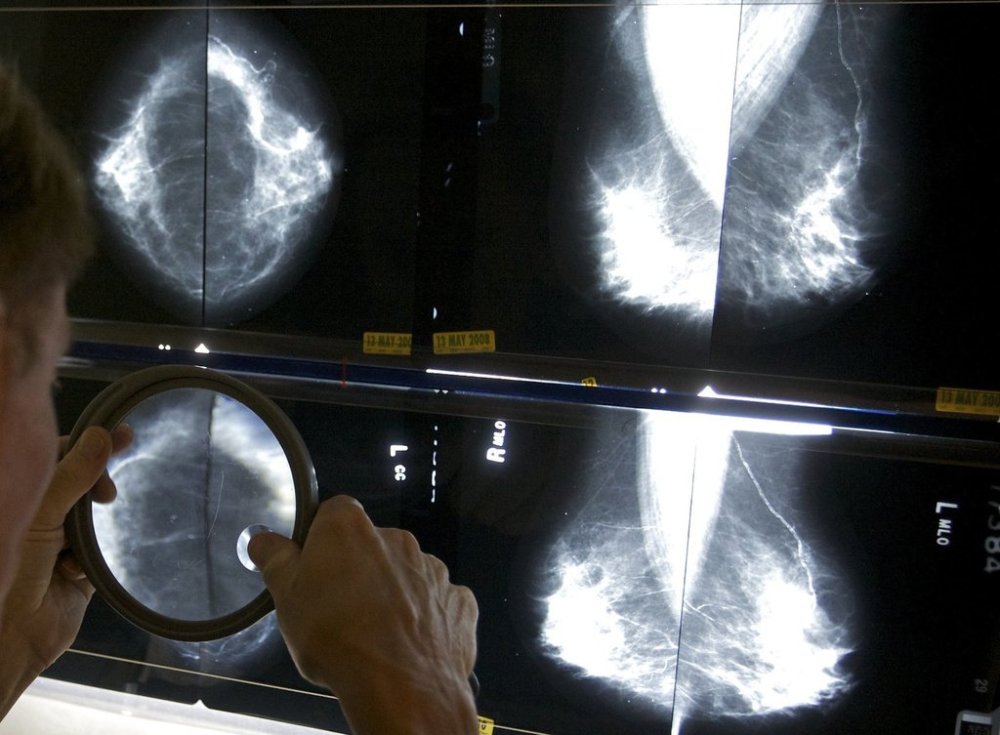
FILE - A radiologist uses a magnifying glass to check mammograms for breast cancer in Los Angeles, May 6, 2010. (AP Photo/Damian Dovarganes, File)

“These kinds of patterns generally reflect something profound going on,” said Tim Rebbeck of Dana-Farber Cancer Institute, who studies cancer risk and was not involved in the research. “We need to fund research that will help us understand.”

The findings were published Thursday in Cancer Discovery, a journal of the American Association for Cancer Research.

How many extra cancers are we talking about?

The researchers compared cancer rates in 2019 to what would be expected based on 2010 rates.

Breast cancer made up the largest share of the excess cancers, with about 4,800 additional cases. There were 2,000 more colorectal cancers compared with what would be expected based on the 2010 rates. There were 1,800 more kidney cancers and 1,200 additional uterine cancers.

Reassuringly, death rates were not rising for most cancers in the young adult age groups, although increasing death rates were seen for colorectal, uterine and testicular cancers.

Why is this happening?

Explanations will take more research. The big databases used for the study don’t include information on risk factors or access to care. Theories abound and a big meeting is planned later this year to bring together experts in the area.

“Several of these cancer types are known to be associated with excess body weight and so one of the leading hypotheses is increasing rates of obesity,” said lead author Meredith Shiels of the National Cancer Institute.

Advances in cancer detection and changes in screening guidelines could be behind some early diagnoses.

For breast cancer, the trend toward women having a first child at older ages is a possible explanation. Pregnancy and breastfeeding are known to reduce risk.

It’s not a uniform trend for all cancers

This isn’t happening across the board. Cancer rates in people under 50 are going down for more than a dozen types of cancer, with the largest declines in lung and prostate cancers.

Cigarette smoking has been declining for decades, which likely accounts for the drop in lung cancer among younger adults.

The drop in prostate cancer is likely tied to updated guidelines discouraging routine PSA testing in younger men because of concerns about overtreatment.

___

The Associated Press Health and Science Department receives support from the Howard Hughes Medical Institute’s Science and Educational Media Group and the Robert Wood Johnson Foundation. The AP is solely responsible for all content.

Report Error Submit a Tip

More Stories

Fusion pop-up coming to street food festival

Tiago Resko 4 minute read Preview

Fusion pop-up coming to street food festival

Tiago Resko 4 minute read 2:01 AM CDT

After surviving breast cancer and watching her husband live through a brain tumour, Marilyn Magtoto decided it was time to take a chance.

Magtoto left her corporate job as a mortgage specialist in July to start M3 Cravings, a pop-up restaurant that blends the traditional Filipino cuisine she grew up on with Mexican street food.

“To me it was like, how much longer do I want to put on hold this thing I’ve been wanting to do for a while now?” Magtoto says. “People may think I’m crazy for leaving behind a corporate professional career I’ve been doing for 22 years, but you know what — it’s worth it.”

Magtoto will now have the chance to share her food at the Streat Feast Festival at The Forks to Sunday; the event brings together people from a variety of backgrounds to share their culture through food, art and performances.

Read
2:01 AM CDT

PCs say Hutterite colonies singled out by Bill 21

Alex Lambert 4 minute read Preview

PCs say Hutterite colonies singled out by Bill 21

Alex Lambert 4 minute read 2:01 AM CDT

SOURIS — Members of Hutterite colonies in the province took aim at the NDP government’s proposed changes to drinking water legislation during a public meeting Thursday in Souris.

The meeting was hosted by Progressive Conservative MLA Colleen Robbins (Spruce Woods) to hear from rural residents about their concerns over Bill 21, which the government says will improve oversight on wells and other water systems in the province.

“There’s not enough clarity, but I feel that the overreach that this bill will bring is not clearly defined, and it could have a lot of negative consequences,” attendee Gilbert Hofer, a member of Green Acres colony near Wawanesa, said after the meeting, which drew about 20 people.

The legislation would allow public health officers to designate the type of water source based on its intended use, water quality and use duration rather than solely the number of connections it has.

Read
2:01 AM CDT

City charter ties council’s hands in wake of criminal allegations against Transcona councillor

Joyanne Pursaga 6 minute read Preview

City charter ties council’s hands in wake of criminal allegations against Transcona councillor

Joyanne Pursaga 6 minute read Wednesday, Aug. 12, 2026

In the wake of additional criminal charges laid against Transcona Coun. Russ Wyatt, several council members say the city should explore options to impose leaves of absence on elected officials who face serious allegations in the future.

Wyatt, 56, was charged Monday with sexual assault and administering a noxious thing with intent to aggrieve or annoy in relation to an October 2023 incident. The councillor was previously charged with sexual assault and administering a noxious substance in March, based on allegations tied to a 2025 gathering.

Under the City of Winnipeg charter, a provincial law, a member of city council automatically forfeits their seat if they are convicted of certain serious criminal offences. It does not apply if they are simply charged.

Mayor Scott Gillingham and others have urged Wyatt to step away from his city hall duties voluntarily, while Gillingham has also suggested the province review the legislation.

Read
Wednesday, Aug. 12, 2026

Strike mandate for Dynacare workers

Free Press staff 2 minute read Preview

Strike mandate for Dynacare workers

Free Press staff 2 minute read Yesterday at 2:01 PM CDT

Nearly 350 laboratory technicians and technologists at Dynacare’s 22 laboratory and health services centres in Manitoba have voted in favour of a strike.

The Manitoba Association of Health Care Professionals, which represents the employees, said in a news release that 99 per cent of members who voted supported going on strike. A strike notice has not been served to the employer. If and when that occurs, the union is required to give two weeks’ notice.

The collective agreement between the union and Dynacare ended March 31. Negotiations between the parties began in February and they have been in mediation since July 15. They’ve been unable to reach a tentative agreement through mediation, and there are no further bargaining or mediation dates scheduled, the union said in a news release.

Dynacare became Manitoba’s only private outpatient provider for laboratory services in 2017, after purchasing competitor Unicity Labs. The union said Manitoba government records show Dynacare members completed more than 15 million laboratory tests in the 2024-25 fiscal year.

Read
Yesterday at 2:01 PM CDT

Three security guards charged with assault after Sea Bears star injured outside nightclub

Nicole Buffie 3 minute read Preview

Three security guards charged with assault after Sea Bears star injured outside nightclub

Nicole Buffie 3 minute read Updated: Yesterday at 12:50 PM CDT

Three security guards are facing assault charges, accused of injuring a Winnipeg Sea Bears player at a nightclub earlier this month.

Read
Updated: Yesterday at 12:50 PM CDT

Manitoba supports MAID delay: Asagwara

Carol Sanders 5 minute read Preview

Manitoba supports MAID delay: Asagwara

Carol Sanders 5 minute read 2:00 AM CDT

The number of Manitobans receiving medical assistance in dying in 2026 is on track with previous years while the plan to extend it to those suffering from mental illness is delayed indefinitely by the federal government — a move Manitoba’s health minister supports.

“There’s so much more work that needs to be done,” Uzoma Asagwara said.

The parliamentary committee that issued its recommendation in June was the third special committee of Parliament struck to assess the eligibility of people with mental illness since 2021, when MAID eligibility was expanded to include people who were not at the end of their lives.

A key condition for MAID eligibility is that a patient must be suffering from a grievous and irremediable medical condition.

Read
2:00 AM CDT