FDA will allow three new color additives made from minerals, algae and flower petals

Advertisement

Advertise with us

U.S. regulators said Friday that they would allow three new color additives made from natural sources to be used in the nation's food supply.

Read this article for free:


or

Already have an account? Log in here »

To continue reading, please subscribe:

Subscribe and receive a limited-edition Free Press branded hat or tote.

Digital Subscription

One year of digital access for only $205*

  • Enjoy unlimited reading on winnipegfreepress.com
  • Read the E-Edition, our digital replica newspaper
  • Access News Break, our award-winning app
  • Play interactive puzzles

*First annual payment billed as $205.00 + GST for one year. This annual subscription will automatically renew at $233.00 + GST every 52 weeks (10% off the regular annual price of $259.35). Offer available to new and qualified returning subscribers only. Cancel any time.

To continue reading, please subscribe:

Add Free Press access to your Brandon Sun subscription for only an additional

$1 for the first 4 weeks*

  • Enjoy unlimited reading on winnipegfreepress.com
  • Read the E-Edition, our digital replica newspaper
  • Access News Break, our award-winning app
  • Play interactive puzzles
Start now

*Your next Brandon Sun subscription payment will increase by $1.00 and you will be charged $17.95 plus GST for four weeks. After four weeks, your payment will increase to $24.95 plus GST every four weeks.

Hey there, time traveller!
This article was published 09/05/2025 (469 days ago), so information in it may no longer be current.

U.S. regulators said Friday that they would allow three new color additives made from natural sources to be used in the nation’s food supply.

It comes after health officials pledged a sweeping phase-out of petroleum-based dyes widely used in foods from cereals to sports drinks to boost health — though action is still pending.

The Food and Drug Administration said it is granting petitions to allow galdieria extract blue, a blue color derived from algae; calcium phosphate, a white color derived from a naturally occurring mineral; and butterfly pea flower extract, a blue color made from dried flower petals.

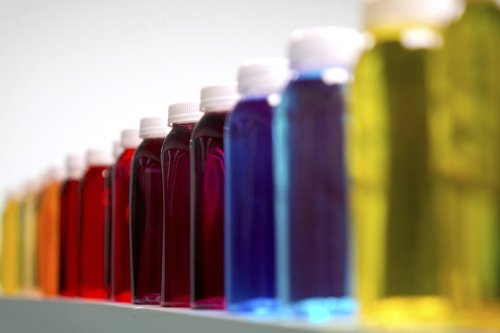
FILE - Bottles containing a variety of colored liquids sit on a shelf in a lab at Sensient Technologies Corp., a color additive manufacturing company, in St. Louis., on Wednesday, April 2, 2025. (AP Photo/Jeff Roberson, File)

The colors will be approved for use in a range of foods from fruit drinks and yogurt to pretzels, ready-to-eat chicken and candies. The move “will expand the palette of available colors from natural sources for manufacturers to safely use in food,” FDA officials said in a statement.

Health advocates have long called for the removal of artificial dyes from foods, citing mixed studies indicating the dyes can cause neurobehavioral problems for some children, including hyperactivity and attention issues. The FDA has maintained for decades that the approved dyes are safe and that “the totality of scientific evidence shows that most children have no adverse effects when consuming foods containing color additives.”

The new color approvals include a 2021 petition from the French company Fermentalg to allow galdieria extract blue; a 2023 petition from Innophos Inc. of Cranbury, New Jersey, to allow calcium phosphate; and a 2024 petition from Sensient Colors LLC of St. Louis, Missouri, to allow butterfly pea flower extract.

The approvals are set to be published in the federal register on May 12 and would take effect in June.

In April, Health Secretary Robert F. Kennedy Jr. and FDA Commissioner Marty Makary announced that they would take steps to eliminate synthetic food dyes in the U.S. food supply by the end of 2026, largely through voluntary efforts from the food industry. The officials also said they would revoke authorization for two little-used artificial dyes, Citrus Red No. 2 and Orange B, and accelerate the timeline to remove Red 3, a food color banned in January because of a link to cancer in laboratory rats.

The FDA plans to initiate the process to revoke those colors “within the coming months,” a spokesperson for the Department of Health and Human Services said.

___

The Associated Press Health and Science Department receives support from the Howard Hughes Medical Institute’s Science and Educational Media Group and the Robert Wood Johnson Foundation. The AP is solely responsible for all content.


Report Error Submit a Tip

More Stories

Mole Mobile on move for your dermatological needs

Sheldon Birnie 3 minute read Preview

Mole Mobile on move for your dermatological needs

Sheldon Birnie 3 minute read Yesterday at 6:00 AM CDT

This weekend, the Mole Mobile will set up shop at three Winnipeg Walmart locations. The mobile clinic will have certified dermatologists on site to screen suspicious-looking moles or lesions for skin cancer.

Read
Yesterday at 6:00 AM CDT

Private governance or public good

David Nutbean 5 minute read 2:00 AM CDT

The Manitoba government recently held public forums to discuss regulations for Bill 51, the Public Sector Artificial Intelligence and Cybersecurity Governance Act. I was able to participate in the meeting in Brandon and there was also a session in Winnipeg.

I was a bit fired up, ready to rail about data centres and phone terms and conditions and generally give it to big tech. The discussion, however, was focused on what the public sector responses should be regarding cybersecurity, data and privacy protections, and AI usage in government.

With all the recent attention on social media bans, the harms of AI, misinformation and the like, I was somewhat disappointed that these would not be tackled directly in this meeting. Those issues may be discussed at future forums.

At this event, as focus groups developed responses, the discussion between private companies and public governance kept getting mixed in, pointing out the reliance of government services on private companies in running their digital operations. As government operations become more dependent on digital infrastructure and towards AI agency and control, rethinking how technology is implemented may be crucial to our democracy.

Demolition ordered after fire in vacant city home

Free Press staff 2 minute read Preview

Demolition ordered after fire in vacant city home

Free Press staff 2 minute read Yesterday at 11:56 AM CDT

A Winnipeg firefighter was assessed by paramedics and an emergency demolition was ordered after a vacant house caught fire Thursday morning for the second time in less than three months.

The two-storey home, at Argyle Street and Disraeli Freeway, in South Point Douglas, was boarded up following a blaze that occurred June 1.

Firefighters returned to the house after flames were reported shortly after 6 a.m. Thursday. The house was engulfed when crews arrived.

“Due to heavy fire conditions, crews were unable to enter the structure,” a Winnipeg Fire Paramedic Service spokesperson wrote in an email to the Free Press.

Read
Yesterday at 11:56 AM CDT

Doctor speaks out, raises alarm over gas plant expansion plans

Rylee Gerrard 4 minute read Preview

Doctor speaks out, raises alarm over gas plant expansion plans

Rylee Gerrard 4 minute read 2:00 AM CDT

A retired doctor is raising red flags on Manitoba Hydro’s proposed gas plant expansion in Brandon and the health-related consequences of climate change.

Read
2:00 AM CDT

Transit union pleads for full shields after near ‘hijacking situation’

Nicole Buffie 5 minute read Preview

Transit union pleads for full shields after near ‘hijacking situation’

Nicole Buffie 5 minute read Yesterday at 6:37 PM CDT

The union representing Winnipeg Transit drivers says the need for full safety shields is critical after an operator was threatened with a hatchet early Thursday.

Read
Yesterday at 6:37 PM CDT

‘Frustrated’ Selkirk nurses plead for help

Morgan Modjeski 3 minute read Preview

‘Frustrated’ Selkirk nurses plead for help

Morgan Modjeski 3 minute read Wednesday, Aug. 19, 2026

The province must take immediate action to increase low staffing levels that are putting Selkirk emergency room nurses at risk, a letter sent to the premier and health minister says.

The letter, sent by the Manitoba Nurses Union and signed by 35 ER nurses, detailed multiple recent incidents at the Selkirk Regional Health Centre. In one case, a nurse was stabbed with a pen by a patient who had been waiting 24 hours for care. In another case, a nurse was bitten by a patient.

“Nurses in that emergency department are extremely frustrated,” said Manitoba Nurses Union president Darlene Jackson. “This is not something that happened in the last month — or overnight — these are problems that have been growing.”

The five-page letter was sent Tuesday to Premier Wab Kinew, Health Minister Uzoma Asagwara and leaders of the Interlake-Eastern Regional Health Authority. It contained 10 requests to improve safety inside the emergency department, including establishing safer nurse-to-patient staffing levels, eliminating the practice of “single physician coverage” in the emergency department and implementing an institutional safety officer around the clock.

Read
Wednesday, Aug. 19, 2026