Canadian researchers develop test they say can help diagnose life-threatening sepsis
Advertisement
Read this article for free:
or
Already have an account? Log in here »
To continue reading, please subscribe:

Digital Subscription
One year of digital access for only $205*
- Enjoy unlimited reading on winnipegfreepress.com
- Read the E-Edition, our digital replica newspaper
- Access News Break, our award-winning app
- Play interactive puzzles
*First annual payment billed as $205.00 + GST for one year. This annual subscription will automatically renew at $233.00 + GST every 52 weeks (10% off the regular annual price of $259.35). Offer available to new and qualified returning subscribers only. Cancel any time.
To continue reading, please subscribe:
Add Free Press access to your Brandon Sun subscription for only an additional
$1 for the first 4 weeks*
- Enjoy unlimited reading on winnipegfreepress.com
- Read the E-Edition, our digital replica newspaper
- Access News Break, our award-winning app
- Play interactive puzzles
*Your next Brandon Sun subscription payment will increase by $1.00 and you will be charged $17.95 plus GST for four weeks. After four weeks, your payment will increase to $24.95 plus GST every four weeks.
Read unlimited articles for free today:
or
Already have an account? Log in here »
Hey there, time traveller!
This article was published 27/05/2025 (477 days ago), so information in it may no longer be current.
TORONTO – A team of Canadian researchers has created a test they say could quickly predict if a patient is going to develop sepsis, a life-threatening condition that happens when the immune system has a dysfunctional reaction to an infection and starts attacking the body’s own organs and tissues.
Sepsis kills thousands of people in Canada and close to 50 million people worldwide every year, said Dr. Claudia dos Santos, senior author of a research paper about the test published Tuesday in the journal Nature Communications.
Treating sepsis quickly is crucial to survival, said dos Santos, who is a clinician-scientist and critical care physician at St. Michael’s Hospital in Toronto.
“A one-hour delay in the treatment of sepsis can increase mortality by close to eight per cent,” she said, noting that acting within the first six hours is very important.
The problem is that there is currently no single test that can tell doctors which patients with infections — which can be anything from COVID-19 to a bacterial infection from a cut — will go on to develop sepsis, she said.
That’s because symptoms of sepsis are “non-specific” and could also be symptoms of illness from the infection itself, including a fever, a high respiratory or heart rate, low blood pressure, low urine output, an abnormal white blood cell count and confusion.
So physicians use their best clinical judgment, but it’s based on a “suspicion” of sepsis rather than a clear biological marker, dos Santos said.
“We do everything that we possibly can in the first six golden hours of sepsis and we cross our fingers and watch and see what happens. And the motivation behind this paper is there has to be a better way.”
Dos Santos and colleagues from the University of British Columbia and National Research Council Canada believe they’ve found it — a blood test that could predict a patient’s likelihood of developing sepsis.
Robert Hancock, director of UBC’s centre for microbial diseases and immunity research, led a team that used artificial intelligence to find genes that stood out in patients who went on to develop sepsis — and found six that they called “Sepset.”
“The idea is that in sepsis, each of these six genes is more highly expressed than it is when the patients aren’t in sepsis,” said Hancock.
“Really critically, we see this phenomenon occurring before there is an obvious diagnosis of sepsis.”
The researchers examined blood samples from 586 past patients and found higher levels of those six genes when patients’ immune systems were starting to react abnormally.
They found that when there was an increased presence of those genes, the patients went into sepsis within 24 hours.
Testing patients to see if they have that six-gene “signature” could allow physicians to take immediate action to treat sepsis early, including starting antibiotics if a bacterial infection is suspected, increasing fluids to help keep blood pressure stable and preparing to move the patient to intensive care if they need respiratory support or other critical care measures, dos Santos said.
Those actions can all happen while doctors pinpoint the initial infection and treat it with antibiotics, steroids, or other medications.
The researchers also wanted to make the sepsis test portable, so it could be brought to a patient’s bedside in the emergency department or used in remote communities to decide whether a patient needs to be transported to an urban hospital.
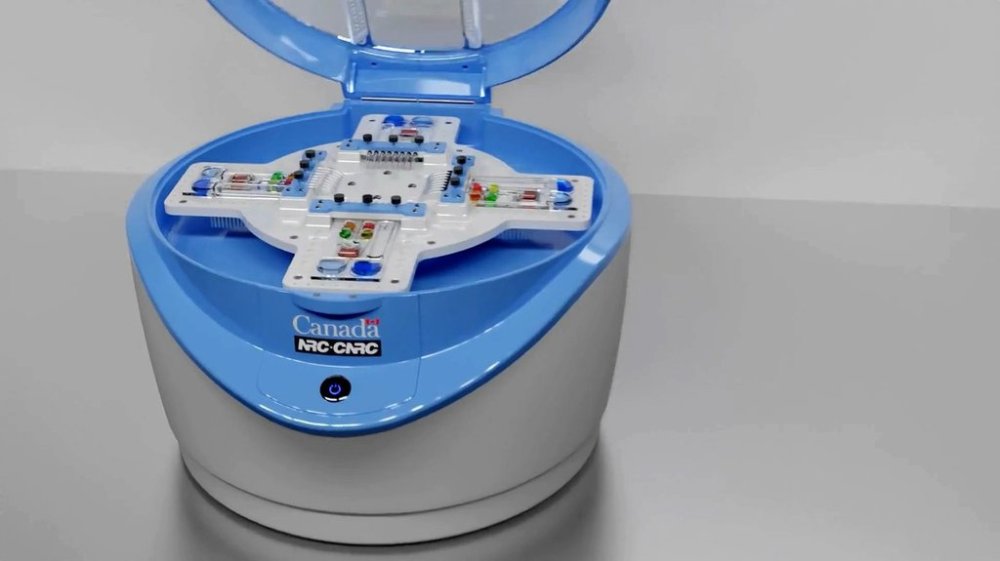
National Research Council Canada developed a small device that takes less than 50 microlitres of blood — one or two drops — and extracts RNA to detect how much of the six signature genes are present.
The device — called Powerblade — produced the results in less than three hours. When tested using 30 of the blood samples from previous patients, it was 92 per cent accurate in predicting who had developed sepsis, the researchers say.
An important limitation of the study is that the test has not yet been used with patients in real time, the paper says.
Dos Santos said that’s the next step, in the form of a clinical trial funded by the Canadian Institutes of Health Research. She’s hoping they’ll be able to start it this year.
“We’re actually going to test the device, the prototype, in the real-world environment and demonstrate that we can do the whole thing for real,” she said.
“And then we need to find out, once we have those results, how does that change (patient) outcomes?”
This report by The Canadian Press was first published May 27, 2025.
Canadian Press health coverage receives support through a partnership with the Canadian Medical Association. CP is solely responsible for this content.