Body positivity losing its lustre on social media

Advertisement
Read this article for free:
or
Already have an account? Log in here »
To continue reading, please subscribe:

Digital Subscription
One year of digital access for only $205*
- Enjoy unlimited reading on winnipegfreepress.com
- Read the E-Edition, our digital replica newspaper
- Access News Break, our award-winning app
- Play interactive puzzles
*First annual payment billed as $205.00 + GST for one year. This annual subscription will automatically renew at $233.00 + GST every 52 weeks (10% off the regular annual price of $259.35). Offer available to new and qualified returning subscribers only. Cancel any time.
To continue reading, please subscribe:
Add Free Press access to your Brandon Sun subscription for only an additional
$1 for the first 4 weeks*
- Enjoy unlimited reading on winnipegfreepress.com
- Read the E-Edition, our digital replica newspaper
- Access News Break, our award-winning app
- Play interactive puzzles
*Your next Brandon Sun subscription payment will increase by $1.00 and you will be charged $17.95 plus GST for four weeks. After four weeks, your payment will increase to $24.95 plus GST every four weeks.
Read unlimited articles for free today:
or
Already have an account? Log in here »
Hey there, time traveller!
This article was published 14/06/2025 (474 days ago), so information in it may no longer be current.
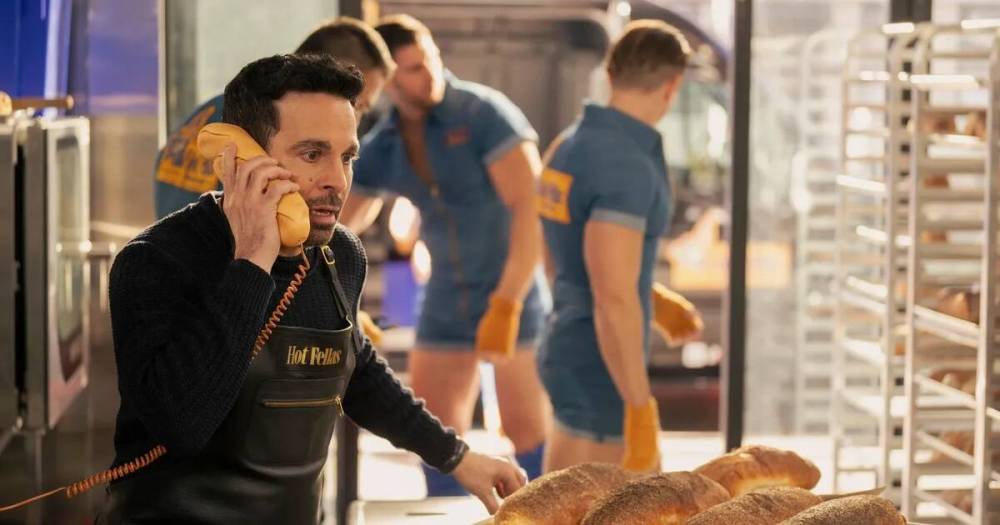
In a scene from this week’s episode of And Just Like That…, HBO’s Sex and the City sequel series, Anthony (Mario Cantone) is lamenting the fact that no one is coming to the grand opening of the brick-and-mortar location of his bakery, Hot Fellas.
“Where is everybody? Are people scared of carbs again? Is body negativity back?” he asks.
As he might say: it certainly frickin’ seems like it, Anthony!
Last week, TikTok made the move to ban the hashtag #SkinnyTok from its platform after European regulators sounded the alarm over the kinds of content being posted there, most of it promoting extreme thinness and the equally extreme measures it takes to get there.
That Anthony should note the “again” and “back” of it all speaks to just how cyclical — and how positively Y2K — this stuff is. After all, he was there in the late ’90s/early 2000s on Sex and the City when Carrie famously wore a belt over her bare, toned, tanned midriff.
After a brief moment in the 2010s when the body positivity movement made it feel like maybe, just maybe, we’d turned a corner, it feels, culturally, like we’re sliding back to the era of low-rise jeans, impossibly thin physiques and diet culture that doesn’t even attempt to pretend it’s about health.
Look at any comments on social media and you’ll see body shaming is alive and well; actively trying to become the smallest version of yourself is encouraged and lauded.
My point being, TikTok banning the hashtag is great and all, but these cultural ideas didn’t need TikTok to take root before.
As Kate Lindsay writes in the Internet-focused newsletter Embedded: “Until we fix society’s sinister, pervasive and constantly fluctuating standards for what bodies are acceptable bodies, everything is SkinnyTok.”
She’s right. From the “what I eat in a day” videos to the relentless fitness obsession with both packing away obscene amounts of protein and getting 10,000 steps (although, according to the cursed algorithm that has found me, that target has moved to 20K) to even the blatant use of the word “skinny,” it’s all SkinnyTok even if it’s not explicitly labelled as such.
The goal is the same: get smaller.
Besides, young, internet-native users are crafty. They know how to get around censors — pro-tip: seggs = sex, unalived = killing/suicide — to keep making the kind of content that is clearly popular among social media users.
As to why these retrograde, “nothing tastes as good as skinny feels” social mores are trending again is more difficult to parse. It could have to do with the mainstreaming of GLP-1 medications such as Ozempic, which have made previously unattainable body types much more attainable, so long as you can afford it.
It could have to do with the fact that we live in deeply uncertain times, and restriction reliably offers an illusion of control. It could also have to do with the fact that we’re just more aware of how we’re perceived, owing to social media.
But it could also be pop culture’s tendency to treat body types — you know, something we famously have control over — like cuts of jeans: in one season, out the next.

The body-positivity movement, like all social movements, wasn’t perfect. It didn’t leave a lot of room for ideas around body neutrality, for example, or even weight fluctuation, leading to a lot of body policing and complicated feelings when artists/creators/influencers who built their businesses on body positivity started losing weight.
But it did see people pushing back against social pressures around thinness. It gave us the language to be able to recognize that well-meaning sentiments such as “strong is the new skinny,” were just valourizing a different (but still thin) feminine ideal. It allowed us to see a diversity of bodies in advertising and online.
Crucially, it called out fatphobia, discrimination and inequitable access to health care.
Thin is in again. But maybe it was folly to think it was ever out.
jen.zoratti@freepress.mb.ca
Jen Zoratti is a columnist and feature writer working in the Arts & Life department, as well as the author of the weekly newsletter NEXT. A National Newspaper Award finalist for arts and entertainment writing, Jen is a graduate of the Creative Communications program at RRC Polytech and was a music writer before joining the Free Press in 2013. Read more about Jen.
Every piece of reporting Jen produces is reviewed by an editing team before it is posted online or published in print – part of the Free Press‘s tradition, since 1872, of producing reliable independent journalism. Read more about Free Press’s history and mandate, and learn how our newsroom operates.
Our newsroom depends on a growing audience of readers to power our journalism. If you are not a paid reader, please consider becoming a subscriber.
Our newsroom depends on its audience of readers to power our journalism. Thank you for your support.
Jen Zoratti is a columnist and feature writer working in the Arts & Life department, as well as the author of the weekly newsletter NEXT. A National Newspaper Award finalist for arts and entertainment writing, Jen is a graduate of the Creative Communications program at RRC Polytech and was a music writer before joining the Free Press in 2013. Read more about Jen.
Every piece of reporting Jen produces is reviewed by an editing team before it is posted online or published in print – part of the Free Press‘s tradition, since 1872, of producing reliable independent journalism. Read more about Free Press’s history and mandate, and learn how our newsroom operates.
Our newsroom depends on a growing audience of readers to power our journalism. If you are not a paid reader, please consider becoming a subscriber.
Our newsroom depends on its audience of readers to power our journalism. Thank you for your support.

Advertisement Advertise With Us
Advertisement Advertise With Us