How ChatGPT and other AI tools are changing the teaching profession
Advertisement
Read this article for free:
or
Already have an account? Log in here »
To continue reading, please subscribe:

Digital Subscription
One year of digital access for only $205*
- Enjoy unlimited reading on winnipegfreepress.com
- Read the E-Edition, our digital replica newspaper
- Access News Break, our award-winning app
- Play interactive puzzles
*First annual payment billed as $205.00 + GST for one year. This annual subscription will automatically renew at $233.00 + GST every 52 weeks (10% off the regular annual price of $259.35). Offer available to new and qualified returning subscribers only. Cancel any time.
To continue reading, please subscribe:
Add Free Press access to your Brandon Sun subscription for only an additional
$1 for the first 4 weeks*
- Enjoy unlimited reading on winnipegfreepress.com
- Read the E-Edition, our digital replica newspaper
- Access News Break, our award-winning app
- Play interactive puzzles
*Your next Brandon Sun subscription payment will increase by $1.00 and you will be charged $17.95 plus GST for four weeks. After four weeks, your payment will increase to $24.95 plus GST every four weeks.
Read unlimited articles for free today:
or
Already have an account? Log in here »
Hey there, time traveller!
This article was published 24/06/2025 (424 days ago), so information in it may no longer be current.
For her 6th grade honors class, math teacher Ana Sepúlveda wanted to make geometry fun. She figured her students “who live and breathe soccer” would be interested to learn how mathematical concepts apply to the sport. She asked ChatGPT for help.
Within seconds, the chatbot delivered a five-page lesson plan, even offering a theme: “Geometry is everywhere in soccer — on the field, in the ball, and even in the design of stadiums!”
It explained the place of shapes and angles on a soccer field. It suggested classroom conversation starters: Why are those shapes important to the game? It proposed a project for students to design their own soccer field or stadium using rulers and protractors.
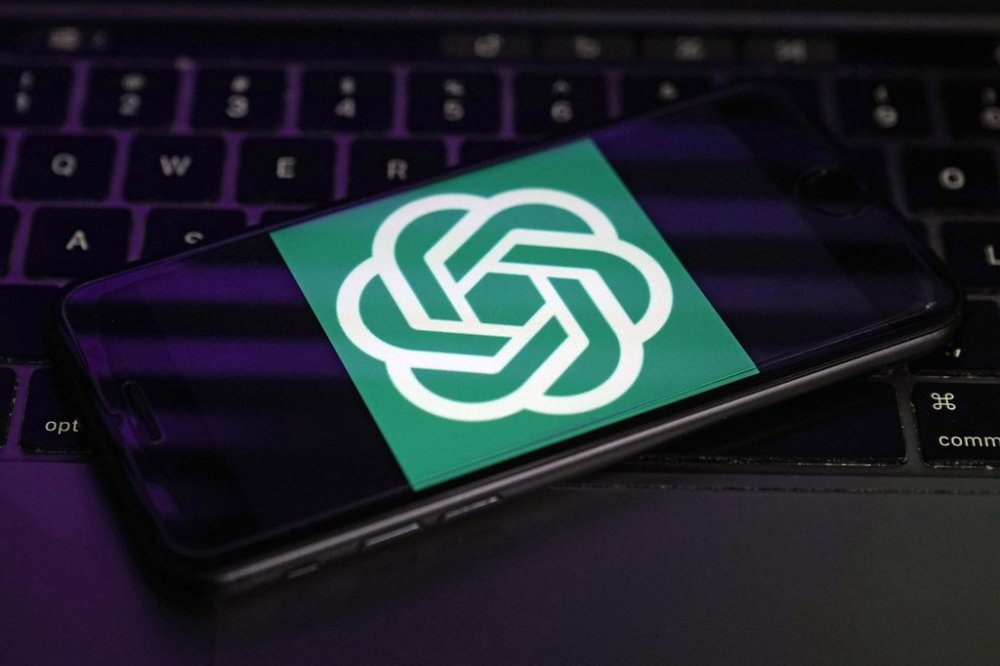
“Using AI has been a game changer for me,” said Sepúlveda, who teaches at a dual language school in Dallas and has ChatGPT translate everything into Spanish. “It’s helping me with lesson planning, communicating with parents and increasing student engagement.”
Across the country, artificial intelligence tools are changing the teaching profession as educators use them to help write quizzes and worksheets, design lessons, assist with grading and reduce paperwork. By freeing up their time, many say the technology has made them better at their jobs.
A poll released Wednesday by Gallup and the Walton Family Foundation found 6 in 10 U.S. teachers working in K-12 public schools used AI tools for their work over the past school year, with heavier use among high school educators and early-career teachers. It surveyed more than 2,000 teachers nationwide in April.
Respondents who use AI tools weekly estimate they save them about six hours a week, suggesting the technology could help alleviate teacher burnout, said Gallup research consultant Andrea Malek Ash, who authored the report.
States are issuing guidelines for using AI tools in classrooms
As schools navigate concerns over student abuse of the technology, some are also are introducing guidelines and training for educators so teachers are aware of avoiding shortcuts that shortchange students.
About two dozen states have state-level AI guidance for schools, but the extent to which it is applied by schools and teachers is uneven, says Maya Israel, an associate professor of educational technology and computer science education at the University of Florida.
“We want to make sure that AI isn’t replacing the judgment of a teacher,” Israel said.
If teachers are using chatbots for grading they should be aware the tools are good for “low-level” grading like multiple choice tests but less effective when nuance is required. There should be a way for students to alert teachers if the grading is too harsh or inconsistent, and the final grading decision needs to remain with the educator, she said.
About 8 in 10 teachers who use AI tools say it saves them time on work tasks like making worksheets, assessments, quizzes or on administrative work. And about 6 in 10 teachers who use AI tools said they are improving the quality of their work when it comes to modifying student materials, or giving student feedback.
“AI has transformed how I teach. It’s also transformed my weekends and given me a better work-life balance,” said Mary McCarthy, a high school social studies teacher in the Houston area who has used AI tools for help with lesson plans and other tasks.
McCarthy said training she received from her school district on AI tools has helped her model proper use for her students.
“If I’m on the soapbox of, ‘AI is bad and kids are going to get dumb,’ well yeah if we don’t teach them how to use the tool,” said McCarthy. “It feels like my responsibility as the adult in the room to help them figure out how to navigate this future.”
Teachers say the technology is best used sparingly
Views on the role of artificial intelligence in education have shifted dramatically since ChatGPT launched in late 2022. Schools around the country initially banned it, but since then many have sought ways to incorporate it into classrooms. Concerns about student overuse and misuse are still prevalent: About half of teachers worry that student use of AI will decrease teens’ ability to think critically and independently or to have persistence when problem solving, according to the study.
One benefit teachers see in becoming more familiar with artificial intelligence is the ability to spot when students are overusing it.
Clues that assignments are written by AI tools include an absence of grammatical errors and complex phrases in writing, said Colorado high school English teacher Darren Barkett. He said he relies on ChatGPT himself to create lesson plans and grade multiple choice tests and essays.

In suburban Chicago, middle school art teacher Lindsay Johnson said she uses only AI programs vetted by her school and deemed safe to use with minors, for data privacy and other concerns. To ensure students feel confident in their skills, she said she brings the technology in only for later stages of projects.
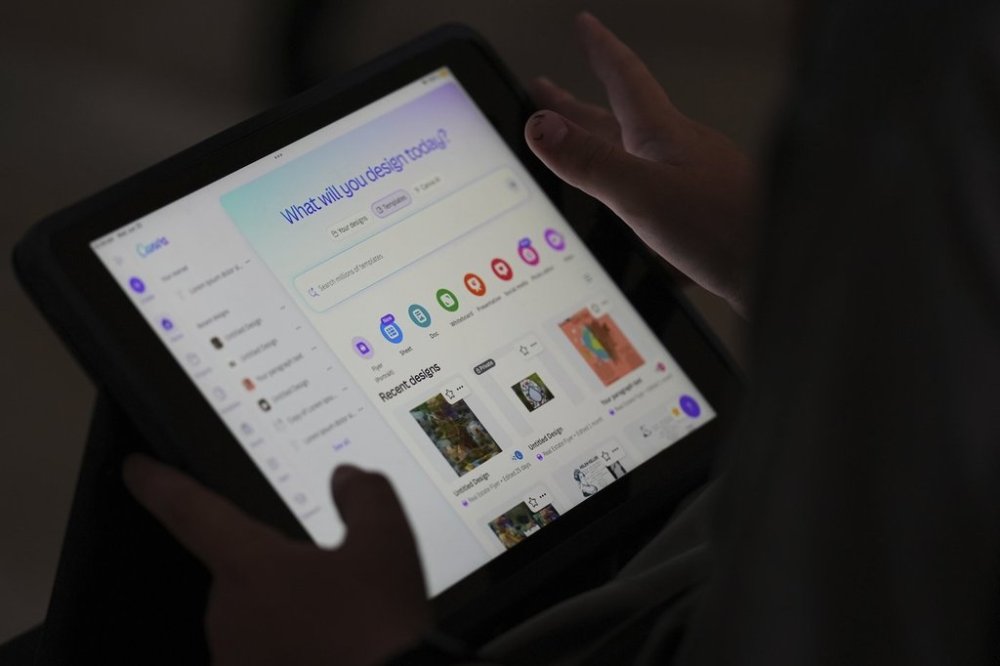
For her 8th graders’ final assessment, Johnson asked them to make a portrait of an influential person in their lives. After students put final touches on their subject’s face, Johnson introduced generative AI for those who wanted help designing the background. She used an AI tool within Canva, after checking with her district’s IT department that the design software passed its privacy screener.
“As an art teacher my goal is to let them know the different tools that are out there and to teach them how those tools work,” she said. Some students weren’t interested in the help. “Half the class said, ‘I’ve got a vision, and am going to keep going with it.’”
___
The Associated Press’ education coverage receives financial support from multiple private foundations. AP is solely responsible for all content. Find AP’s standards for working with philanthropies, a list of supporters and funded coverage areas at AP.org.