‘He really walked the talk’
Anti-poverty crusader helped hundreds of people
Advertisement
Read this article for free:
or
Already have an account? Log in here »
To continue reading, please subscribe:

Digital Subscription
One year of digital access for only $205*
- Enjoy unlimited reading on winnipegfreepress.com
- Read the E-Edition, our digital replica newspaper
- Access News Break, our award-winning app
- Play interactive puzzles
*First annual payment billed as $205.00 + GST for one year. This annual subscription will automatically renew at $233.00 + GST every 52 weeks (10% off the regular annual price of $259.35). Offer available to new and qualified returning subscribers only. Cancel any time.
To continue reading, please subscribe:
Add Free Press access to your Brandon Sun subscription for only an additional
$1 for the first 4 weeks*
- Enjoy unlimited reading on winnipegfreepress.com
- Read the E-Edition, our digital replica newspaper
- Access News Break, our award-winning app
- Play interactive puzzles
*Your next Brandon Sun subscription payment will increase by $1.00 and you will be charged $17.95 plus GST for four weeks. After four weeks, your payment will increase to $24.95 plus GST every four weeks.
Read unlimited articles for free today:
or
Already have an account? Log in here »
Hey there, time traveller!
This article was published 19/07/2025 (431 days ago), so information in it may no longer be current.
Harold Dyck wasn’t a rich man, but if there was any one quality that defined who he was it was his tireless devotion to enriching the lives of Winnipeggers who experienced poverty.
He died in February at the age of 72, surrounded by friends and family.
In 1998, Dyck founded what came to be known as the Low Income Intermediary Project. The program advocated for the better treatment of recipients of Employment and Income Assistance, also known as provincial welfare, and helped them receive the benefits to which they were entitled.
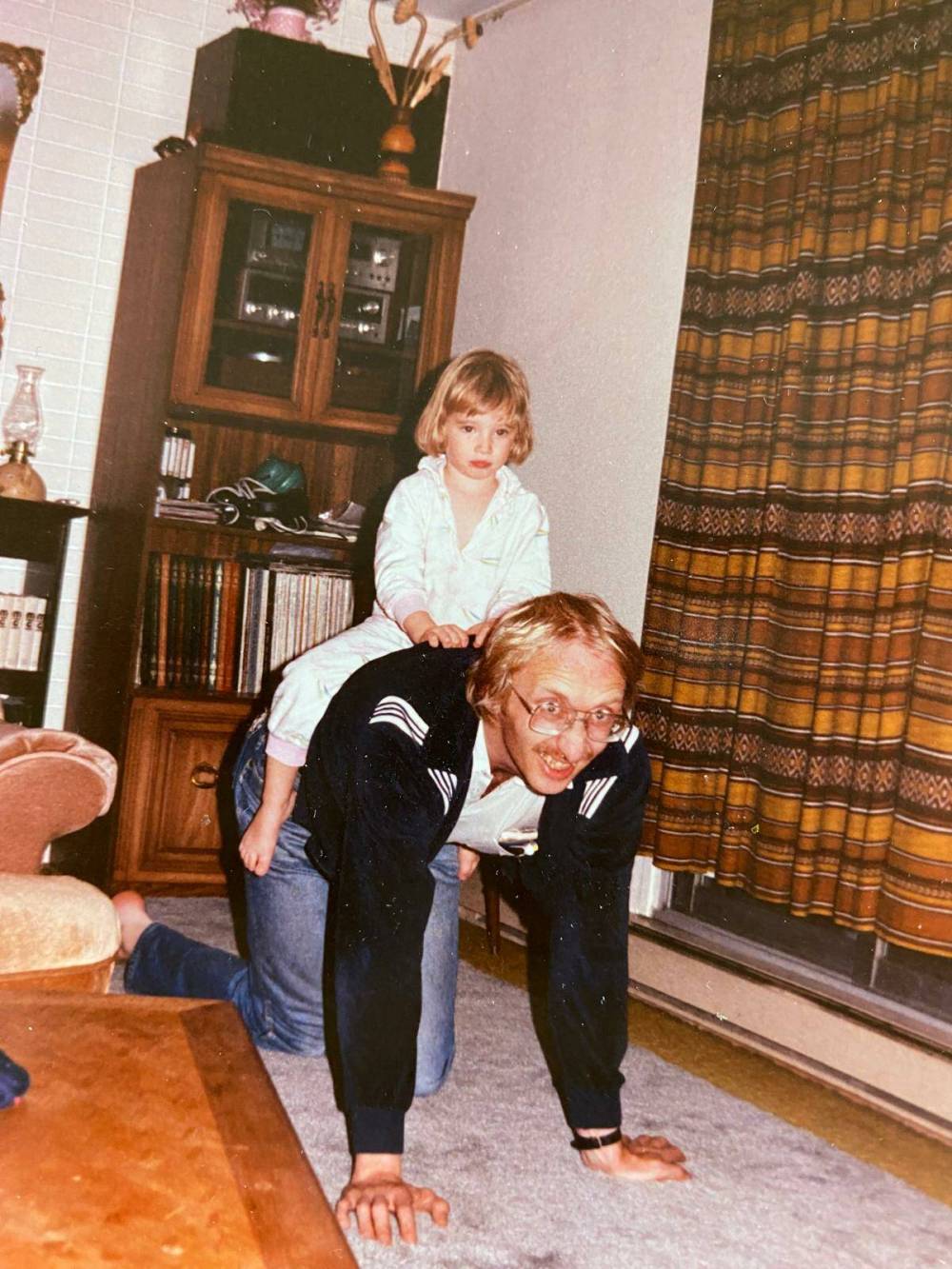
It was essentially a one-man crusade led by Dyck that helped people access benefits they likely would have been denied. In many cases, he would represent the individuals he worked with all the way to the Social Services Appeal Board, which had the final say on such matters.
During its nearly 25-year history, the project represented hundreds of people and Dyck’s deep-rooted understanding of the welfare system was responsible for helping them collect tens of thousands of dollars in benefits the system would have otherwise denied them.
What’s remarkable about his efforts is that Dyck never collected a single dime from any of the people he represented. The work was all done pro bono and the project received no government grants or private funding.
His passion for fighting the system didn’t come as much of a surprise to those who knew Dyck. He had experienced poverty first-hand and knew how inhumane it could be.
“That was what I found so inspirational about him,” says his daughter, Jen Dyck-Sprout.
“He really walked the talk in a way where he really believed this stuff and he wasn’t going to give up his beliefs to go get a job, even though it would have obviously been more comfortable and he was in really deep poverty himself struggling to make ends meet.”
Like many of the people he represented, Dyck never expected he would have to contend with poverty. He had a solid career as an inspector with Manitoba Workplace Safety and Health and later at Boeing Winnipeg. But he eventually found himself out of work; his situation was compounded by bouts of depression and a subsequent divorce.
Journalist and former city councillor Donald Benham first became acquainted with Dyck in the late 1990s when he was a host and producer of the CBC Radio program Questionnaire. Dyck was asked to appear on the show as a guest to talk about what it was like to live in poverty.
Benham was blown away by his guest’s knowledge and insight.
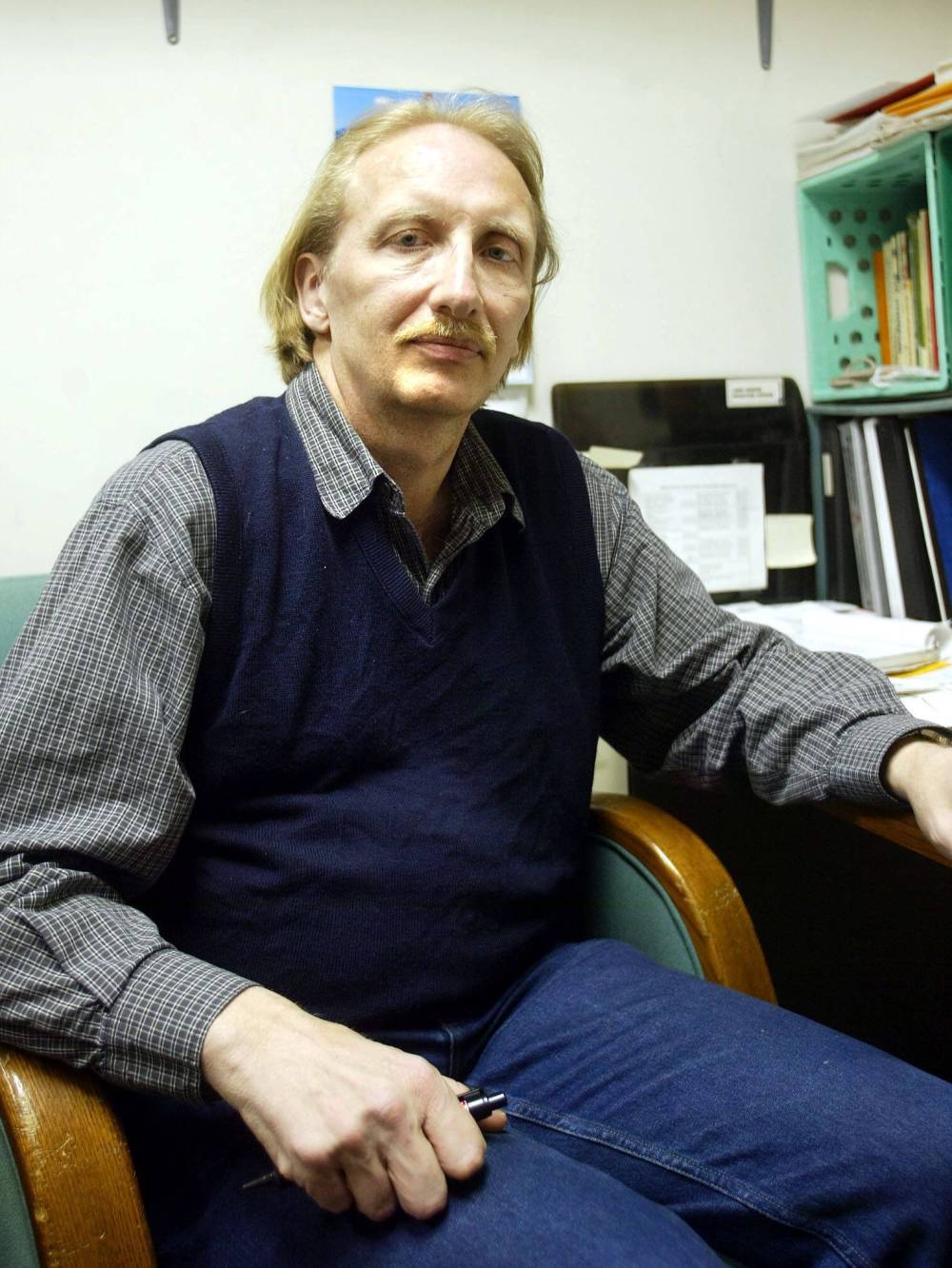
Harold Dyck’s passion project was the Low Income Intermediary Project, which helped people on social assistance get the benefits they were entitled to.
“He had this amazing capacity for information and he had a great way of putting things so that people who weren’t in the system could understand it,” he recalls.
The two men became reacquainted several years later when they were both working at Winnipeg Harvest. At one point they shared a cubicle while the food bank was undergoing renovations and forged an enduring friendship that lasted until Dyck’s death.
The irony of that friendship didn’t escape either man. Benham is a Progressive Conservative, while Dyck was a proud Marxist who ran unsuccessfully in several provincial elections for the Communist Party of Canada’s Manitoba chapter.
“That was no problem and was no barrier to any communication between us at all,” he says. “We both agreed on all the important stuff, which is poverty is wrong and unjust and we need to change it. Those were things we could agree on completely … although we were coming at them from different ends of the political spectrum.
“I guess the basis of our friendship was that we enjoyed a sense of humour together,” Benham adds. “He was great at poking fun at all kinds of things and especially people in power. Even more important than that was what I learned from him. He was always reading.”
Ah, yes, reading: maybe the one thing Dyck was even more passionate about than his anti-poverty work. Growing up on the family farm in Birds Hill with his younger siblings, Marlene and Leonard, the shy young man could often be found in his room with his nose stuck in a book.
“He was so well read,” Marlene recalls of her brother. “Honestly, you could bring up any kind of topic and he would know something about it. He was very knowledgeable and absorbed everything.
“Even though he had his strong beliefs, he never pushed them on you. He was a great debater. He really liked to talk to people and get their view on things.”
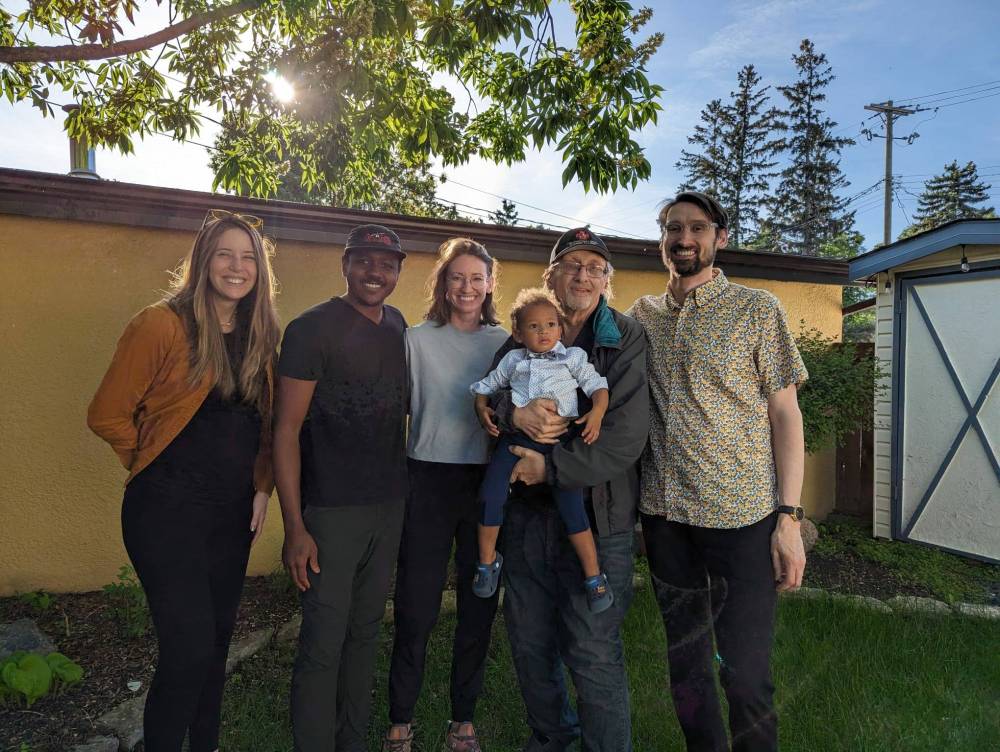
From left: Shelley Burns, Uri Maxima, Jen Dyck-Sprout, Teo Maxima, Dyck and Nelson Sprout in 2024.
Although he was generally reluctant to discuss his upbringing with Jen or her brother Nelson, Dyck’s daughter believes those early years played a huge role in developing her dad’s political views.
As a young man, he studied briefly in Cuba and Russia, where he learned about Marxism and came to see capitalism as oppressive. That sojourn cemented many of the beliefs he developed working on the family farm, where they raised minks.
“He didn’t like that,” she says. “He really empathized with the animals and talked about how cruel he felt it was that they were being killed to make coats and hats for wealthy people. I think that was some of his early … radicalizing around class.”
Dyck’s efforts to help others weren’t restricted to those dealing with poverty.
In the early 1980s at Boeing, he helped spearhead efforts to organize the first union at the company’s Winnipeg plant.
Several years later, while working at Harvest, Dyck was instrumental in changing the way the faculty of medicine at the University of Manitoba accepts students.
Prospective doctors are required to spend one day each year at Harvest to sort potatoes and other food items. Dyck was asked to speak with them one day and immediately asked how many of them had experiences with poverty or the welfare system.
Of course, no one raised a hand, something that was duly noted by one of their professors, Dr. Joe Kaufert. Kaufert went back to his colleagues, told them the story and a discussion ensued about how the gap Dyck had exposed could be corrected.
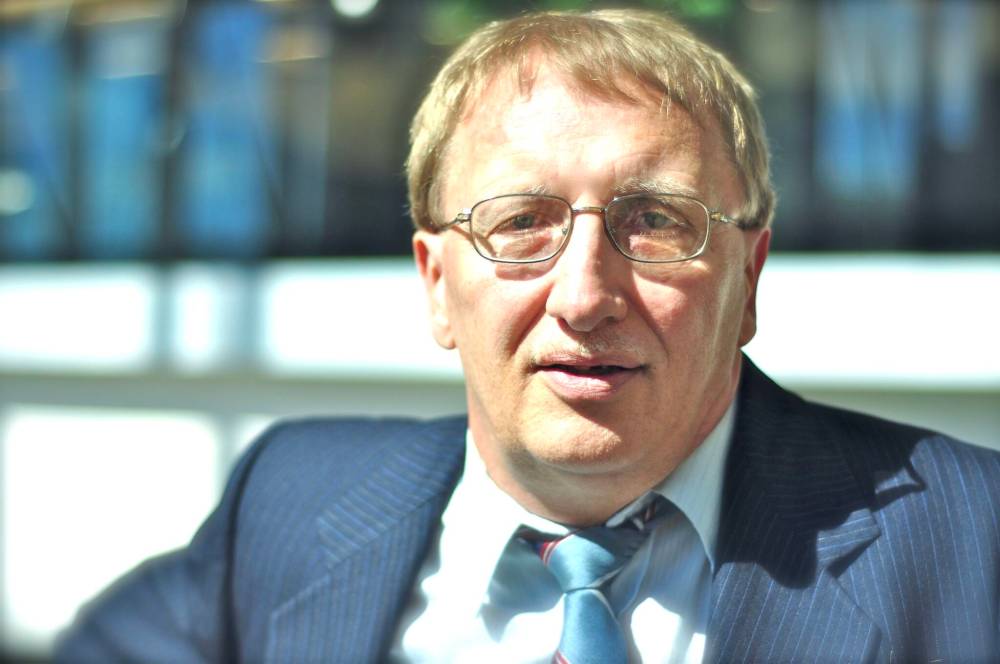
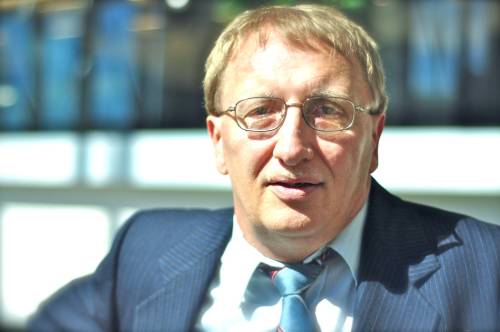
Harold Dyck, seen here in 2011, died in February at the age of 72.

As a result, the faculty now anonymously asks each applicant if they grew up in a family that experienced welfare, hunger, poverty or homelessness. Eight seats that had previously been reserved for out-of-province students are now filled by students who answer yes, something Benham says likely wouldn’t have happened without his good friend’s insight.
Dyck had been ill for some time prior to his death, suffering from both diabetes and liver disease.
While she mourned his demise, his sister Marlene says she will never forget his fighting spirit or desire to make the world a better place.
“He wanted to change the world. He helped a lot of people and he thought if everybody else could say the same, it would be a lot better of a world.”
fpcity@freepress.mb.ca