EU regulator green lights an injectable HIV drug that could help stop transmission

Advertisement

Advertise with us

LONDON (AP) — The European Medicines Agency has recommended authorizing a twice-yearly injectable drug aimed at preventing HIV, which scientists say could help end the virus' transmission.

Read this article for free:


or

Already have an account? Log in here »

To continue reading, please subscribe:

Subscribe and receive a limited-edition Free Press branded hat or tote.

Digital Subscription

One year of digital access for only $205*

  • Enjoy unlimited reading on winnipegfreepress.com
  • Read the E-Edition, our digital replica newspaper
  • Access News Break, our award-winning app
  • Play interactive puzzles

*First annual payment billed as $205.00 + GST for one year. This annual subscription will automatically renew at $233.00 + GST every 52 weeks (10% off the regular annual price of $259.35). Offer available to new and qualified returning subscribers only. Cancel any time.

To continue reading, please subscribe:

Add Free Press access to your Brandon Sun subscription for only an additional

$1 for the first 4 weeks*

  • Enjoy unlimited reading on winnipegfreepress.com
  • Read the E-Edition, our digital replica newspaper
  • Access News Break, our award-winning app
  • Play interactive puzzles
Start now

*Your next Brandon Sun subscription payment will increase by $1.00 and you will be charged $17.95 plus GST for four weeks. After four weeks, your payment will increase to $24.95 plus GST every four weeks.

Hey there, time traveller!
This article was published 25/07/2025 (394 days ago), so information in it may no longer be current.

LONDON (AP) — The European Medicines Agency has recommended authorizing a twice-yearly injectable drug aimed at preventing HIV, which scientists say could help end the virus’ transmission.

In a statement on Friday, the EU drug regulator said its evaluations of lenacapavir, sold as Yeytuo in Europe by Gilead Sciences, showed the drug is “highly effective” and “considered to be of major public health interest.” Once the regulator’s guidance is accepted by the European Commission, the authorization is valid in all 27 EU member countries as well as Iceland, Norway and Liechtenstein.

Last year, studies suggested that lenacapavir, already used to treat people with HIV, was nearly 100% effective in stopping transmission in both women and men.
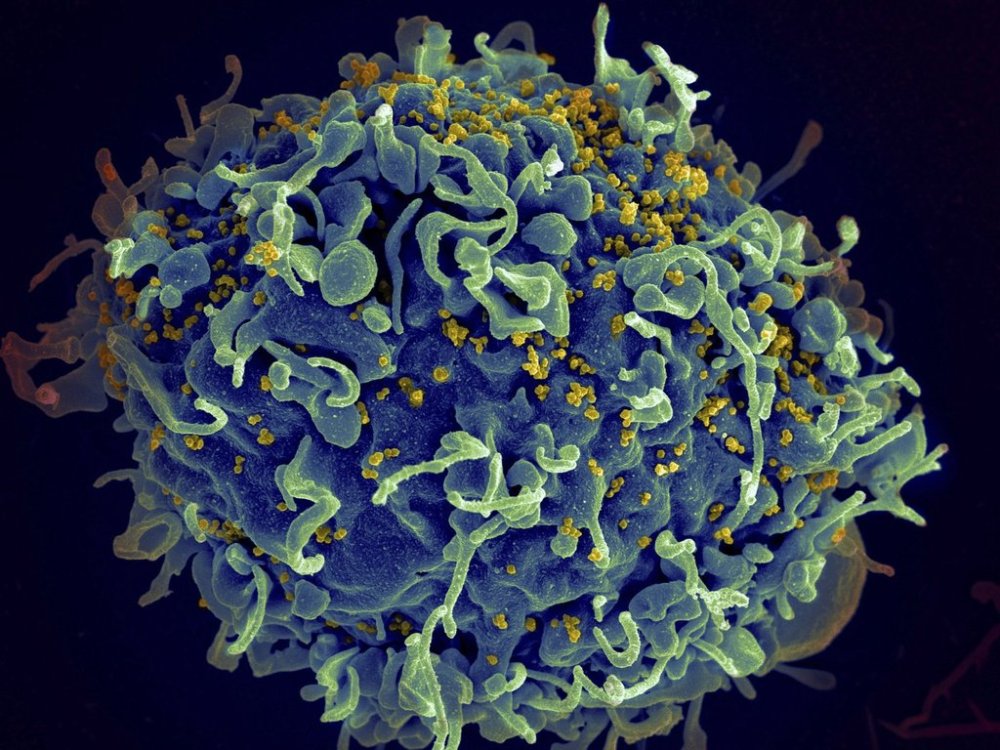
FILE - This colorized electron microscope image provided by the U.S. National Institutes of Health shows a human T cell, in blue, under attack by HIV, in yellow, the virus that causes AIDS. (Seth Pincus, Elizabeth Fischer, Austin Athman/National Institute of Allergy and Infectious Diseases/NIH via AP, File)

Winnie Byanyima, executive director of the U.N. AIDS agency, has said the drug “could change the trajectory of the HIV epidemic” if it is made available to everyone who needs it.

In June, the U.S. Food and Drug Administration authorized lenacapavir to prevent HIV. Earlier this month, the World Health Organization recommended countries offer the drug as an additional option to people at risk of the virus.

Condoms help guard against HIV infection if used properly. Other medication aimed at preventing HIV include daily pills that people can take and another injectable drug called cabotegravir, which is given every two months. Lenacapavir’s six-month protection makes it the longest-lasting type, an option that could attract people wary of more visits to health clinics or stigma from taking daily pills.

Critics have raised concerns, however, that lenacapavir may not be made widely enough available to stop global outbreaks of HIV. Drugmaker Gilead has said it will allow cheap, generic versions to be sold in 120 poor countries with high HIV rates — mostly in Africa, Southeast Asia and the Caribbean.

But it has excluded nearly all of Latin America, where rates are far lower but increasing, sparking concern the world is missing a critical opportunity to stop the disease.

Last year, there were about 630,000 AIDS deaths worldwide and more than 40 million people are estimated to have HIV, according to UNAIDS.

UNAIDS chief Byanyima has previously suggested that President Donald Trump make a deal with Gilead to produce and license its “magical” prevention drug lenacapavir across the world to the millions of people who need it.

___

The Associated Press Health and Science Department receives support from the Howard Hughes Medical Institute’s Department of Science Education and the Robert Wood Johnson Foundation. The AP is solely responsible for all content.


Report Error Submit a Tip

More Stories

Puzzles Palace

1 minute read Monday, Jul. 27, 2026

To solve our puzzles, please subscribe with this special offer: |

Executive exodus continues at Shared Health with three recent departures

Chris Kitching 5 minute read Preview

Executive exodus continues at Shared Health with three recent departures

Chris Kitching 5 minute read Friday, Aug. 21, 2026

Manitoba’s provincial health authority is looking for its fourth chief financial officer since 2023 and additional replacements after the recent departures of three executives.

Read
Friday, Aug. 21, 2026

Wooed by wood, Cedarella founder takes pride in handcrafted designs

David Sanderson 7 minute read Preview

Wooed by wood, Cedarella founder takes pride in handcrafted designs

David Sanderson 7 minute read Yesterday at 6:00 AM CDT

Marina Bulan is the founder of Cedarella, a two-year-old venture that turns out eye-catching wood products such as jewelry, kitchen decor, children’s toys and, most recently, metre-high outdoor planters that double as home street-number indicators.

Ahead of immigrating to Winnipeg a decade ago from their native Russia, Bulan and her partner thought it would be prudent to conduct some research on their soon-to-be new home, a city they knew next to nothing about.

Imagine their surprise as they were viewing the 2007 surrealist film My Winnipeg, which comically blends historical facts about our burg with what Winnipeg-born writer/director Guy Maddin has termed “mystical hypothesizing.”

(For instance, there is no proof that, as reported in the award-winning flick, Winnipeg is the sleepwalking capital of the world, and that residents keep keys to their former abodes on their person in the event they turn up there during a bout of somnambulism.)

Read
Yesterday at 6:00 AM CDT

Frustration mounts as drug raids sweep problems out of downtown, into West End

Scott Billeck 7 minute read Preview

Frustration mounts as drug raids sweep problems out of downtown, into West End

Scott Billeck 7 minute read Friday, Aug. 21, 2026

West End business owners say their neighbourhood has been under siege for months, and some believe downtown police drug sweeps have made things worse by pushing more street disorder in their direction — and pushing customers away.

Read
Friday, Aug. 21, 2026

Swede leads Manitoba Open, Winnipegger sits 33rd

Mike McIntyre 6 minute read Preview

Swede leads Manitoba Open, Winnipegger sits 33rd

Mike McIntyre 6 minute read Yesterday at 6:53 PM CDT

From Lars-Erik Sjoberg to Thomas Steen to Viggo Bjorck, there’s no shortage of Swedish athletes who have quickly become fan favourites here in Winnipeg.

Daniel Svard is hoping to add his name to the growing list.

Although he wields a golf club and not a hockey stick, the 23-year-old from Stockholm is opening plenty of eyes this week at Elmhurst. He carries a two-shot lead into Sunday’s final round of the Manitoba Open, looking to close out his first professional victory in his just his fourth career tournament.

Svard fired a six-under 66 on Saturday to move to 14-under through 54 holes of the PGA Tour Americas event.

Read
Yesterday at 6:53 PM CDT

Plenty of alternatives to U.S. wines on the shelves

Ben Sigurdson 5 minute read Preview

Plenty of alternatives to U.S. wines on the shelves

Ben Sigurdson 5 minute read Yesterday at 6:00 AM CDT

In February 2025, Manitoba (and most other provinces) pulled American liquor from store shelves as part of the ongoing trade dispute with the United States.

Then in December, the province followed a similar course to others and put American booze that was already on hand back on shelves, selling off inventory that had been wasting away in warehouses for months, and directing proceeds from those sales to charities.

Lineups sprung up at numerous stores as consumers snapped up bestselling American products — think Maker’s Mark, Jack Daniel’s, Apothic Red and the like. After that initial rush, what was left has been languishing on shelves ever since, with many products eventually being drastically discounted for a quick sale, lest they become too long in the tooth.

I decided early on not to write about/review U.S. products in this space until things were well and truly sorted. But a few months back, I found myself in the mood for a big, oaky red wine and — in a moment of weakness, or nostalgia, or maybe just curiosity — I picked up a $30-ish California Cabernet Sauvignon.

Read
Yesterday at 6:00 AM CDT