About 7 people a year die trying to save others from drowning in Canada, study finds

Advertisement

Advertise with us

TORONTO - A new study says an average of seven people in Canada die each year trying to save another person from drowning.  

Read this article for free:


or

Already have an account? Log in here »

To continue reading, please subscribe:

Subscribe and receive a limited-edition Free Press branded hat or tote.

Digital Subscription

One year of digital access for only $205*

  • Enjoy unlimited reading on winnipegfreepress.com
  • Read the E-Edition, our digital replica newspaper
  • Access News Break, our award-winning app
  • Play interactive puzzles

*First annual payment billed as $205.00 + GST for one year. This annual subscription will automatically renew at $233.00 + GST every 52 weeks (10% off the regular annual price of $259.35). Offer available to new and qualified returning subscribers only. Cancel any time.

To continue reading, please subscribe:

Add Free Press access to your Brandon Sun subscription for only an additional

$1 for the first 4 weeks*

  • Enjoy unlimited reading on winnipegfreepress.com
  • Read the E-Edition, our digital replica newspaper
  • Access News Break, our award-winning app
  • Play interactive puzzles
Start now

*Your next Brandon Sun subscription payment will increase by $1.00 and you will be charged $17.95 plus GST for four weeks. After four weeks, your payment will increase to $24.95 plus GST every four weeks.

Hey there, time traveller!
This article was published 31/07/2025 (407 days ago), so information in it may no longer be current.

TORONTO – A new study says an average of seven people in Canada die each year trying to save another person from drowning.  

The researchers found that 74 people drowned between January 2010 and December 2019 after attempting a rescue in the water.  

“Intervening when there is a drowning incident is critical to the outcome of the person who started drowning. However, it’s really important to do that safely,” said Tessa Clemens, a co-author of the study and a researcher with the Drowning Prevention Research Centre Canada and the Lifesaving Society of Ontario. 
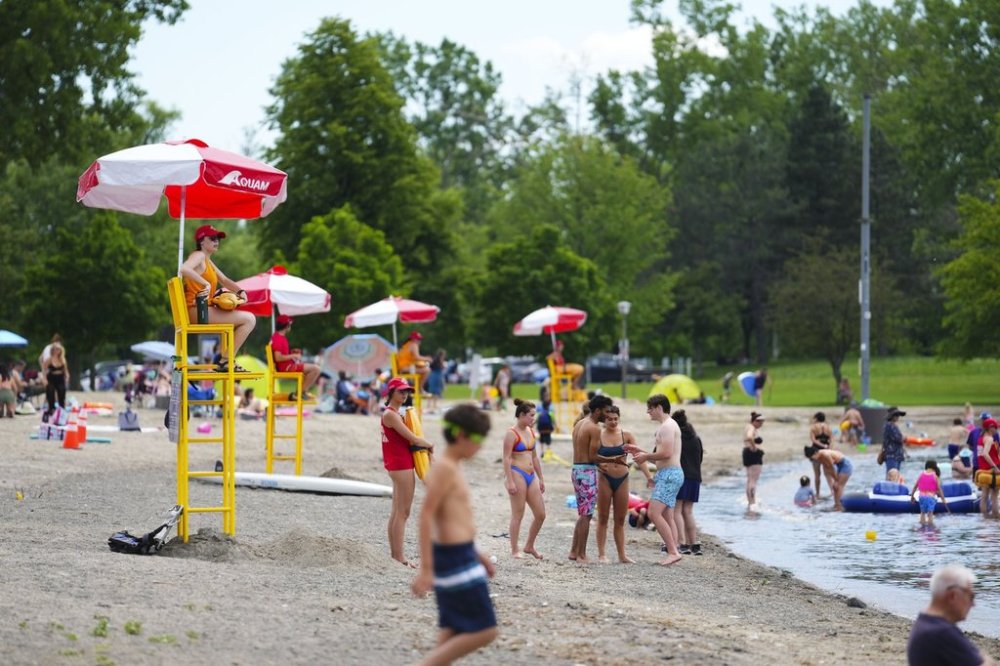
Lifeguards work at Britannia Beach of the Ottawa River in Ottawa on Friday, June 24, 2022. THE CANADIAN PRESS/Sean Kilpatrick

The Lifesaving Society released the study, which was first published in the BMJ in June, on Thursday because there has been a recent surge in drownings in Ontario and Quebec, said Stephanie Bakalar, the society’s senior communications officer. 

“In particular, we have heard of many instances of bystanders attempting rescues this summer and then becoming victims themselves,” Bakalar said in an email, noting they wanted to raise awareness about drowning prevention before the August long weekend. 

Clemens and her colleagues examined 4,535 fatal drownings over the 10-year period and found that in more than half of those cases, someone tried to rescue them.   

Most of those hundreds of rescuers did not have any lifesaving training, but frequently risked their own lives by trying to grab the drowning person in the water.  

Clemens said rescues involving getting in the water with the drowning person and trying to carry or tow them to shore should only be done by those who have taken some rescue training.

Lifesaving training teaches people how to approach a drowning person and help them without getting pulled underwater themselves, she said. 

In addition to the risk of getting pulled under, people tend to overestimate their own swimming ability in lakes, rivers and oceans, Clemens said. 

“Being able to swim in a pool can be very different than swimming in a natural water setting during a high-risk situation where somebody is in distress,” she said. 

“Most drowning in Canada does happen in natural water.”

People who haven’t had lifesaving training should try a “non-contact rescue,” including calling for help and throwing a life-jacket, ring buoy, floating toy or another buoyant object for the person to grab on to. They can also call out to the person and encourage them to swim toward them.

If someone is on shore or by a pool and sees someone drowning, they can lay flat on their stomach and reach a pole or another object out toward the person, but only if they are confident they won’t be pulled into the water.  

Clemens said the majority of the 74 rescuers who drowned knew the person they were trying to save, but some were unrelated bystanders. 

Many attempted rescues involve parents trying to save their children, Clemens said, so the instinct to do whatever it takes to save them is intense.  

She urges parents and caregivers to avoid ever being in that situation by never taking their eyes off their kids and staying within arm’s reach when they’re in the water, as well as putting up fences around backyard pools to prevent children from entering the pool area unsupervised. 

Clemens also said people should swim where there are lifeguards whenever possible and everyone — both adults and children — should wear a life-jacket while boating.  

She said everyone should know how to swim and that adult courses, as well as basic lifesaving training, are available through the Lifesaving Society.     

This report by The Canadian Press was first published July 31, 2025. 

Canadian Press health coverage receives support through a partnership with the Canadian Medical Association. CP is solely responsible for this content.

Report Error Submit a Tip

More Stories

DNA on beer can helps solve killing

Dean Pritchard 4 minute read Preview

DNA on beer can helps solve killing

Dean Pritchard 4 minute read Yesterday at 2:00 AM CDT

Two years after 74-year-old James Monaghan was stabbed in his Sherburn Street home, DNA found on a beer can led police to his killer.

Shara Harper, 29, pleaded guilty to manslaughter and on Tuesday was sentenced to six years in prison.

A neighbour found Monaghan dead in his home on July 29, 2022. He had been stabbed twice in the chest and back.

The investigation into Monaghan’s killing had stalled until June 2024, when DNA found on an empty beer can in Monaghan’s home was confirmed to be a match for Harper.

Read
Yesterday at 2:00 AM CDT

Closure of Nomads field massive upset for north end

Joshua Frey-Sam 4 minute read Preview

Closure of Nomads field massive upset for north end

Joshua Frey-Sam 4 minute read 6:08 PM CDT

The North Winnipeg Nomads have a flag on the field.

The long-standing minor football club was recently informed that its field is unfit to host games and that it would need to find a new home for its five youth and adult teams until repairs are made to the playing surface.

“Our board has made every effort to address the condition of our home field,” the club wrote in a statement. “Unfortunately, following a professional assessment, the field has been determined to be unsafe and unstable for our athletes.”

All five of the club’s teams will play their 2026 season at Frank Whyte Field, part of the Northwood Community Centre, with no confirmed date for when they can play on their home field again.

Read
6:08 PM CDT

‘Dynacare sucks’: premier muses about bringing lab services back into public system

Carol Sanders 5 minute read Preview

‘Dynacare sucks’: premier muses about bringing lab services back into public system

Carol Sanders 5 minute read Updated: Yesterday at 7:45 PM CDT

Premier Wab Kinew says Manitoba may bring Dynacare’s diagnostic lab services back into the public system rather than continue to sign contracts with the for-profit company.

“Dynacare sucks. They’ve made an absolute mess of this situation,” the premier said Wednesday, the day the company’s 350 employees reported back to work after the labour board halted their strike after just one day.

Kinew first made the remark about Dynacare in a CBC radio interview Wednesday morning and added he is “not happy with them.”

Dynacare performs the majority of non-emergency blood and urine tests in the province.

Read
Updated: Yesterday at 7:45 PM CDT

Lone Manitoba 9/11 victim's legacy lives on helping Inuit students become nurses

Melissa Martin 13 minute read Preview

Lone Manitoba 9/11 victim's legacy lives on helping Inuit students become nurses

Melissa Martin 13 minute read 5:24 PM CDT

On the night before the morning that everyone remembers, Ellen Judd spoke to her partner, Christine Egan, several times on the phone. Egan was in New York, where she’d gone to look after her nephews so her beloved brother, Michael, and his wife, Anna, could treat themselves to an anniversary vacation.

Usually, Judd would have been there, too. The couple had been together for more than 15 years, and loved sharing all the good parts of life. But at the time, she was an anthropology professor at the University of Manitoba, and the school year was just starting; she had classes the next day. Staying connected by phone would have to suffice.

In their calls that night, Judd remembers, Egan was happy. Christmas was the main topic. They were planning to spend the holiday with Judd’s family in Ontario, and talked about when to book flights. Egan was looking forward to that visit; Judd’s family “loved her to bits,” the now-retired professor says, and the affection was mutual.

The next day, Egan said, she planned to go into Manhattan with Michael. He was an executive at Aon, a global risk, retirement and health services corporation, and had an office on the 105th floor of the World Trade Centre’s South Tower.

Read
5:24 PM CDT

Ferraro, Skinner getting lay of the land before training camp starts

Mike McIntyre 8 minute read Preview

Ferraro, Skinner getting lay of the land before training camp starts

Mike McIntyre 8 minute read Yesterday at 5:45 PM CDT

They’ve both been around the NHL block a bit, but make no mistake, Stuart Skinner and Mario Ferraro are experiencing some “new kid at school” type jitters this week.

The pair were prized July 1 free agent signings by the Winnipeg Jets and are now quickly trying to get the lay of the land — from teammates and systems and structure to restaurants, schools and the best routes to the rink — in what is a frantic time on both a professional and personal level.

“It’s a big change, right?” Ferraro said Wednesday following a pre-training camp skate at the Hockey For All Centre.

“Like moving cities, getting settled somewhere else, with my family, my wife, my daughter, our two dogs. But I think it’s gone really well and smooth. We found a great place here, and we’re really happy with where we’re living.”

Read
Yesterday at 5:45 PM CDT

South Winnipeg neighbourhood will be first to go geothermal

Chris Kitching 4 minute read Preview

South Winnipeg neighbourhood will be first to go geothermal

Chris Kitching 4 minute read Updated: Yesterday at 7:28 PM CDT

A new neighbourhood in south Winnipeg will be Manitoba’s first to use a shared, large-scale geothermal system to heat and cool hundreds of homes over coming decades.

The province is giving up to $4 million to the developers of Southwood Circle, just north of the University of Manitoba’s Fort Garry campus, for a district geothermal system as part of the NDP’s goal to reach net-zero greenhouse gas emissions by 2050.

“It means a whole neighbourhood can tap into geothermal, which means low-carbon heating and cooling for at least 1,000 homes,” Premier Wab Kinew said at a news conference Wednesday.

Geothermal systems, equipped with pumps and pipes, use underground temperatures to heat and cool one or more buildings. Proponents point to long-term energy and cost savings compared with conventional heating and cooling systems.

Read
Updated: Yesterday at 7:28 PM CDT