Skipping the U.S. and taking a vacation to East Coast this year? It will cost you.
Advertisement
Read this article for free:
or
Already have an account? Log in here »
To continue reading, please subscribe:
Digital Subscription
One year of digital access for only $1.44 a week*
- Enjoy unlimited reading on winnipegfreepress.com
- Read the E-Edition, our digital replica newspaper
- Access News Break, our award-winning app
- Play interactive puzzles
*Billed as $5.77 plus GST every four weeks. After 52 weeks, price increases to the regular rate of $19.95 plus GST every four weeks. Offer available to new and qualified returning subscribers only. Cancel any time.
To continue reading, please subscribe:
Add Free Press access to your Brandon Sun subscription for only an additional
$1 for the first 4 weeks*
- Enjoy unlimited reading on winnipegfreepress.com
- Read the E-Edition, our digital replica newspaper
- Access News Break, our award-winning app
- Play interactive puzzles
*Your next Brandon Sun subscription payment will increase by $1.00 and you will be charged $17.95 plus GST for four weeks. After four weeks, your payment will increase to $24.95 plus GST every four weeks.
Read unlimited articles for free today:
or
Already have an account? Log in here »
Hey there, time traveller!
This article was published 16/08/2025 (429 days ago), so information in it may no longer be current.
FREDERICTON – In September 2024, Natasha Beitman Brener and her husband decided to take a three-week vacation to Canada’s East Coast.
Beitman Brener, a lawyer in Kingston, Ont., spent about six months planning the trip, looking at various options to stay in Prince Edward Island, Nova Scotia and New Brunswick.
“We are young, we don’t have all the money in the world, we have a mortgage. So we went on this trip and we thought, ‘oh, this will be affordable compared to something like Japan’ . … We were going to cook our own food,” she said in a recent interview.
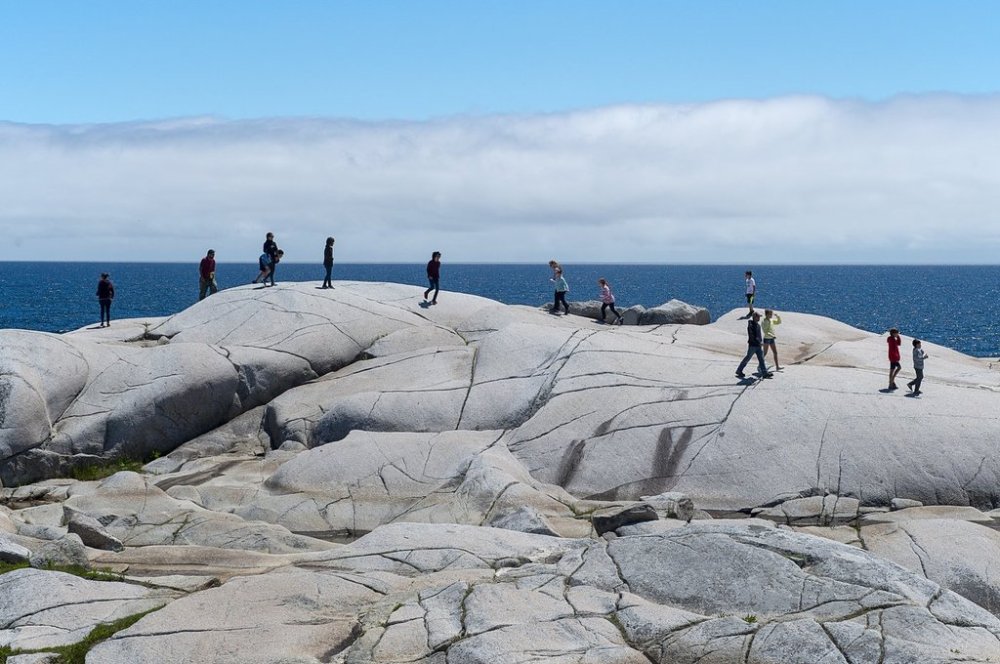
They rented a recreational vehicle in Montreal for about $6,000, and between campground parking fees, gasoline, groceries, park passes, a round of golf, and a couple of dinners out, Beitman Brener said the total added up to $15,000.
“It was the most incredible trip. We loved it. It was worth it. It was incredible. The East Coast is so extraordinary,” she said. “But it was $15,000 and we talked to our friend — they went to Japan for three weeks for the same price, with flights. And I said to my husband, ‘well, we could have gone to Japan for the same price.'”
This year, as a trade war grinds on with the United States, Canadians who decide to vacation within their country are realizing their patriotism comes with a hefty price tag — and some are choosing to scale back their plans.
For Alick Tsui, a St. John’s, N.L., resident, a recent five-day, two-person trip to Port Rexton, N.L., cost him about $3,000. He is avoiding spending his dollars in the United States because of U.S. President Donald Trump’s trade war and comments of annexing Canada.
But high prices are forcing him to cut costs for future trips in Canada. “Before I would stay for four nights, now I may cut it down to three nights. But that won’t change my plan to travel.”
Tsui said he and his wife try to save money with “economical” lunches from gas stations. “But nighttime, we try to find whatever we can to have a good meal. Not expensive, but a good meal,” he said. The couple went to Vietnam and Thailand earlier this year for about 10 days; that trip cost about one-third the price that he usually pays for a week’s vacation in Canada.
Beitman Brener, meanwhile, says she wanted to take a mother-daughter vacation this month after the lawyer had some unexpected time off. The duo sought to travel within Canada on a budget of $3,000 for four nights and five days. They too are avoiding travelling to the United States.
She looked into several locations, including Quebec City and Manitoulin Island in Ontario, but — even with sharing a hotel or Airbnb room — their accommodation costs would have been about $3,000. Along with food and gas, the total would have been about $6,000, she said.
They couldn’t justify the cost so they chose to spend two nights at a boutique hotel in their hometown. The fact each vacation has to be planned down to every meal because of high costs has removed some of the joy of taking a spontaneous holiday in Canada, she said.
A scan of individual round trip flights from Toronto to cities on the East Coast for the week of Aug. 18 -23 showed prices to Halifax ranging from around $700 for Flair Airlines to nearly $1,700 for WestJet; about $1,200 via Air Canada to $2,500 via Air Transat to St. John’s; and between $1,500 and $3,000 on Air Canada to Charlottetown.
A vehicle rental for five days the week of Aug. 18 -23 in Halifax, St. John’s, and Charlottetown ranged from an average of $1,500 for an SUV to $1,000 for a sedan. For the week, hotel rooms in Halifax, St. John’s and Prince Edward Island ranged from around $200 a night to $500.
Richard Powers, associate professor at University of Toronto’s Joseph L. Rotman School of Management, said two main reasons can help explain why travel within Canada is so expensive — lack of competition among airline services and fallout from COVID-19.
Airlines haven’t reinstated some of routes they cut down at the height of the pandemic, he said. How long the fallout from COVID-19 will last is anybody’s guess, Powers said. “That’s the million-dollar question.”

When it comes to accommodation, he said the high prices can be blamed on minimal supply. “I’m just booking Vancouver for the fall, and I’m having trouble finding a place for under $500 a night,” he said. “That’s a lot.”
Restaurant bills in Canada add up — when compared with those in Europe — because of the tipping culture that adds 15 to 20 per cent for each meal, he said.
With the push to support Canadian tourism, Powers said, people are willing to pay “a bit of a premium.”
“How much premium is the question? And it’s almost getting out of control.”
This report by The Canadian Press was first published Aug. 16, 2025.

Advertisement Advertise With Us
Advertisement Advertise With Us