Move over, green lawns. Drier, warmer climate boosts interest in low-water landscaping
Advertisement
Read this article for free:
or
Already have an account? Log in here »
To continue reading, please subscribe:

Digital Subscription
One year of digital access for only $205*
- Enjoy unlimited reading on winnipegfreepress.com
- Read the E-Edition, our digital replica newspaper
- Access News Break, our award-winning app
- Play interactive puzzles
*First annual payment billed as $205.00 + GST for one year. This annual subscription will automatically renew at $233.00 + GST every 52 weeks (10% off the regular annual price of $259.35). Offer available to new and qualified returning subscribers only. Cancel any time.
To continue reading, please subscribe:
Add Free Press access to your Brandon Sun subscription for only an additional
$1 for the first 4 weeks*
- Enjoy unlimited reading on winnipegfreepress.com
- Read the E-Edition, our digital replica newspaper
- Access News Break, our award-winning app
- Play interactive puzzles
*Your next Brandon Sun subscription payment will increase by $1.00 and you will be charged $17.95 plus GST for four weeks. After four weeks, your payment will increase to $24.95 plus GST every four weeks.
Read unlimited articles for free today:
or
Already have an account? Log in here »
Hey there, time traveller!
This article was published 17/09/2025 (373 days ago), so information in it may no longer be current.
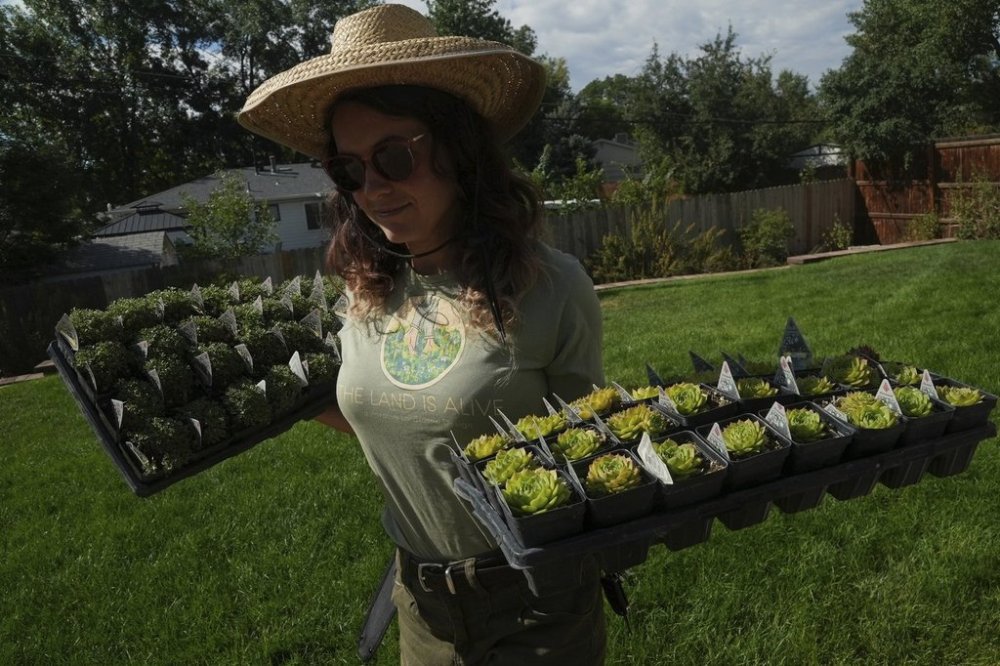
LITTLETON, Colo. (AP) — When Lena Astilli first bought her home outside of Denver, she had no interest in matching the wall-to-wall green lawns that dominated her block. She wanted native plants — the kind she remembered and loved as a child in New Mexico, that require far less water and have far more to offer insects and birds that are in decline.
“A monoculture of Kentucky bluegrass is not helping anybody,” Astilli said. After checking several nurseries before finding one that had what she wanted, she has slowly been reintroducing those native plants to her yard.
Though Astilli was replacing grass just last month, it remains ubiquitous in American yards. It’s a tradition that began more than two centuries ago with the landed gentry copying the landscaping of Europe’s wealthy, and grass now dominates as the familiar planting outside everything from single-family homes to apartment complexes to office parks and retail malls.
“In the absence of simple directions and guidance about what to do with their landscape, they default to lawn because it’s easy,” said Mark Richardson, executive director of the Ecological Landscape Alliance, a nonprofit that promotes sustainable landscaping.
Yet that grass is problematic in deserts and any place with limited water, such as the American West, where it won’t do well without irrigation. As climate change makes the world hotter and triggers more extreme weather, including drought, thirsty expanses of groomed emerald are taxing freshwater supplies that are already under stress.
Enter xeriscaping — landscaping aimed at vastly reducing the need for irrigation, including by using native or drought-tolerant plants. (A utility here, Denver Water, says it coined the term in 1981 by combining “landscape” with the Greek word “xeros,” which means dry, to encourage reduced water use.)
Reasons to think about ripping up that lawn
The average U.S. family uses 320 gallons (1,211 liters) of water every day, according to the Environmental Protection Agency. Nearly a third of that is devoted to outdoor water use. It’s even more for people with thirsty plants in dry places.
“Potable water is going to become harder and harder to come by,” said Richardson. “Lawn reduction is a fantastic way to limit the use of water in the landscape.”
His group isn’t keen on grass even in areas like the Northeast or Midwest, where drought and water use aren’t as problematic as in the West. Less lawn means fewer pesticides and fertilizers washing into rivers. More native plants mean more rest stops and nesting grounds for pollinators like birds, butterflies and bees, which have faced serious population declines in recent decades.
“We can bring nature back into our urban and suburban areas,” said Haven Kiers, associate professor of landscape architecture at University of California-Davis. “Improving biodiversity, creating habitat is going to be a huge thing for the environment.”
It’s also better for the people using the yard, Kiers said.
“So many studies show that spending time in nature and gardening, all of this is really good for you,” Kiers said. “When they’re doing that, they’re not talking about mowing the lawn.”
Taking the first steps
Kiers says the only thing more intimidating than an expanse of lawn is an expanse of unplanted dirt. Her top recommendation: take it slowly. It also mitigates the cost, because she said paying someone to do it all at once can cost tens of thousands of dollars.
If you’ve got beds along the outside of the house, expand them. If you’ve got a path leading to the front door, put shrubs or flowers on either side of it. If you don’t have shade, plant a tree, and if you’ve got a tree already, create a bed around it. All of these steps reduce the lawn space.
There are also financial incentives and rebates in several states to make the transformation more affordable. Sometimes they’re offered by a city, county, state, water agency or local conservation organizations, so searching for the programs available with the municipalities and companies near you is a good place to start.
Looking for landscaping ideas? “If you want to see good examples of horticultural at its finest, visit a public garden,” Richardson said. Kiers recommended finding a master gardener or a community garden volunteer, because they’ll often provide expertise free of charge.
What’s in Lena’s yard?
Astilli, the Littleton homeowner, remade her backyard with native plants a few years ago — goldenrod, sunflowers, rudbeckia, purple poppy mallow, Rocky Mountain bee plant and more. Some green lawn remains for her dog and child to romp.
Late this summer, she was getting her hands dirty converting the front yard to xeriscaping. With the help of Restorative Landscape Design and its owner, Eryn Murphy, Astilli was replacing grass with plants like bee balm, evening primrose, scarlet gilia, prairie dropseed and tall thimbleweed.
In a break from the work, Murphy reeled off a few of the different possible looks for low-water landscaping: a gravel garden with perennials, lush prairie, a crevice or rock garden with tiny plants growing in the stone features, a cactus garden.

“Really the sky is the limit in terms of your creativity and your aesthetic,” she said. “It’s just about using plants that are supposed to be here.”
Murphy said an ever-drier West due to climate change will require people to “do something” as lawns become less and less viable.
“Water is going to keep getting more expensive, your lawn is going to stop looking good. You’re going to have to open your eyes and say, what could I do that’s different and better?”
___
The Associated Press’ climate and environmental coverage receives financial support from multiple private foundations. AP is solely responsible for all content. Find AP’s standards for working with philanthropies, a list of supporters and funded coverage areas at AP.org.