‘Complete collapse’: Manitoba First Nation takes province to court over moose hunting

Advertisement

Advertise with us

WINNIPEG - A First Nation in Manitoba is taking the province to court in an attempt to put a halt to moose harvesting in its territory, saying it infringes on the community's right to hunt for food and for social and ceremonial purposes due to dwindling population numbers.

Read this article for free:


or

Already have an account? Log in here »

To continue reading, please subscribe:

Subscribe and receive a limited-edition Free Press branded hat or tote.

Digital Subscription

One year of digital access for only $205*

  • Enjoy unlimited reading on winnipegfreepress.com
  • Read the E-Edition, our digital replica newspaper
  • Access News Break, our award-winning app
  • Play interactive puzzles

*First annual payment billed as $205.00 + GST for one year. This annual subscription will automatically renew at $233.00 + GST every 52 weeks (10% off the regular annual price of $259.35). Offer available to new and qualified returning subscribers only. Cancel any time.

To continue reading, please subscribe:

Add Free Press access to your Brandon Sun subscription for only an additional

$1 for the first 4 weeks*

  • Enjoy unlimited reading on winnipegfreepress.com
  • Read the E-Edition, our digital replica newspaper
  • Access News Break, our award-winning app
  • Play interactive puzzles
Start now

*Your next Brandon Sun subscription payment will increase by $1.00 and you will be charged $17.95 plus GST for four weeks. After four weeks, your payment will increase to $24.95 plus GST every four weeks.

Hey there, time traveller!
This article was published 18/09/2025 (381 days ago), so information in it may no longer be current.

WINNIPEG – A First Nation in Manitoba is taking the province to court in an attempt to put a halt to moose harvesting in its territory, saying it infringes on the community’s right to hunt for food and for social and ceremonial purposes due to dwindling population numbers.

The Misipawistik Cree Nation, located along the northwestern shores of Lake Winnipeg, filed a statement of claim Wednesday asking the court for an order to strike three approved game hunting areas near the First Nation for the hunting season.

“What we’re trying to do is force the province into a better moose management system. And our treaty rights that are constitutionally protected need to have the top priority after conservation before any licences can be issued,” Chief Heidi Cook said in an interview.
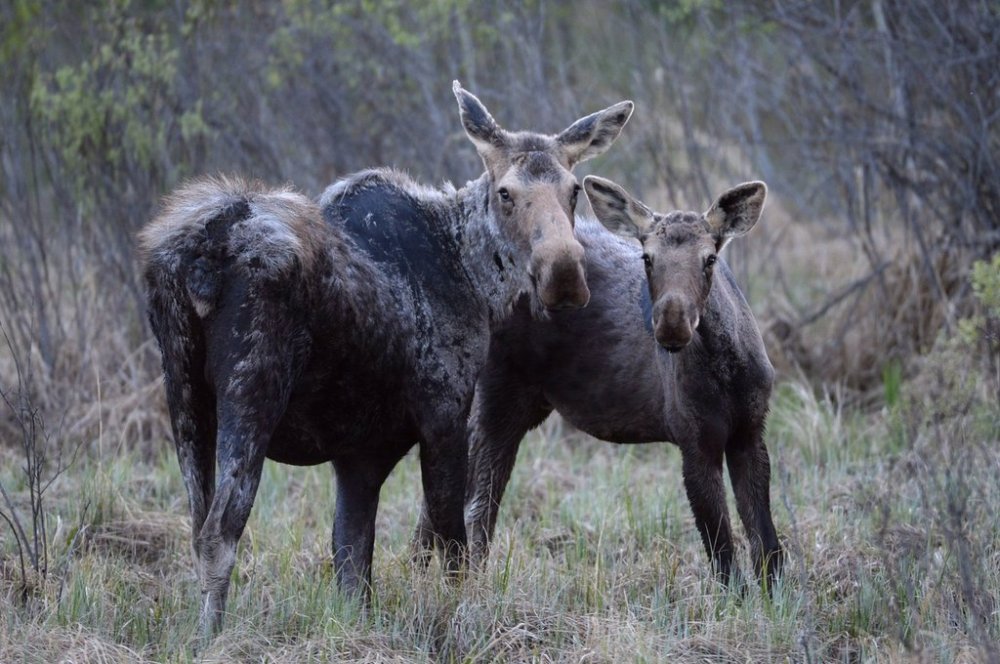
Moose are seen along a road near Lac la Biche, Alta., on Tuesday, May 10, 2016. THE CANADIAN PRESS/Jonathan Hayward

The lawsuit says the First Nation has observed a sharp drop in moose harvested by members.

Between 2011 and 2017, hunters harvested 17 to 22 moose annually. From 2018 to 2024, it was five, says the claim.

Last year, Misipawistik warned the province its members couldn’t meaningfully hunt for moose in the territory and asked the government to put a hold on licences. The government reduced the number issued and committed to working with the community to determine population dynamics and food needs of the First Nation.

Cook said that didn’t happen and the community was surprised to learn in May the province issued 136 licences and 68 tags for bull moose for the three areas in the territory.

“What they’re doing is counting on unsuccessful harvest, which is not the way to manage a population sustainably,” she said.

The First Nation asked the province to provide “defensible data” to show a moose hunt can move forward in a sustainable way, but the government has not developed a consistent way to track moose populations, alleges the lawsuit.

In 2018, Misipawistik developed a land guardian program to track moose in the area. The document says the community noticed the population dwindling because of hydroelectric development, resource extraction, roads and the intrusion of non-treaty-rights holding licensed hunters.

Land guardians consult with non-community hunters in the area to track numbers. Cook said for the most part the work has been successful, but some outside hunters have reacted defensively and believe the First Nation wants to push them out permanently.

The claim argues the province must give priority to the community and consult with it before issuing licences in the areas.

“Moose harvesting is intrinsic to Misipawistik’s spiritual, ceremonial and cultural practices and integral to the social identity and cultural continuity of Misipawistik. The spiritual, emotional and physical health of Misipawistik members suffers when the Treaty right to hunt moose for food is infringed or under threat,” the lawsuit says.

The importance of moose extends beyond food for the community, said Cook.

On a hunt, elders and knowledge keepers pass sacred teachings onto younger members, often in Cree. Following the harvest, parts of the animal can be used to pass on traditional and customary practices involving the preparation and tanning of hides, used to create ceremonial drums, rattles and clothing. Other parts are used to make artwork and tools, including scrapers, knives and hammers.

“It nourishes us in ways beyond just having a full belly,” said Cook.

Misipawistik is the latest First Nation to take action to stop hunting in its traditional territory this year due to low moose numbers.

Bloodvein First Nation, north of Winnipeg, recently erected signs prohibiting non-members from hunting in their territory. The province announced this week a buffer zone would be enforced there for the season.

“The moose is a resource for all Manitobans. That’s the position of our government,” Premier Wab Kinew said Thursday regarding some First Nations’ concerns about the hunting season.

“We have treaties in Manitoba. Treaties are about sharing. We want to make sure that there can be sharing.”

Kinew wouldn’t comment on Misipawistik’s lawsuit, as it’s before the courts.

The lawsuit says Misipawistik would like to see a halt in its territory until moose populations can recover and meet the food needs of the current on-reserve population, estimated to be 29 to 55 moose annually.

In the meantime, the First Nation has been financially supporting hunters to travel to Saskatchewan for food, social and ceremonial needs. Cook said that is not sustainable.

“We need to address the management system now, before there’s a complete collapse of the moose population.”

This report by The Canadian Press was first published Sept. 18, 2025.

Report Error Submit a Tip

More Stories

Moving drama at MTYP gives voice to boy who changed law

Holly Harris 5 minute read Preview

Moving drama at MTYP gives voice to boy who changed law

Holly Harris 5 minute read Yesterday at 2:37 PM CDT

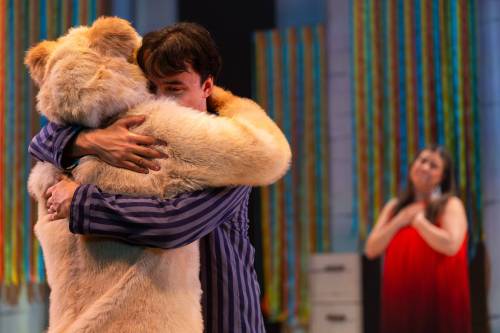
The heroic true tale of Norway House Cree Nation-born Jordan River Anderson came home Friday night, as Manitoba Theatre for Young People presented Yvette Nolan’s Jordan.

The touring production, a collaboration with Geordie Theatre, runs weekends through Oct. 11, with additional stops in Toronto, Vancouver and Ottawa’s National Arts Centre.

Having several of Anderson’s family members witness the local première underscored the evening with poignancy. Elder and Pine Creek First Nation member Barbara Nepinak added her own dignified presence and prayers following MTYP artistic director Pablo Felices-Luna’s welcoming remarks.

The season-opener also marks the Winnipeg-raised playwright’s homecoming; the Algonquin playwright, director, dramaturg, actor and educator was a fixture in our local theatre community for many years before going on to serve as artistic director for Native Earth Performing Arts from 2003 to ‘11, among other contributions.

Read
Yesterday at 2:37 PM CDT

Volunteer pop-up library axed from Manitoba Youth Centre

Matthew Frank 4 minute read Preview

Volunteer pop-up library axed from Manitoba Youth Centre

Matthew Frank 4 minute read Updated: Yesterday at 11:25 AM CDT

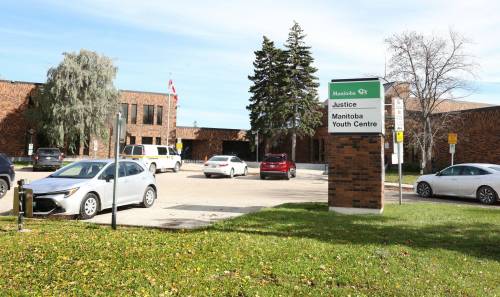
Manitoba Corrections has cancelled a pop-up library program at the Manitoba Youth Centre, leaving inmates without librarian services and fewer options to borrow certain books.

The Prison Libraries Committee, part of the non-profit Manitoba Library Association, operated and funded the volunteer program since 2024 before it was shut down by the province last month. The group previously partnered with the province to offer the service because the facility has no dedicated library of its own.

“It is concerning that community members who are incarcerated, especially youth, are losing out on meaningful programming, access to information and rehabilitation efforts, which are offered at no cost to (Manitoba) Corrections. We urge Manitoba Justice to promote more library services and programming, not less,” said a Sept. 24 letter from the non-profit addressed to the justice minister.

Ashley Huot, chair of the Prison Libraries Committee, said she was puzzled when she received an email last month from Manitoba Corrections stating that the pop-up library was no longer needed.

Read
Updated: Yesterday at 11:25 AM CDT

Blown lead spoils Jets opener

Mike McIntyre 7 minute read Preview

Blown lead spoils Jets opener

Mike McIntyre 7 minute read Friday, Oct. 2, 2026

Younger. Faster. Stronger.

They may still be a long ways from a finished product, but it’s safe to say the new-look Winnipeg Jets made a mostly favourable first impression on Friday night in front of a sold-out crowd at Canada Life Centre.

Sure, a 4-3 overtime loss to a hard-nosed Boston Bruins outfit is going to sting a little, especially since the home team was just 98 seconds away from a regulation victory.

But if the Jets can bottle up this kind of energy and effort, they should enjoy plenty of success over the course of the 84-game campaign.

Read
Friday, Oct. 2, 2026

Winnipeggers witness unveiling of Japanese Canadian monument in B.C.

Morgan Modjeski 6 minute read Preview

Winnipeggers witness unveiling of Japanese Canadian monument in B.C.

Morgan Modjeski 6 minute read Yesterday at 8:39 PM CDT

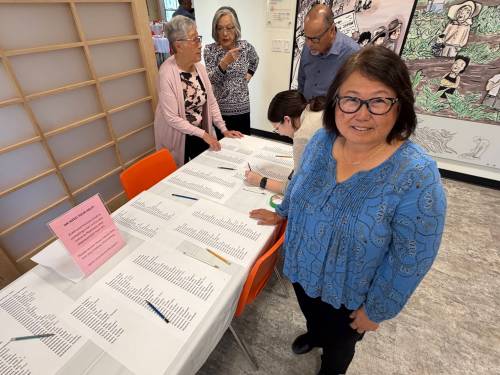
As Miki Stewart gathered with her family at the Japanese Cultural Association of Manitoba on Saturday afternoon, she was thinking of her parents, Yoshimaru and Yoshi Abe.

Both Stewart, 80, and her sister Yumi Falk, 81, alongside an older brother, were born in the Tashme internment camp in British Columbia. They were among more than 2,600 Japanese Canadians who were forcefully removed and interred at the camp following the bombing of Pearl Harbour and Canada’s declaration of war on Japan in 1941.

“They didn’t talk much about how they suffered,” Stewart said of her parents. “But they did.”

She was amongst a group of more than 150 people who gathered at the association’s McPhillips headquarters on Saturday afternoon to watch the unveiling of the Japanese Canadian Monument in Victoria B.C.

Read
Yesterday at 8:39 PM CDT

Bombers get ‘whopped’ in Montreal

Taylor Allen 5 minute read Preview

Bombers get ‘whopped’ in Montreal

Taylor Allen 5 minute read Yesterday at 11:32 PM CDT

MONTREAL — It’s hard to fathom that the Winnipeg Blue Bombers smacked these Montreal Alouettes five weeks ago.

The team that pulled off that 44-28 upset at Princess Auto Stadium was nowhere to be found in La Belle Province on Saturday night.

You can, however, now find them in the basement of the West Division at 7-8 after getting completely outmatched and outclassed by the Als in a 37-10 beatdown.

“This was bad,” left tackle Stanley Bryant told the Free Press postgame. “They basically had their way all around. They whopped our ass.”

Read
Yesterday at 11:32 PM CDT

Mayoral candidate Vogiatzakis criticized for living outside Winnipeg

Malak Abas 4 minute read Preview

Mayoral candidate Vogiatzakis criticized for living outside Winnipeg

Malak Abas 4 minute read Friday, Oct. 2, 2026

A mayoral hopeful took heat from other candidates Friday for living outside Winnipeg while running in the civic election.

Mike Vogiatzakis’s primary residence is in the Rural Municipality of St. Andrews, about 25 kilometres north of Winnipeg — a community with its own mayor and councillors.

But the funeral director said he owns a home in Winnipeg where he divides his time, and he would move to the city full-time if elected mayor.

“It doesn’t matter where a person lives. Why are we dividing St. Andrews and Manitoba and Winnipeg? I’ve met the criteria to run for mayor,” Vogiatzakis said Friday morning.

Read
Friday, Oct. 2, 2026