Hard pass. Cold brew. Dad bod. Merriam-Webster adds over 5,000 words to ‘Collegiate’ dictionary
Advertisement
Read this article for free:
or
Already have an account? Log in here »
To continue reading, please subscribe:

Digital Subscription
One year of digital access for only $205*
- Enjoy unlimited reading on winnipegfreepress.com
- Read the E-Edition, our digital replica newspaper
- Access News Break, our award-winning app
- Play interactive puzzles
*First annual payment billed as $205.00 + GST for one year. This annual subscription will automatically renew at $233.00 + GST every 52 weeks (10% off the regular annual price of $259.35). Offer available to new and qualified returning subscribers only. Cancel any time.
To continue reading, please subscribe:
Add Free Press access to your Brandon Sun subscription for only an additional
$1 for the first 4 weeks*
- Enjoy unlimited reading on winnipegfreepress.com
- Read the E-Edition, our digital replica newspaper
- Access News Break, our award-winning app
- Play interactive puzzles
*Your next Brandon Sun subscription payment will increase by $1.00 and you will be charged $17.95 plus GST for four weeks. After four weeks, your payment will increase to $24.95 plus GST every four weeks.
Read unlimited articles for free today:
or
Already have an account? Log in here »
Hey there, time traveller!
This article was published 24/09/2025 (357 days ago), so information in it may no longer be current.
NEW YORK (AP) — Word nerd alert: Merriam-Webster announced Thursday it has taken the rare step of fully revising and reimagining one of its most popular dictionaries with a fresh edition that adds over 5,000 new words, including “petrichor,” “teraflop,” “dumbphone” and “ghost kitchen.”
The 12th edition of “Merriam-Webster’s Collegiate Dictionary” comes 22 years after the book’s last hard-copy update and amid declining U.S. sales for analog dictionaries overall, according to Circana BookScan. It will be released Nov. 18, with preorders now available.
Petrichor, by the way, is a pleasant odor after a rainfall following a warm, dry period. Teraflop is a unit of measure for calculating the speed of a computer. Dumbphones are just that, mobile devices we used before the smartphone revolution. And ghost kitchens, which came into their own during the pandemic, are commercial spaces for hire.
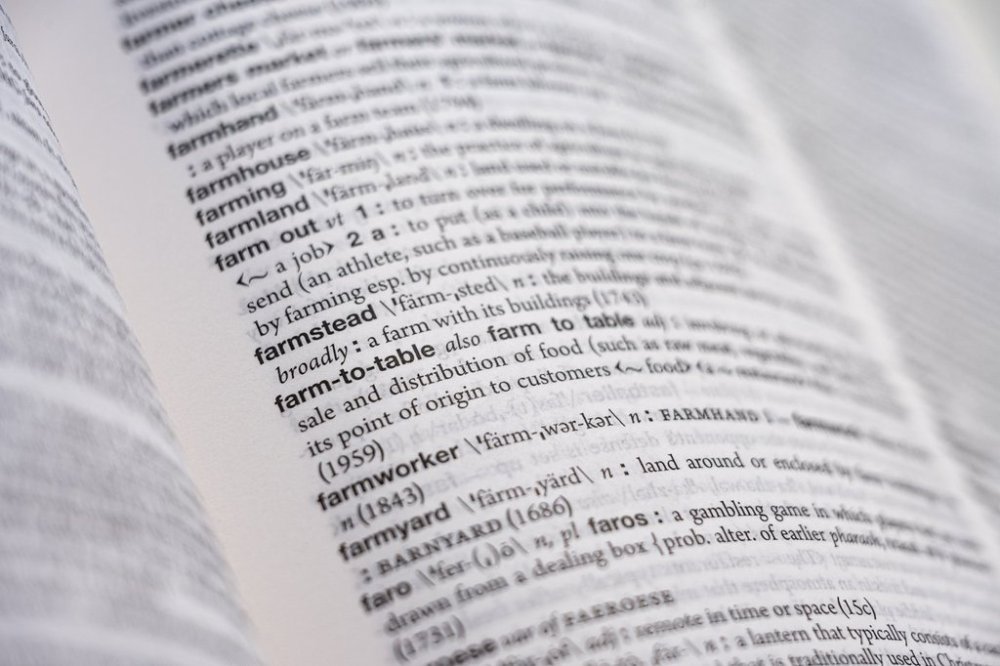
Other additions: “cold brew,” “farm-to-table,” “rizz,” “dad bod,” “hard pass,” “adulting” and “cancel culture.” There’s also “beast mode,” “dashcam,” “doomscroll,”
“WFH” and “side-eye.”
The new “Collegiate” also includes enhanced entries for some top lookups, and more than 20,000 new usage examples. All of the added words were already available on Merriam-Webster.com.
How did they make room for all that?
The company removed two sections of the “Collegiate’s” 11th edition that had sparse biographical and geographical entries to make room for the new content. Greg Barlow, Merriam-Webster’s president, exclusively told The Associated Press ahead of the announcement that people no longer use dictionaries to learn such things as the location of Kalamazoo or who Nikolai Rimsky-Korsakov was. For that, they reach for the internet.
(It’s a city in southwest Michigan, for the eternally curious, and he’s a Russian composer who died in 1908.)
Merriam-Webster also eliminated some obscure and antiquated words, including “enwheel,” meaning encircle.
“We wanted to make the ‘Collegiate’ more useful, a better design, more interesting,” Barlow said. “We wanted it to be more rewarding to browse, more fun to look through, and to really be practical for research, but also a beautiful book.”
What’s happening with dictionary sales in general?
The chunky, linen-cover “Collegiate” update weighs in at nearly 5 pounds. It comes as adult reference book sales, including dictionaries and atlases, have shown annual declines since 2022, according to Circana BookScan, which captures 85% of the print market. In the 12-month period ending Sept., 6, dictionary sales fell 9% compared with the same period prior.
Merriam-Webster, the country’s leading dictionary company, sells about 1.5 million of them a year. Most are regularly revised but not fully overhauled like the “Collegiate,” Barlow said. The company’s retail sales overall have generally held steady in the last few years, he said. Print sales account for a small fraction of the company’s revenue.
“While the print dictionary is not at all important to the growth and profitability of this wonderful language company, it’s still our heart,” Barlow said. “There are people out there who just love books, and we love books.”
For dictionary sales overall, there’s a bit of sunshine at Barnes & Noble. The chain’s dictionary sales have gone up so far this year over the same period in 2024, said Kat Sarfas, marketing manager for nonfiction. She noted similar increases for such reference materials as the U.S. Constitution as well.
“I do think there is that nostalgia that people have to be able to pull a dictionary off the shelf and look up a word,” Sarfas said. “There’s a certain desire to have these kinds of reference materials at home. It may be something that people feel like, as educated people, we should own.”
Dictionaries may be down but they aren’t dead yet
While Merriam-Webster’s “Collegiate,” originally focused on the needs of college students, is among top sellers in dictionaries for Barnes & Noble, its general-interest “The Merriam-Webster Dictionary” is more popular. It was last tweaked in 2022. A pocket version is also a strong seller, Sarfas said.
Death knells for print dictionaries have been ringing since the rise of the internet, said Grant Barrett, a lexicographer, former dictionary editor for Oxford University Press and others, and co-host of public radio’s “A Way with Words.”
“Now we’re in this weird limbo where people want the dictionary but they don’t want to pay for it, because they’re used to getting things for free on the internet,” he said.
Merriam-Webster’s website receives about a billion visits a year, making the company a word digital leader as well, Barlow said. Over the last 10 years, revenue overall has grown by nearly 500% on the strength of its online dictionary, thesaurus, mobile apps and word games.
The new “Collegiate” introduces curated word lists, such as words from the 1990s and “10 Words for Things that Often Go Unnamed.” And it has more word histories. Did you know “calculate” comes from the Latin for “pebble,” because ancient Romans used little stones to do addition and subtraction?
And, for incredibly granular dictionary fans, the new “Collegiate” preserves lettered thumb notches — those little finger-size dents along the edges of reference book pages — to make browsing easier. The only printer doing the notches in the U.S. has closed since Merriam-Webster was last in need, so it had to go to India, Barlow said.
Why do print dictionaries still matter?
Print versions still matter in preserving cultures, as gifts, as a household utility, and for students under cellphone bans at school, among other reasons, said Sarfas, Barrett and other book pros.
“There are lots of communities that speak languages that have never been documented, and they may not have been documented because those languages might have been actively suppressed. I’m thinking about Indigenous communities across North America,” said Lindsay Rose Russell, executive director of the Dictionary Society of North America.

“Having a print dictionary has all along sort of indicated the legitimacy of a language,” said Russell, also an author who teaches English at the University of Illinois at Urbana-Champaign.
Barrett said his show and its companion podcast receive a lot of letters from readers that lend insight into how they use dictionaries.
“Some people use the dictionary almost as a meditative resource where they just open it up and see what they find and kind of let their minds wander a little bit,” he said.
Got a band in need of a name? Commodores’ trumpet player William King used a dictionary to find his, running his finger down a page, Russell noted.
“We lucked out,” King told People magazine in 1978. “We almost became ‘The Commodes.’ ”