Toronto to develop wastewater surveillance program for FIFA World Cup

Advertisement

Advertise with us

TORONTO - Toronto Public Health is developing a wastewater surveillance program to detect any potential spread of diseases during the FIFA World Cup.

Read this article for free:


or

Already have an account? Log in here »

To continue reading, please subscribe:

Subscribe and receive a limited-edition Free Press branded hat or tote.

Digital Subscription

One year of digital access for only $205*

  • Enjoy unlimited reading on winnipegfreepress.com
  • Read the E-Edition, our digital replica newspaper
  • Access News Break, our award-winning app
  • Play interactive puzzles

*First annual payment billed as $205.00 + GST for one year. This annual subscription will automatically renew at $233.00 + GST every 52 weeks (10% off the regular annual price of $259.35). Offer available to new and qualified returning subscribers only. Cancel any time.

To continue reading, please subscribe:

Add Free Press access to your Brandon Sun subscription for only an additional

$1 for the first 4 weeks*

  • Enjoy unlimited reading on winnipegfreepress.com
  • Read the E-Edition, our digital replica newspaper
  • Access News Break, our award-winning app
  • Play interactive puzzles
Start now

*Your next Brandon Sun subscription payment will increase by $1.00 and you will be charged $17.95 plus GST for four weeks. After four weeks, your payment will increase to $24.95 plus GST every four weeks.

Hey there, time traveller!
This article was published 17/10/2025 (328 days ago), so information in it may no longer be current.

TORONTO – Toronto Public Health is developing a wastewater surveillance program to detect any potential spread of diseases during the FIFA World Cup.

Toronto’s new Medical Officer of Health Dr. Michelle Murti said the pilot will collect sewage samples in areas where fans congregate and test them for infections such as COVID-19, influenza and RSV.

Murti said the public health unit is looking into whether other illnesses, such as measles, could also be monitored in wastewater given the large international audience expected next summer.
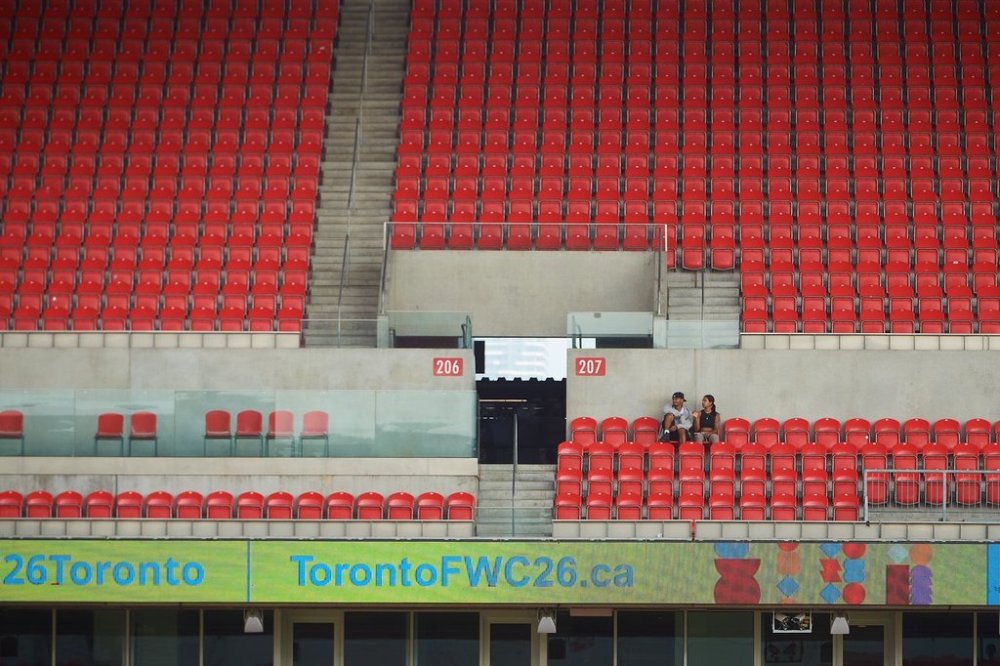
People sit in the empty stands at BMO Field as the City of Toronto and MLSE complete the first phase of upgrades in transforming the space into the 2026 World Cup ready Toronto Stadium in Toronto, on Tuesday, Sept. 23, 2025. THE CANADIAN PRESS/Sammy Kogan

“It’ll just be one more piece of information that we have as part of a larger suite of information that we’re looking at to make sure that we’re keeping people safe and healthy through the games,” Murti said.

The city has said it expects 300,000 out-of-town visitors in Toronto over the course of six World Cup matches starting in June.

Ontario’s COVID-19 wastewater surveillance program, which provided a close to real-time way to track the prevalence of the virus before people showed symptoms during the pandemic, ended last year.

Dr. Fahad Razak, an internal medicine specialist at St. Michael’s Hospital, said applying this technology to a large scale event like the World Cup is an innovative approach to fill the gap left since the provincial program concluded.

Razak said that program should have been sustained and the disease detection potential of the technology should have been explored beyond COVID-19.

For example, Windsor-Essex County used wastewater surveillance earlier this year to detect a rise in measles infections within the region.

“Measles is a very good example because it is an illness that is so transmissible. If you have a high pocket of unprotected people and you have the emergence of the measles signal within that area, that’s an area where you’d want to do your best from a public health perspective to try and prevent spread,” Razak said.

Razak said wastewater could also be used for opioid surveillance to detect a contaminated drug supply during the World Cup.

“The idea here is – can you use it to make decisions and to intervene in a way that saves people’s lives or reduces illness? That’s the critical question.”

Dr. Lawrence Goodridge, co-lead of the Guelph Wastewater Epidemiology Lab for Public Health, said the province’s decision to end its wastewater program, which monitored 75 per cent of the population, has necessitated smaller scale programs like this one.

The pilot will be useful if a major outbreak spreads at the games, but the drawback is that the reach is limited, he said.

“People are going to be moving around, they’re coming into Toronto, but they’re also going to be moving around through the province for the World Cup,” Goodridge said.

Toronto’s top doctor said the pilot will help determine the value of wastewater surveillance for future large-scale events in the city.

This report by The Canadian Press was first published Oct. 17, 2025.

Canadian Press health coverage receives support through a partnership with the Canadian Medical Association. CP is solely responsible for this content.

Report Error Submit a Tip

More Stories

South Winnipeg neighbourhood will be first to go geothermal

Chris Kitching 4 minute read Preview

South Winnipeg neighbourhood will be first to go geothermal

Chris Kitching 4 minute read Updated: Yesterday at 7:28 PM CDT

A new neighbourhood in south Winnipeg will be Manitoba’s first to use a shared, large-scale geothermal system to heat and cool hundreds of homes over coming decades.

The province is giving up to $4 million to the developers of Southwood Circle, just north of the University of Manitoba’s Fort Garry campus, for a district geothermal system as part of the NDP’s goal to reach net-zero greenhouse gas emissions by 2050.

“It means a whole neighbourhood can tap into geothermal, which means low-carbon heating and cooling for at least 1,000 homes,” Premier Wab Kinew said at a news conference Wednesday.

Geothermal systems, equipped with pumps and pipes, use underground temperatures to heat and cool one or more buildings. Proponents point to long-term energy and cost savings compared with conventional heating and cooling systems.

Read
Updated: Yesterday at 7:28 PM CDT

‘Dynacare sucks’: premier muses about bringing lab services back into public system

Carol Sanders 6 minute read Preview

‘Dynacare sucks’: premier muses about bringing lab services back into public system

Carol Sanders 6 minute read Updated: Yesterday at 7:45 PM CDT

Premier Wab Kinew says Manitoba may bring Dynacare’s diagnostic lab services back into the public system rather than continue to sign contracts with the for-profit company.

“Dynacare sucks. They’ve made an absolute mess of this situation,” the premier said Wednesday, the day the company’s 350 employees reported back to work after the labour board halted their strike after just one day.

Kinew first made the remark about Dynacare in a CBC radio interview Wednesday morning and added he is “not happy with them.”

Dynacare performs the majority of non-emergency blood and urine tests in the province.

Read
Updated: Yesterday at 7:45 PM CDT

What's Up: Brew at the Zoo, Neighbour x Neighbour fest, Fiver, Exploration of Contentment, Mangofest

5 minute read Preview

What's Up: Brew at the Zoo, Neighbour x Neighbour fest, Fiver, Exploration of Contentment, Mangofest

5 minute read Updated: 9:53 AM CDT

Brew at the ZooAssiniboine Park Zoo, 2595 Roblin Ave.Friday, 7-10 p.m.Tickets $68 hereIn July, Winnipeg beer drinkers flocked to Blue Cross Park for the return of Ballpark Brewfest; in August, they convened at Le Patio 340 for the Winnipeg Beer Festival.

And on Friday, lager lovers and hop heads will descend on the Assiniboine Park Zoo for the annual Brew at the Zoo, which sees local breweries pouring their wares alongside a range of national and international products. (Note: the zoo proper is not open to Brew at the Zoo guests.)

Among the locals taking part at this year’s Brew at the Zoo are Kilter Brewing Co., Heritage Farms Brewing Co., Dastardly Villain Ale Works, One Great City Brewing Co. and Barn Hammer Brewing Co. Locals pouring non-beer options include Brat Cat Mead Co., Shrugging Doctor Beverage Company and Patent 5 Distillery.

Brew at the Zoo, then, offers much more than beer, with a range of ready-to-drink cocktails, coolers, cider, wine and spirits being poured throughout the event; non-alcoholic options include kombucha and non-alcoholic beer.

Read
Updated: 9:53 AM CDT

Weekender festivities to take over downtown

Sheldon Birnie 3 minute read Preview

Weekender festivities to take over downtown

Sheldon Birnie 3 minute read Yesterday at 6:00 AM CDT

Come one, come all, to Graham Avenue this weekend.

Organizers of the Weekender hope to welcome thousands of Winnipeggers to the streets and parking lots in and around the Graham Avenue pedestrian mall in what they are billing as “Downtown’s Biggest Street Party.”

Starting Friday evening and running through Sunday, the free festival boasts a plethora of ways by which visitors can enjoy themselves. From food trucks to markets, games to live music, classic cars and free bike repairs, the festival aims to provide a little something for everyone.

“The Weekender is truly about bringing people together, to have fun, to experience all that downtown has to offer,” says Olivia Billson, director of communications and public relations for Downtown Winnipeg BIZ, which is putting on the festival in conjunction with Smith Events and Arch Events.

Read
Yesterday at 6:00 AM CDT

Supportive housing operator sued after man with dementia walks away

Erik Pindera 4 minute read Preview

Supportive housing operator sued after man with dementia walks away

Erik Pindera 4 minute read 6:00 AM CDT

The Public Guardian and Trustee of Manitoba is suing a health services company after a man with dementia under its care allegedly wandered away from an apartment it operates for vulnerable people and was later found face down in a puddle — unresponsive, hypothermic and severely injured.

The public trustee — a provincial government agency that, among other duties, makes financial and personal care decisions for vulnerable adults who cannot do so themselves — filed the lawsuit against Cambridge Health Inc. and a related numbered company in the Court of King’s Bench earlier this month.

The agency did so on behalf of a now-38-year-old man, who has been under its care since 2018, as a result of his frontotemporal dementia. The disease often starts in mid-life, rather than old age, as is the case with most other forms of dementia.

The lawsuit alleges the man, who resided at a Henderson Highway apartment complex where Cambridge Health operated a supportive residence for people with complex behavioural health issues, was in a common area of the home at about 4:30 p.m. on April 3 last year.

Read
6:00 AM CDT

Manitoba gains doctors for third straight year, but loses at pandemic-level rate: report

Scott Billeck 5 minute read Preview

Manitoba gains doctors for third straight year, but loses at pandemic-level rate: report

Scott Billeck 5 minute read Updated: Yesterday at 7:44 PM CDT

Manitoba is adding doctors at a record clip — but it’s also losing them at a rate not seen since the depths of the COVID-19 pandemic, a physicians advocacy organization cautioned Wednesday.

Read
Updated: Yesterday at 7:44 PM CDT