Advice to feed babies peanuts early and often helped thousands of kids avoid allergies

Advertisement

Advertise with us

A decade after a landmark study proved that feeding peanut products to young babies could prevent development of life-threatening allergies, new research finds the change has made a big difference in the real world.

Read this article for free:


or

Already have an account? Log in here »

To continue reading, please subscribe:

Subscribe and receive a limited-edition Free Press branded hat or tote.

Digital Subscription

One year of digital access for only $205*

  • Enjoy unlimited reading on winnipegfreepress.com
  • Read the E-Edition, our digital replica newspaper
  • Access News Break, our award-winning app
  • Play interactive puzzles

*First annual payment billed as $205.00 + GST for one year. This annual subscription will automatically renew at $233.00 + GST every 52 weeks (10% off the regular annual price of $259.35). Offer available to new and qualified returning subscribers only. Cancel any time.

To continue reading, please subscribe:

Add Free Press access to your Brandon Sun subscription for only an additional

$1 for the first 4 weeks*

  • Enjoy unlimited reading on winnipegfreepress.com
  • Read the E-Edition, our digital replica newspaper
  • Access News Break, our award-winning app
  • Play interactive puzzles
Start now

*Your next Brandon Sun subscription payment will increase by $1.00 and you will be charged $17.95 plus GST for four weeks. After four weeks, your payment will increase to $24.95 plus GST every four weeks.

Hey there, time traveller!
This article was published 19/10/2025 (345 days ago), so information in it may no longer be current.

A decade after a landmark study proved that feeding peanut products to young babies could prevent development of life-threatening allergies, new research finds the change has made a big difference in the real world.

Peanut allergies began to decline in the U.S. after guidance first issued in 2015 upended medical practice by recommending introducing the allergen to infants starting as early as 4 months. The rate of peanut allergies in children ages 0 to 3 fell by more than 27% after guidance for high-risk kids was first issued in 2015, and by more than 40% after the recommendations were expanded in 2017.

“That’s a remarkable thing, right?” said Dr. David Hill, an allergist and researcher at Children’s Hospital of Philadelphia, and author of a study published Monday in the medical journal Pediatrics. Hill and colleagues analyzed electronic health records from dozens of pediatric practices to track diagnoses of food allergies in young children before, during and after the guidelines were issued.
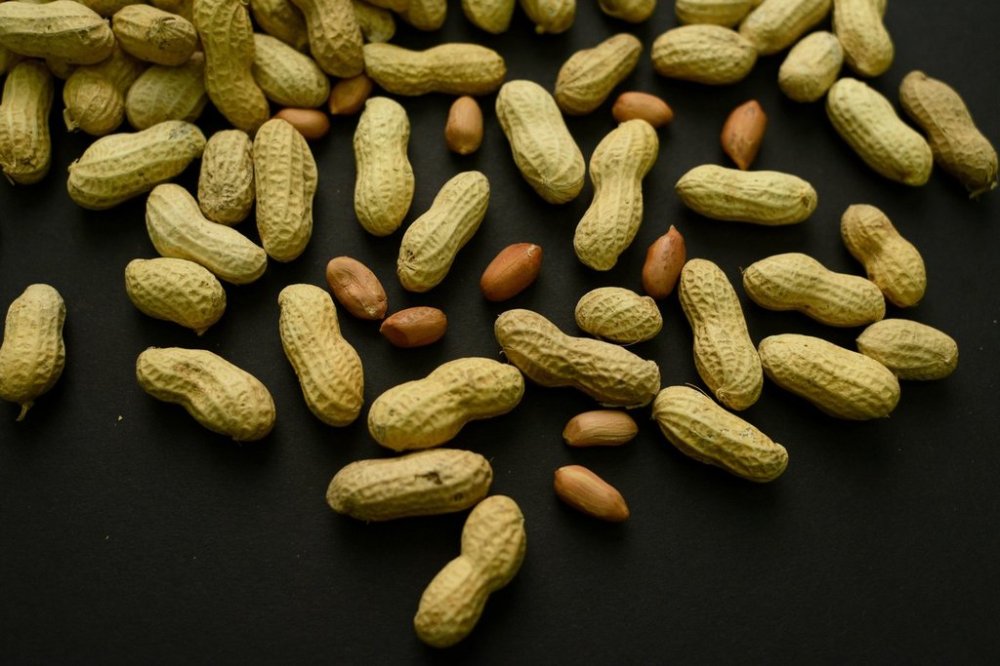
FILE - An arrangement of peanuts is seen Feb. 20, 2015, in New York. (AP Photo/Patrick Sison, File)

“I can actually come to you today and say there are less kids with food allergy today than there would have been if we hadn’t implemented this public health effort,” he added.

About 60,000 children have avoided food allergies since 2015, including 40,000 children who otherwise would have developed peanut allergies. Still, about 8% of children are affected by food allergies, including more than 2% with a peanut allergy.

Peanut allergy is caused when the body’s immune system mistakenly identifies proteins in peanuts as harmful and releases chemicals that trigger allergic symptoms, including hives, respiratory symptoms and, sometimes, life-threatening anaphylaxis.

For decades, doctors had recommended delaying feeding children peanuts and other foods likely to trigger allergies until age 3. But in 2015, Gideon Lack at King’s College London, published the groundbreaking Learning Early About Peanut Allergy, or LEAP, trial.

Lack and colleagues showed that introducing peanut products in infancy reduced the future risk of developing food allergies by more than 80%. Later analysis showed that the protection persisted in about 70% of kids into adolescence.

The study immediately sparked new guidelines urging early introduction of peanuts — but putting them into practice has been slow.

Only about 29% of pediatricians and 65% of allergists reported following the expanded guidance issued in 2017, surveys found.

Confusion and uncertainty about the best way to introduce peanuts early in life led to the lag, according to a commentary that accompanied the study. Early on, medical experts and parents alike questioned whether the practice could be adopted outside of tightly controlled clinical settings.

The data for the analysis came from a subset of participating practice sites and may not represent the entire U.S. pediatric population, noted the commentary, led by Dr. Ruchi Gupta, a child allergy expert at Northwestern University.

However, the new research offers “promising evidence that early allergen introduction is not only being adopted but may be making a measurable impact,” the authors concluded.

Advocates for the 33 million people in the U.S. with food allergies welcomed signs that early introduction of peanut products is catching on.

“This research reinforces what we already know and underscores a meaningful opportunity to reduce the incidence and prevalence of peanut allergy nationwide,” said Sung Poblete, chief executive of the nonprofit group Food Allergy Research & Education, or FARE.

The new study emphasizes the current guidance, updated in 2021, which calls for introducing peanuts and other major food allergens between four and six months, without prior screening or testing, Hill said. Parents should consult their pediatricians about any questions.

“It doesn’t have to be a lot of the food, but little tastes of peanut butter, milk-based yogurt, soy-based yogurts and tree butters,” he said. “These are really good ways to allow the immune system exposure to these allergenic foods in a safe way.”

Tiffany Leon, 36, a Maryland registered dietitian and director at FARE, introduced peanuts and other allergens early to her two young sons.

At first, Leon’s own mother was shocked at the advice to feed babies such foods before the age of 3, she said. But Leon explained how the science had changed.

“As a dietitian, I practice evidence-based recommendations,” she said. “So when someone told me, ‘This is how it’s done now, these are the new guidelines,’ I just though, OK, well, this is what we’re going to do.”

___

This story has been corrected to report that about 40,000 children have avoided peanut allergies after doctors began recommending introducing the peanuts to babies, not 60,000.

___

The Associated Press Health and Science Department receives support from the Howard Hughes Medical Institute’s Department of Science Education and the Robert Wood Johnson Foundation. The AP is solely responsible for all content.


Report Error Submit a Tip

More Stories

Manitoba PC leader Khan survives confidence vote

Carol Sanders 3 minute read Preview

Manitoba PC leader Khan survives confidence vote

Carol Sanders 3 minute read Updated: Yesterday at 8:33 PM CDT

Manitoba Progressive Conservative Leader Obby Khan survived a confidence vote last week.

Caucus communications director Alison Sutherland confirmed the vote was held Friday and that Khan still has “the full confidence” of the PC caucus.

She did not provide further details.

The party under Khan’s leadership is floundering, a recent poll suggests.

Read
Updated: Yesterday at 8:33 PM CDT

Orange Shirt Day project fits students to a tee

Maggie Macintosh 5 minute read Preview

Orange Shirt Day project fits students to a tee

Maggie Macintosh 5 minute read Yesterday at 6:57 PM CDT

On the eve of Orange Shirt Day, hundreds of black T-shirts will be handed out to teenagers at Elmwood High School — and there wasn’t a mixup in the clothing procurement process.

The student-run business behind the initiative wanted to make a statement about “truth and reconciliation” being a year-round activity, said Daniel Concepcion, a Grade 12 student.

Daniel said given that black is a staple in the wardrobe of teenagers, he hopes these shirts won’t sit on hangers for 364 days of the year.

“Every child matters, every part of the day, every day,” the 17-year-old said.

Read
Yesterday at 6:57 PM CDT

Dealing now with increasing judicial dangers

Ben Wickstrom 5 minute read 2:00 AM CDT

For years, the Manitoba Association of Crown Attorneys (“MACA”) has been engaged in a dispute with the Manitoba government over the workload of its lawyers. That dispute is expected to come to a head at the end of November, when two weeks of grievance hearings are scheduled.

We remain hopeful that we can reach an agreement with our employer. But if we cannot, our union’s lawyers are prepared to make our case. As those hearings approach, we want to explain how we got here, what is at stake, and why this dispute matters beyond the working conditions of our members.

These problems are longstanding and predate the election of Manitoba’s current government. Our concern with the current government is not that it created these problems, but that it is now responsible for addressing them.

Despite the evidence before it, the government has not meaningfully addressed the workload concerns we have raised throughout its time in office.

Canada resorting to its tried and true playbook

Niigaan Sinclair 5 minute read Preview

Canada resorting to its tried and true playbook

Niigaan Sinclair 5 minute read Yesterday at 6:00 AM CDT

In 1846, Britain faced an emergency influenced by the Irish famine, so leaders repealed the country’s “Corn Laws” and restrictions on imported food and grain, transitioning to a system of free trade.

This created a crisis in the then Province of Canada, which had relied on British “preferential” status to prop up its agricultural and resource industries.

As a result, Canada looked south for new markets and eventually negotiated a free trade agreement with the United States.

This required land to be acquired and converted for industrial use quickly, so Canada quickly dispatched Commissioner William Robinson to negotiate with Indigenous communities along Lake Huron and Lake Superior for land.

Read
Yesterday at 6:00 AM CDT

Jets pick up netminder as relatively new 23-man roster announced

Mike McIntyre 7 minute read Preview

Jets pick up netminder as relatively new 23-man roster announced

Mike McIntyre 7 minute read Updated: Yesterday at 9:25 PM CDT

Let’s get the caveats out of the way: Nothing is set in stone, nor written in permanent ink, and what you see right now could change in the blink of an eye.

With that being said, allow us to introduce you to the 2026-27 Winnipeg Jets — where change is very much in the air.

The 23-man roster submitted to the NHL offices by Monday’s 4 p.m. deadline includes seven players who were not on the team at this time last year. In fact, there could be as many as 10 new faces in the opening-night lineup on Friday against Boston when you factor in three regulars didn’t start the 2025-26 campaign due to injury.

That’s a lot of turnover, which isn’t surprising for a team that finished 26th overall in the standings and was — to most fans and pundits — too old and too slow.

Read
Updated: Yesterday at 9:25 PM CDT

Advice to feed babies peanuts early and often helped thousands of kids avoid allergies

Jonel Aleccia, The Associated Press 4 minute read Preview

Advice to feed babies peanuts early and often helped thousands of kids avoid allergies

Jonel Aleccia, The Associated Press 4 minute read Tuesday, Oct. 21, 2025

A decade after a landmark study proved that feeding peanut products to young babies could prevent development of life-threatening allergies, new research finds the change has made a big difference in the real world.

Peanut allergies began to decline in the U.S. after guidance first issued in 2015 upended medical practice by recommending introducing the allergen to infants starting as early as 4 months. The rate of peanut allergies in children ages 0 to 3 fell by more than 27% after guidance for high-risk kids was first issued in 2015, and by more than 40% after the recommendations were expanded in 2017.

“That’s a remarkable thing, right?” said Dr. David Hill, an allergist and researcher at Children’s Hospital of Philadelphia, and author of a study published Monday in the medical journal Pediatrics. Hill and colleagues analyzed electronic health records from dozens of pediatric practices to track diagnoses of food allergies in young children before, during and after the guidelines were issued.

“I can actually come to you today and say there are less kids with food allergy today than there would have been if we hadn't implemented this public health effort,” he added.

Read
Tuesday, Oct. 21, 2025