Russia faces a shrinking and aging population and tries restrictive laws to combat it
Advertisement
Read this article for free:
or
Already have an account? Log in here »
To continue reading, please subscribe:

Digital Subscription
One year of digital access for only $205*
- Enjoy unlimited reading on winnipegfreepress.com
- Read the E-Edition, our digital replica newspaper
- Access News Break, our award-winning app
- Play interactive puzzles
*First annual payment billed as $205.00 + GST for one year. This annual subscription will automatically renew at $233.00 + GST every 52 weeks (10% off the regular annual price of $259.35). Offer available to new and qualified returning subscribers only. Cancel any time.
To continue reading, please subscribe:
Add Free Press access to your Brandon Sun subscription for only an additional
$1 for the first 4 weeks*
- Enjoy unlimited reading on winnipegfreepress.com
- Read the E-Edition, our digital replica newspaper
- Access News Break, our award-winning app
- Play interactive puzzles
*Your next Brandon Sun subscription payment will increase by $1.00 and you will be charged $17.95 plus GST for four weeks. After four weeks, your payment will increase to $24.95 plus GST every four weeks.
Read unlimited articles for free today:
or
Already have an account? Log in here »
Hey there, time traveller!
This article was published 24/10/2025 (327 days ago), so information in it may no longer be current.
For a quarter century, President Vladimir Putin has faced the specter of Russia’s shrinking and aging population.
In 1999, a year before he came to power, the number of babies born in Russia plunged to its lowest recorded level. In 2005, Putin said the demographic woes needed to be resolved by maintaining “social and economic stability.”
In 2019, he said the problem still “haunted” the country.
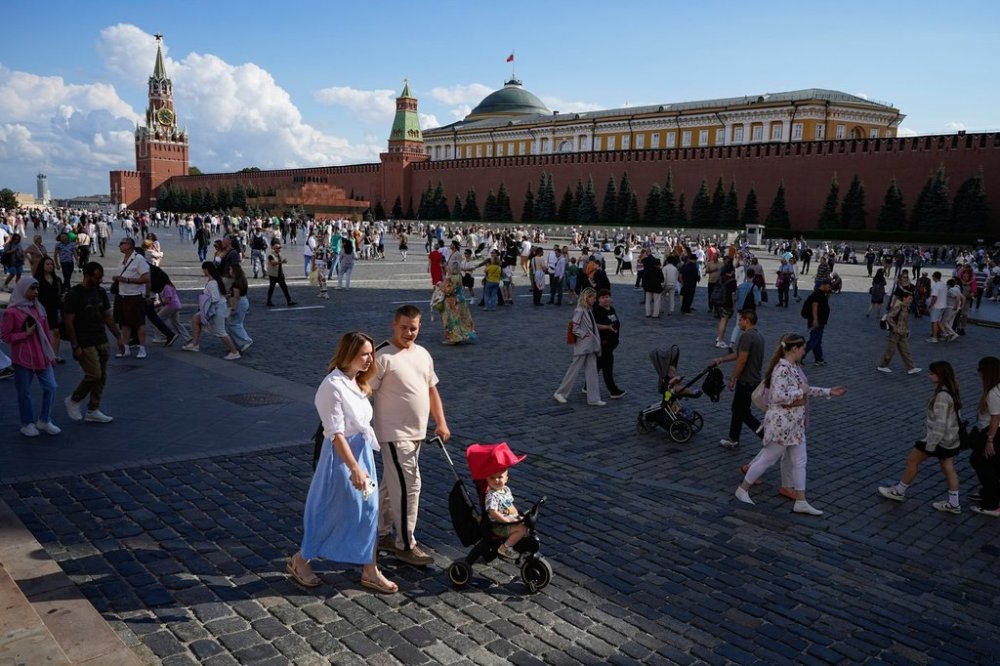
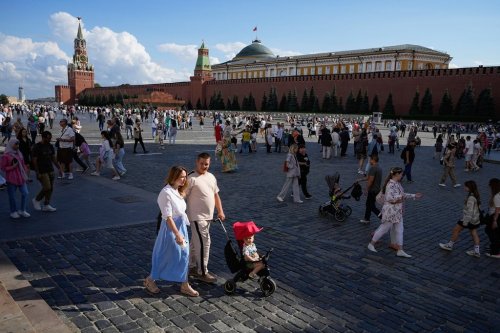
As recently as Thursday, he told a Kremlin demographic conference that increasing births was “crucial” for Russia.
Putin has launched initiatives to encourage people to have more children — from free school meals for large families to awarding Soviet-style “hero-mother” medals to women with 10 or more children.
“Many of our grandmothers and great-grandmothers had seven, eight, and even more children,” Putin said in 2023. “Let’s preserve and revive these wonderful traditions. Having many children and a large family must become the norm.”
At first, births in Russia grew with its economic prosperity, from 1.21 million babies born in 1999 to 1.94 million in 2015.
But those hard-won gains are crumbling against a backdrop of financial uncertainty, the war in Ukraine, an exodus of young men and opposition to immigration.
Russia’s population has fallen from 147.6 million in 1990 — the year before the USSR collapsed — to 146.1 million this year, according to Russia’s Federal Statistics Service. Since the 2014 illegal annexation of Crimea, it has included the peninsula’s population of about 2 million, as well as births and deaths there, in its data.
The population also is significantly older. In 1990, 21.1% was 55 or older, government data said. In 2024, that figure was 30%.
Since the 2015 peak, the number of births has fallen annually, and deaths are now outpacing births. There were only 1.22 million live births last year — marginally above the 1999 low. Demographer Alexei Raksha reported the number of babies born in Russia in February 2025 was the lowest monthly figure in over two centuries.
Russia is trying new restrictions to halt the backslide and embrace what it calls “traditional family values” with laws banning the promotion of abortion and “child-free ideology” and outlawing all LGBTQ+ activism.
Officials believe such values are “a magic wand” for solving demographic problems, said Russian feminist scholar Sasha Talaver.
In the government’s view, women might be financially independent, but they should be “willing and very excited to take up this additional work of reproduction in the name of patriotism and Russian strength,” she said.
Harsh demographic history
In Russia, as in much of the West, shrinking births are usually linked with economic turbulence. Young couples in cramped apartments, unable to buy their own homes or who fear for their jobs, usually have less confidence they can afford raising a child.
But Russia is saddled with a harsh demographic history.
About 27 million Soviet citizens died in World War II, diminishing the male population dramatically.
As the country was beginning to recover, the Soviet Union collapsed, and births tumbled again.
The number of Russian women in their 20s and early 30s is small, said Jenny Mathers of the University of Aberystwyth in Wales, leaving authorities “desperate to get as many babies as possible out of this much smaller number of women.”
Although Russia has not said how many troops have been killed in Ukraine, Western estimates have put the dead in the hundreds of thousands. When the war began, many young Russians moved abroad — some for ideological reasons like escaping a crackdown on dissent or to avoid military service.
“You’ve got a much-diminished pool of potential fathers in a diminished pool of potential mothers,” Mathers said. That is a particular problem for Putin, who has long linked population and national security, she said.
Some family-friendly initiatives are popular, like cash certificates for parents that can go toward pensions, education or a subsidized mortgage.
Others are controversial, such as one-time payments of about $1,200 for pregnant teenagers in some regions. Officials say these aim to support vulnerable mothers, but critics say they encourage such pregnancies.
Still other programs seem mostly symbolic. Since 2022, Russia has created state holidays like Family, Love and Fidelity Day in July, and Pregnant Women’s Day -– celebrated on April 7 and Oct. 7.
Last year, Russia’s fertility rate — the average number of children born per woman — was 1.4, state media reported. That’s well below the 2.1 replacement rate for the population, and slightly lower than the U.S. figure of 1.6 released by the Centers for Disease Control and Prevention.
Discouraging abortion
Some regions have laws making it illegal to “encourage abortions,” while national legislation in 2024 banned the promotion of “child-free propaganda.” The wording in such initiatives is often vague, leaving them open to interpretation, but the change was enough to prompt producers of a reality TV hit “16 and Pregnant” to change the show’s name to “Mommy at 16.”
For many women, the measures make already sensitive conversations even more fraught. A 29-year-old woman who’s decided not to bear children told The Associated Press she sees a gynecologist at a private Moscow clinic, rather than a state one, to avoid intrusive questions.
“Whether I plan to have children, whether I don’t plan to have children — I don’t get asked about that at all,” she said, speaking on condition of anonymity because she feared repercussions. It’s “a completely different story” at state-run clinics, she said.
An increasing number of laws limit access to abortion. While the procedure remains legal and widely available, more private clinics no longer offer abortion services. New legislation has also curbed the sale of abortion-inducing pills, a move that also affects some emergency contraceptives.
Women are encouraged to go to state clinics, where waits are longer and some sites refuse to do abortions on certain days. By the time patients have completed compulsory counseling and mandatory waiting periods of between 48 hours and a week, they risk surpassing the time frame for a legal abortion.
Abortions have steadily decreased under these laws, although experts say the number of procedures already was falling. Still, there hasn’t been a corresponding increase in births, and activists believe restricting abortion will only harm the health of women and children.
“The only thing you will get from this is illegal abortions. That means more deaths: more children’s deaths and more women’s deaths,” says Russian journalist and feminist activist Zalina Marshenkulova.
She sees the new government limits as repression for repression’s sake. “They exist just to ban, to block any voice of freedom,” she told AP.
Curbing immigration
Russia could increase its population by allowing more immigrants — something the Kremlin is unlikely to adopt.
Russian officials have recently fomented anti-migrant sentiment, tracking their movements, clamping down on their employment and impeding their children’s rights to education. Central Asians who have traditionally traveled to Russia for work are looking elsewhere, hoping to avoid growing discrimination and economic uncertainty.
While the war in Ukraine continues, Moscow can promise financial rewards for would-be parents but not the stability needed for gambling on the future.
When people lack confidence about their prospects, it’s not a time for having children, Mathers said, adding: “An open-ended major war doesn’t really encourage people to think positively about the future.”
The 29-year-old woman who chose not to have children agrees.
“The happiest and healthiest child will only be born in a family with healthy, happy parents,” she said.