Toy inventor Burt Meyer, who dreamed up Lite-Brite and Rock ’Em Sock ’Em Robots, dies age 99

Advertisement

Advertise with us

Burt Meyer, who invented toys like Rock ’Em Sock ’Em Robots, Lite-Brite and MouseTrap in the 1960s that delighted generations of children, has died. He was 99.

Read this article for free:


or

Already have an account? Log in here »

To continue reading, please subscribe:

Subscribe and receive a limited-edition Free Press branded hat or tote.

Digital Subscription

One year of digital access for only $205*

  • Enjoy unlimited reading on winnipegfreepress.com
  • Read the E-Edition, our digital replica newspaper
  • Access News Break, our award-winning app
  • Play interactive puzzles

*First annual payment billed as $205.00 + GST for one year. This annual subscription will automatically renew at $233.00 + GST every 52 weeks (10% off the regular annual price of $259.35). Offer available to new and qualified returning subscribers only. Cancel any time.

To continue reading, please subscribe:

Add Free Press access to your Brandon Sun subscription for only an additional

$1 for the first 4 weeks*

  • Enjoy unlimited reading on winnipegfreepress.com
  • Read the E-Edition, our digital replica newspaper
  • Access News Break, our award-winning app
  • Play interactive puzzles
Start now

*Your next Brandon Sun subscription payment will increase by $1.00 and you will be charged $17.95 plus GST for four weeks. After four weeks, your payment will increase to $24.95 plus GST every four weeks.

Hey there, time traveller!
This article was published 25/11/2025 (309 days ago), so information in it may no longer be current.

Burt Meyer, who invented toys like Rock ’Em Sock ’Em Robots, Lite-Brite and MouseTrap in the 1960s that delighted generations of children, has died. He was 99.

Meyer’s creations arrived in the postwar boom, when plastic molding and mass production transformed how American kids played. That shift opened the door for more dynamic toys, and Meyer seized the moment with designs that would stay on shelves for decades.

Meyer died on Oct. 30, said Rebecca Mathis, executive director at King-Bruwaert House, a retirement community in Burr Ridge, Illinois, where he lived.
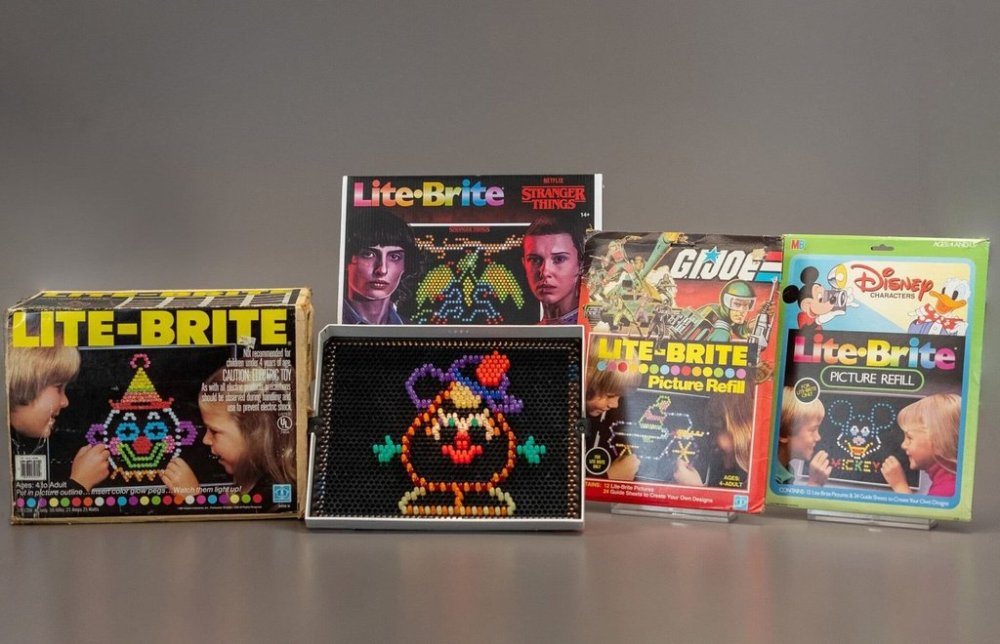
This photo provided by The Strong National Museum of Play shows Lite-Brite toys created by Burt Meyers part of the museum's collection sitting in an arrangement at The Strong National Museum of Play in Rochester, N.Y. (The Strong National Museum of Play via AP)

Meyer succeeded by straddling two often conflicting worlds, carrying a boundless childlike imagination alongside a pragmatic understanding of machines.

The idea for Lite-Brite came in 1966 when Meyer was walking in Manhattan with Marvin Glass, who owned one of the largest toy design companies at the time, and the two men passed a window display featuring hundreds of colored lights. Engineers at the company doubted that electic lights could be safely adapted for children, according to Tim Walsh, who interviewed Meyer for his 2005 book “Timeless Toys.”

Meyer, an employee at Marvin Glass & Associates, insisted it could.

“There’s billions of ideas out there,” Walsh wrote, “but executing them into a final creative solution is often the hard part.”

Meyer came up with a small backlit box and black paper sheets that allowed kids to create illuminated patterns. Lite-Brite was a hit, earning spots on Time Magazine’s list of 100 greatest toys and in the Strong National Museum of Play’s hall of fame. New versions are still being sold.

Meyer had a similar role with a design team that reimagined a bulky boxing arcade game for home use. The original concept stalled in development after a featherweight boxer died from a brain injury, making any toy that invoked the tragedy unmarketable, company leaders thought.

Meyer revisited the idea with a simple shift. “This is too good to pass up,” he recalled saying in a 2010 interview. “Let’s take it away from humanity, let’s make it robots. And we won’t have them fall over, we’ll have something funny happen.”

The result was Rock ’Em Sock ’Em Robots, a small game where players control the fighters’ fists by pressing buttons on joysticks. A player wins by hitting the jaw of the opposing robot, theatrically popping up the spring-loaded head.

The toy remained recognizable to later generations, appearing in the film “Toy Story 2,” and the toy company Mattel announced plans in 2021 for a live action movie adaptation.

Meyer launched his own firm, Meyer/Glass Design, in the mid-1980s. The company developed numerous best-sellers including Gooey Louie, where children picked boogers our of Louie’s nose, and the Pretty Pretty Princess board game. His son, Steve Meyer, ran the business until 2006, according to The New York Times.

Born in 1926 as Burton Carpenter Meyer, he enlisted in the Navy and served for two years as an aircraft mechanic. After retiring from toy making, he moved to Downers Grove, a suburb of Chicago, where he built small planes and could be seen deftly steering them aloft from a nearby private airfield well into his 80s.

In interviews, Meyer often drew parallels between aerospace engineering and toy design, saying both required ingenutity and teamwork.

“When you’re flying the airplane, use every resource that you have in there. That’s why we were able to turn out so many successful products,” Meyer said, crediting his success to the highly collaborative environment at Marvin Glass & Associates.

Meyer’s car had a vanity plate that said TOYKING, and by most accounts, he was. In a 2010 interview, he said he was still delighted by telling people what he did for a living, and having them respond: “Oh, I played with that!”
Report Error Submit a Tip

More Stories

Manitoba PCs choose Narth as interim leader; ‘deeply hurt’ Khan blasts former caucus colleagues

Carol Sanders 7 minute read Preview

Manitoba PCs choose Narth as interim leader; ‘deeply hurt’ Khan blasts former caucus colleagues

Carol Sanders 7 minute read Updated: Yesterday at 9:46 PM CDT

Manitoba’s Progressive Conservative caucus chose MLA Konrad Narth as interim party leader Tuesday to replace Obby Khan, who quit a day earlier after he said he was stabbed in the back by a small group of caucus members plotting in secret to oust him.

Read
Updated: Yesterday at 9:46 PM CDT

Hydro reports $446-M loss in 2025-26, points to fourth drought year in past five

Scott Billeck 3 minute read Preview

Hydro reports $446-M loss in 2025-26, points to fourth drought year in past five

Scott Billeck 3 minute read Yesterday at 6:38 PM CDT

Manitoba Hydro posted a $446-million loss in 2025-26, as drought conditions slashed hydroelectric generation, forcing the Crown corporation to buy more power while leaving it with less electricity to sell outside the province.

The loss was $666 million worse than the $220-million profit Hydro had budgeted. The utility posted a $63-million loss the previous year, according to the utility’s annual report released Tuesday.

Hydro said the 2025-26 fiscal year, which ended on March 31, marked its fourth low-water year in the past five years, among the worst stretches of water-flow conditions in its recorded history.

Hydroelectric generation fell 23 per cent to 24 billion kilowatt-hours from 31 billion the previous year, leaving Hydro a net importer of electricity.

Read
Yesterday at 6:38 PM CDT

What does the PC stand for in party’s name? Seems to be Pretty Confused

Tom Brodbeck 5 minute read Preview

What does the PC stand for in party’s name? Seems to be Pretty Confused

Tom Brodbeck 5 minute read Yesterday at 1:11 PM CDT

It should have been obvious from the beginning that the Manitoba Progressive Conservative party was going to have trouble holding itself together under Obby Khan.

Read
Yesterday at 1:11 PM CDT

Woman took ‘meaningful’ responsibility after disposing of body: lawyer

Dean Pritchard 5 minute read Preview

Woman took ‘meaningful’ responsibility after disposing of body: lawyer

Dean Pritchard 5 minute read 6:00 AM CDT

A woman who was threatened with death if she didn’t help dispose the body of a Mexican man murdered in the basement of a North End home should serve no more jail time, a judge has been told.

Devlin Langlois, 25, has pleaded guilty to accessory after the fact to murder in the March 2025 killing of 28-year-old Diego Moscoza.

“By pleading guilty, Ms. Langlois has already taken meaningful accountability for her actions,” defence lawyer Joshua Rogala told King’s Bench Justice Candace Grammond at a sentencing hearing Monday.

He urged the judge to sentence Langlois to the equivalent of 14 months already served, plus two years supervised probation.

Read
6:00 AM CDT

Billions of dollars spent on health, but scattershot financial reporting leaves decision-makers, Manitobans in the dark, auditor general says

Nicole Buffie 3 minute read Preview

Billions of dollars spent on health, but scattershot financial reporting leaves decision-makers, Manitobans in the dark, auditor general says

Nicole Buffie 3 minute read Yesterday at 5:20 PM CDT

Manitoba’s auditor general says significant gaps in health-sector financial reporting make it difficult to understand how billions of dollars in public funds are spent.

Auditor General Tyson Shtykalo is calling for clearer, more transparent reporting in his latest report, titled Observations on Health Sector Financial Reporting and Accountability in Manitoba.

“Manitoba spends nearly $10 billion annually on health care, but current financial reporting does not provide a clear picture of how that money is spent, what services cost, or the financial pressures facing the system,” Shtykalo said in a news release.

While some financial information is available, the reports do not provide a “complete, consistent, or easily understood” picture of how health-care funds are spent, the report said.

Read
Yesterday at 5:20 PM CDT

Obsessed stalker who shot, killed young woman at bus stop in 1993 dies behind bars at age 74

Erik Pindera 3 minute read Preview

Obsessed stalker who shot, killed young woman at bus stop in 1993 dies behind bars at age 74

Erik Pindera 3 minute read Yesterday at 5:53 PM CDT

A Winnipeg man who stalked a woman for several years before shooting her dead in the street in 1993 has died in Stony Mountain prison.

On Monday, 74-year-old Ronald Edd Bell died of apparent natural causes at the federal prison just north of Winnipeg, the Correctional Service of Canada said.

Bell had been in prison since May 30, 1994, when he was given a life sentence with no chance of parole for 18 years for killing Terry-Lyn Babb, 25, on Jan. 21, 1993.

Bell walked up behind an unsuspecting Babb, who was waiting at a bus stop at Sherbrook Street and Wolseley Avenue, and shot her in the head with a pistol in front of horrified witnesses, says the Free Press report of his sentencing hearing.

Read
Yesterday at 5:53 PM CDT