This underappreciated holiday flower has upside-down blooms
Advertisement
Read this article for free:
or
Already have an account? Log in here »
To continue reading, please subscribe:

Digital Subscription
One year of digital access for only $205*
- Enjoy unlimited reading on winnipegfreepress.com
- Read the E-Edition, our digital replica newspaper
- Access News Break, our award-winning app
- Play interactive puzzles
*First annual payment billed as $205.00 + GST for one year. This annual subscription will automatically renew at $233.00 + GST every 52 weeks (10% off the regular annual price of $259.35). Offer available to new and qualified returning subscribers only. Cancel any time.
To continue reading, please subscribe:
Add Free Press access to your Brandon Sun subscription for only an additional
$1 for the first 4 weeks*
- Enjoy unlimited reading on winnipegfreepress.com
- Read the E-Edition, our digital replica newspaper
- Access News Break, our award-winning app
- Play interactive puzzles
*Your next Brandon Sun subscription payment will increase by $1.00 and you will be charged $17.95 plus GST for four weeks. After four weeks, your payment will increase to $24.95 plus GST every four weeks.
Read unlimited articles for free today:
or
Already have an account? Log in here »
Hey there, time traveller!
This article was published 02/12/2025 (273 days ago), so information in it may no longer be current.
If I asked you to name a holiday flower, my guess is poinsettia, amaryllis or paperwhite would be the first to come to mind. But there’s another, underused seasonal plant that deserves attention.
Allow me to introduce you to cyclamen.
There are roughly two dozen species of the perennial plants, some with rounded leaves and others with heart-, kidney- or ivy-shaped foliage. Some boast white or silver marbling or speckles on their leaves.
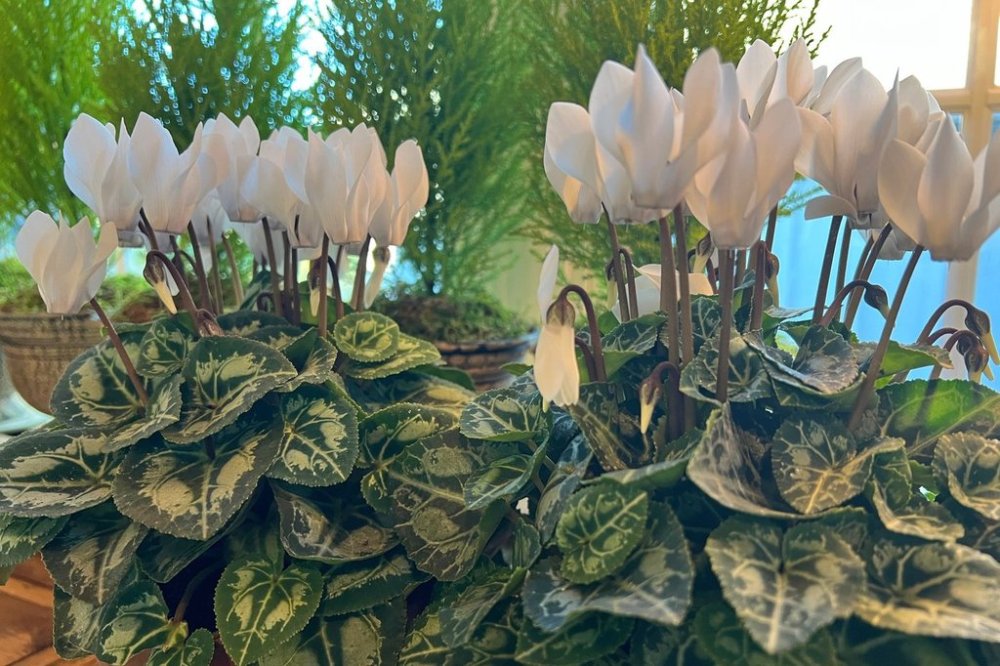
But their flowers are the main attraction. Available in white and shades of pink, red and purple, the houseplants boast unusual, upside-down flowers with delicate, backward-curved petals –- and they bloom only in winter.
Place cyclamen plants in a spot that provides soft or indirect light, such as in front of an east- or north-facing window, or to the side of a brighter one. These plants do not like the heat; they thrive best at temperatures that hover around 60 degrees.
Cyclamens also like humidity, so consider growing them in a bathroom or placing pots on a rimmed pebble tray to which you’ve added water, but not so much that the pebbles float. As the water evaporates, it will create a humid microclimate around the plant.
Watering is a balancing act. Too much, and the plant’s roots will rot. Too little, and they’ll droop. Your best bet is to water cyclamen through the drainage hole at the bottom of its pot, placing it in a shallow bowl of water until the soil is lightly saturated, then removing the pot from the bowl and allowing it to drain before returning it to its home perch.
Take care not to splash the plant’s crown — the juncture between the bottom of the main stem and the roots — with water. It is highly susceptible to rot.
Provide a monthly dose of a balanced houseplant fertilizer diluted to half-strength when the plant is in its growing phase.
Stop watering and fertilizing as soon as the plant’s leaves turn yellow, which signals that it’s preparing for dormancy. Moving it to a cool, dark room will help the plant during this phase. Most, if not all, of the leaves will die and drop; you can trim off any that remain.
Brush off a bit of soil from the top of the plant’s tuberous root to expose it to air while it’s dormant. This will help prevent rotting.
Your cyclamen will look dead during summer, but will show signs of new life in the fall. When you spot new growth, cover up the top of the tuber with potting mix. Then move the plant back into bright, indirect light, and resume watering and fertilizing for another round of cheerful holiday blooms.
___
Jessica Damiano writes weekly gardening columns for the AP and publishes the award-winning Weekly Dirt Newsletter. You can sign up here for weekly gardening tips and advice.
___
For more AP gardening stories, go to https://apnews.com/hub/gardening.