Nova Scotia premier defends widely-criticized cannabis crackdown order
Advertisement
Read this article for free:
or
Already have an account? Log in here »
To continue reading, please subscribe:

Digital Subscription
One year of digital access for only $205*
- Enjoy unlimited reading on winnipegfreepress.com
- Read the E-Edition, our digital replica newspaper
- Access News Break, our award-winning app
- Play interactive puzzles
*First annual payment billed as $205.00 + GST for one year. This annual subscription will automatically renew at $233.00 + GST every 52 weeks (10% off the regular annual price of $259.35). Offer available to new and qualified returning subscribers only. Cancel any time.
To continue reading, please subscribe:
Add Free Press access to your Brandon Sun subscription for only an additional
$1 for the first 4 weeks*
- Enjoy unlimited reading on winnipegfreepress.com
- Read the E-Edition, our digital replica newspaper
- Access News Break, our award-winning app
- Play interactive puzzles
*Your next Brandon Sun subscription payment will increase by $1.00 and you will be charged $17.95 plus GST for four weeks. After four weeks, your payment will increase to $24.95 plus GST every four weeks.
Read unlimited articles for free today:
or
Already have an account? Log in here »
Hey there, time traveller!
This article was published 11/12/2025 (277 days ago), so information in it may no longer be current.
HALIFAX – Premier Tim Houston is defending his government’s crackdown on cannabis dispensaries, despite widespread and escalating criticism, saying he is concerned about the illegal market.
The premier says illegal cannabis is a public health risk and may be tied to organized crime and human trafficking.
“We have massive concerns, as do many, many community members across this province… about the organized crime element. Where does everybody think the money’s going?” Houston said to reporters after a cabinet meeting Thursday.
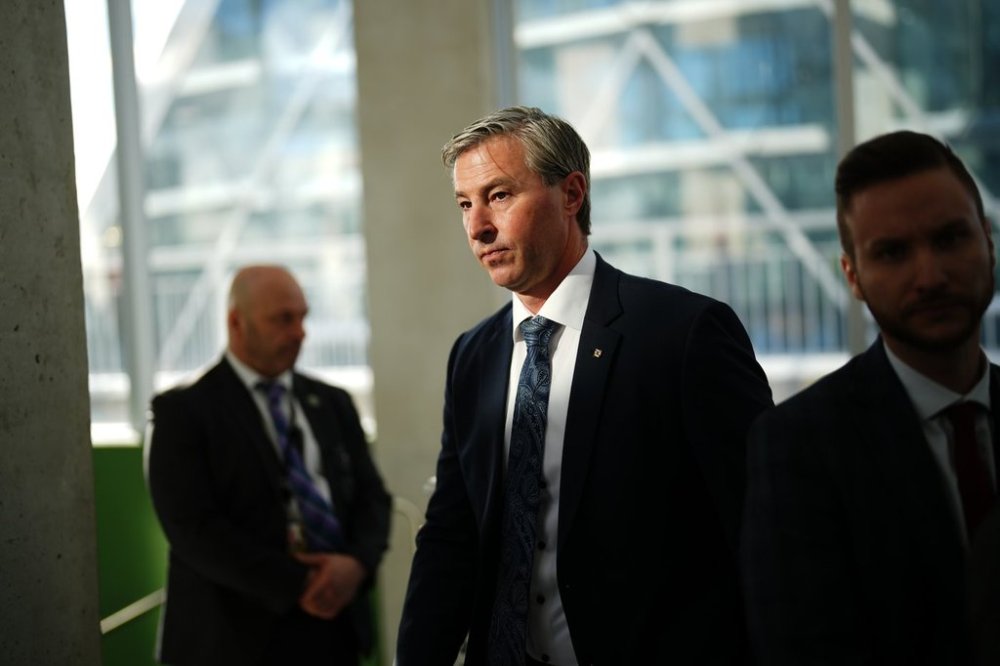
“Nova Scotians are tired of it, and they want somebody to stand up against this (illegal cannabis), and we are the voice for those people who are afraid to stand up.”
Houston did not provide details of how illegal cannabis might be tied to organized crime and human trafficking.
Last week’s government order to ramp up cannabis enforcement and a letter from the justice minister to Mi’kmaq chiefs requesting co-operation on the issue has prompted criticism that his government may be interfering with law enforcement to target First Nations communities.
Sipekne’katik First Nation Chief Michelle Glasgow has called the province’s directive appalling, and says the premier, justice minister and minister of L’nu affairs are banned from band lands.
On Tuesday Glasgow issued a statement saying that Houston has “not once” come to her community during his term as premier and “he has continued to radicalize colonial practices to suppress our community and fellow Mi’kmaw by forming laws that direct harm against us.”
A number of critics have raised concerns about the directive including the Assembly of Nova Scotia Mi’kmaw Chiefs, the former minister of justice and attorney general, several First Nations members, two legal experts and opposition leaders.
Houston said Mi’kmaq cannabis operations are not being targeted, and that all unlicensed cannabis is illegal.
“We have people making millions and millions of dollars selling illegal cannabis, and they’re upset to hear that there might be a crackdown on it. We also have people who are customers and some of them think this is some elaborate scheme by the government to get more money from them. It’s not,” he said, adding that public safety is the driving force behind the directive.
Justice Minister Scott Armstrong unveiled the directive last week, calling on all Nova Scotia police agencies to prioritize cannabis enforcement by identifying and disrupting illegal operations and distribution networks.
That same day, he wrote to 13 Mi’kmaq chiefs requesting their co-operation as they tackle illegal cannabis sales, and rejected the requests of some chiefs to work with the province to set up their own cannabis retail systems.
“Rather than respond to each of these requests individually, I felt it important to share our government’s clear and unequivocal position with all of you today: Given the implication to public health and public safety, all cannabis retail activity, including on-reserve activity, must operate under the existing provincial framework as detailed in the Cannabis Control Act, 2021,” the letter says.
Armstrong’s letter also says that there is no way to monitor who finances or profits from illegal businesses. Based on experiences in other jurisdictions, Armstrong said that this “raises serious questions about the potential involvement of organized crime.”
Provincial law strictly controls the sale of cannabis, which is done through Nova Scotia Liquor Corp. outlets. There are 51 legal cannabis outlets across the province; one is located on a First Nations reserve.
This means that the Nova Scotia Liquor Corp. must remain the exclusive cannabis retailer, his letter added. “I am not aware of an even remotely credible basis for suggesting that use of or trade in cannabis is a Mi’kmaq Aboriginal or treaty right.”

Thomas Durfee, a First Nations cannabis advocate, has said the government’s crackdown is “blatantly racist” and an attack on Mi’kmaq sovereignty.
Durfee said in an interview last week he has a legal right to sell cannabis at treaty truckhouses — the term used for trading posts in treaties signed by the Mi’kmaq and British Crown in the 1700s. He is currently involved in a legal case moving through the provincial court system following a raid on one of his cannabis outlets.
He said he has repeatedly asked to meet with provincial officials to discuss plans for selling cannabis that meets legal health and safety standards.
“As a First Nations entrepreneur I would never risk people’s health and safety. We are not here to harm anyone,” Durfee said.
This report by The Canadian Press was first published Dec. 11, 2025.