Some flu measures decline, but it’s not clear this severe season has peaked

Advertisement

Advertise with us

NEW YORK (AP) — U.S. flu infections showed signs of a slight decline last week, but health officials say it is not clear that this severe flu season has peaked.

Read this article for free:


or

Already have an account? Log in here »

To continue reading, please subscribe:

Subscribe and receive a limited-edition Free Press branded hat or tote.

Digital Subscription

One year of digital access for only $205*

  • Enjoy unlimited reading on winnipegfreepress.com
  • Read the E-Edition, our digital replica newspaper
  • Access News Break, our award-winning app
  • Play interactive puzzles

*First annual payment billed as $205.00 + GST for one year. This annual subscription will automatically renew at $233.00 + GST every 52 weeks (10% off the regular annual price of $259.35). Offer available to new and qualified returning subscribers only. Cancel any time.

To continue reading, please subscribe:

Add Free Press access to your Brandon Sun subscription for only an additional

$1 for the first 4 weeks*

  • Enjoy unlimited reading on winnipegfreepress.com
  • Read the E-Edition, our digital replica newspaper
  • Access News Break, our award-winning app
  • Play interactive puzzles
Start now

*Your next Brandon Sun subscription payment will increase by $1.00 and you will be charged $17.95 plus GST for four weeks. After four weeks, your payment will increase to $24.95 plus GST every four weeks.

Hey there, time traveller!
This article was published 09/01/2026 (247 days ago), so information in it may no longer be current.

NEW YORK (AP) — U.S. flu infections showed signs of a slight decline last week, but health officials say it is not clear that this severe flu season has peaked.

New government data posted Friday — for flu activity through last week — showed declines in medical office visits due to flu-like illness and in the number of states reporting high flu activity.

However, some measures show this season is already surpassing the flu epidemic of last winter, one of the harshest in recent history. And experts believe there is more suffering ahead.
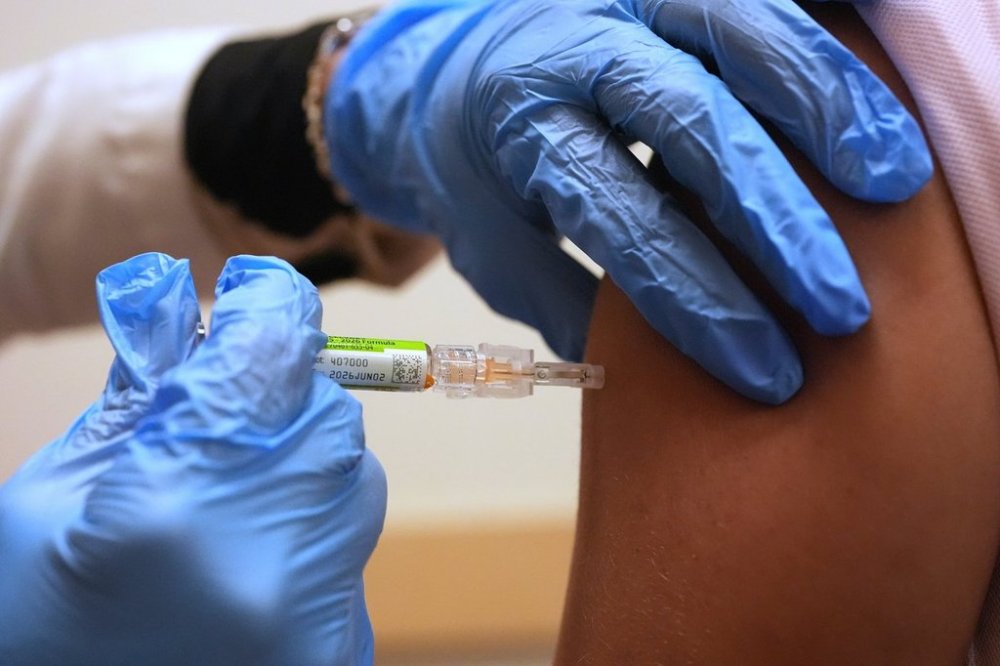
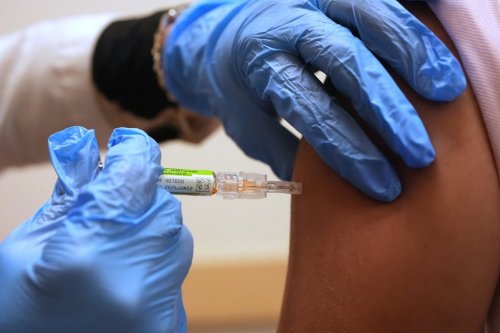
FILE - Pharmacy manager Aylen Amestoy administers a patient with a seasonal flu vaccine at a CVS Pharmacy in Miami, Tuesday, Sept. 9, 2025. (AP Photo/Rebecca Blackwell, File)

“This is going to be a long, hard flu season,” New York State Health Commissioner Dr. James McDonald said, in a statement Friday.

One type of flu virus, called A H3N2, historically has caused the most hospitalizations and deaths in older people. So far this season, that is the type most frequently reported. Even more concerning, more than 91% of the H3N2 infections analyzed were a new version — known as the subclade K variant — that differs from the strain in this year’s flu shots.

The last flu season saw the highest overall flu hospitalization rate since the H1N1 flu pandemic 15 years ago. And child flu deaths reached 289, the worst recorded for any U.S. flu season this century — including that H1N1 “swine flu” pandemic of 2009-2010.

So far this season, there have been at least 15 million flu illnesses and 180,000 hospitalizations, the U.S. Centers for Disease Control and Prevention estimates. It also estimates there have been 7,400 deaths, including the deaths of at least 17 children.

Last week, 44 states reported high flu activity, down slightly from the week before. However, flu deaths and hospitalizations rose.

Determining exactly how flu season is going can be particularly tricky around the holidays. Schools are closed, and many people are traveling. Some people may be less likely to see a doctor, deciding to just suffer at home. Others may be more likely to go.

Also, some seasons see a surge in cases, then a decline, and then a second surge.

For years, federal health officials joined doctors’ groups in recommending that everyone 6 months and older get an annual influenza vaccine. The shots may not prevent all symptoms but can prevent many infections from becoming severe, experts say.

But federal health officials on Monday announced they will no longer recommend flu vaccinations for U.S. children, saying it is a decision parents and patients should make in consultation with their doctors.

“I can’t begin to express how concerned we are about the future health of the children in this country, who already have been unnecessarily dying from the flu — a vaccine preventable disease,” said Michele Slafkosky, executive director of an advocacy organization called Families Fighting Flu.

“Now, with added confusion for parents and health care providers about childhood vaccines, I fear that flu seasons to come could be even more deadly for our youngest and most vulnerable,” she said in a statement.

Flu is just one of a group of viruses that tend to strike more often in the winter. Hospitalizations from COVID-19 and RSV, or respiratory syncytial virus, also have been rising in recent weeks — though were not diagnosed nearly as often as flu infections, according to other federal data.

___

The Associated Press Health and Science Department receives support from the Howard Hughes Medical Institute’s Department of Science Education and the Robert Wood Johnson Foundation. The AP is solely responsible for all content.

Report Error Submit a Tip

More Stories

Citizen reports help highlight connectivity issues across southwest Manitoba

Nicole Buffie 5 minute read Preview

Citizen reports help highlight connectivity issues across southwest Manitoba

Nicole Buffie 5 minute read Updated: Yesterday at 10:43 AM CDT

A southwestern Manitoba man has created a map to document cell service blackout spots in an effort to push for better access in rural areas.

Mark Custance compiled more than 300 citizen reports over the last few months to document where service in southwest Manitoba is strong, spotty or doesn’t exist at all.

“I’ve heard people complain and say, ‘cell service sucks’ or ‘this is not working.’ But what does the data actually say?” Custance said from his office in Melita, where he has installed a cell-service booster to maintain connectivity with the rest of the world.

Analyzing where service is good and poor, he cross-references it with the location of cellphone towers across the region.

Read
Updated: Yesterday at 10:43 AM CDT

Downtown no place to be after dark, huge majority of Winnipeggers say in survey

Joyanne Pursaga 8 minute read Preview

Downtown no place to be after dark, huge majority of Winnipeggers say in survey

Joyanne Pursaga 8 minute read Friday, Sep. 11, 2026

Most Winnipeggers are afraid to walk alone downtown and believe the city needs more police officers, a new survey finds.

Winnipeg Police Service released its 2026 citizen survey Friday.

Downtown safety appears to remain a major concern, with just 44 per cent saying they feel very or reasonably safe walking alone in the area during the day. The number plummets to eight per cent overall at night, down from nine per cent in 2024, the last time the survey was conducted.

This year, 14 per cent of men felt very or reasonably safe walking alone downtown at night, compared to just three per cent of women.

Read
Friday, Sep. 11, 2026

Fallis’s comic thriller infiltrates book club

Ben Sigurdson 3 minute read Preview

Fallis’s comic thriller infiltrates book club

Ben Sigurdson 3 minute read Yesterday at 6:00 AM CDT

The Free Press Book Club and McNally Robinson Booksellers are pleased to welcome Toronto author Terry Fallis to the next virtual meeting on Tuesday, September 29 at 7 p.m. to read from and discuss his novel The Marionette.

Fallis, a former lawyer, bureaucrat and political consultant, is the author of 10 bestselling novels and the two-time winner of the Stephen Leacock Medal for Humour (in 2015 for No Relation and in 2008 for The Best Laid Plans, which also won CBC’s Canada Reads in 2011).

His 11th novel, An End In Itself, will be published in November by McClelland & Stewart, who also published The Marionette in October 2025 (and which was also longlisted for the Leacock medal).

The Marionette follows James Norval, bestselling author of a series of thrillers featuring fictional CIA agent Hunter Chase. While in Tajikistan researching his next Hunter Chase novel, Norval is detained by local officials and subsequently freed and ferried away by the Canadian Security Intelligence Service (CSIS).

Read
Yesterday at 6:00 AM CDT

Port of Churchill expansion could chase belugas away, U of M researcher says

Nicole Buffie 4 minute read Preview

Port of Churchill expansion could chase belugas away, U of M researcher says

Nicole Buffie 4 minute read 9:07 AM CDT

As plans to expand the Port of Churchill into a four-season trade corridor gathers momentum, a University of Manitoba researcher has published a report on what ship traffic could mean for the beluga whales that gather in the Churchill River estuary each summer.

Veronica Coppolaro said more vessels in the waterways bring a risk that belugas will stop using the estuary for migration, which would impact the ecological landscape, tourism and communities that rely on the animals for food and cultural purposes.

“There are studies showing that (noises) change the way they swim, they change the way (the whales) are vocalizing, they change their main activity, and so this (expansion) can have consequences at different levels,” she said.

The Churchill river estuary is a marine habitat where the Churchill River empties into Hudson Bay. During the summer months belugas gather in the area to feed and give birth.

Read
9:07 AM CDT

Puzzles Palace

1 minute read Monday, Jul. 27, 2026

To solve our puzzles, please subscribe with this special offer: |

Canadians loving Carney’s decision to stand tall against floundering U.S. bully

Tom Brodbeck 5 minute read Preview

Canadians loving Carney’s decision to stand tall against floundering U.S. bully

Tom Brodbeck 5 minute read Friday, Sep. 11, 2026

It’s hard to imagine a more dramatic political contrast than the one unfolding on opposite sides of the Canada-U.S. border.

Mark Carney is fighting a trade war with Donald Trump, taking the occasional verbal punch from the American president and imposing retaliatory tariffs on U.S. products.

And the prime minister is being rewarded for it politically.

Trump, meanwhile, is fighting pretty much everyone he can find — including some of America’s closest allies — and his own voters are increasingly giving him the political equivalent of a raised middle finger. That’s quite a tale of two leaders.

Read
Friday, Sep. 11, 2026