Somali businesses struggle during the Minneapolis ICE crackdown
Advertisement
Read this article for free:
or
Already have an account? Log in here »
To continue reading, please subscribe:

Digital Subscription
One year of digital access for only $205*
- Enjoy unlimited reading on winnipegfreepress.com
- Read the E-Edition, our digital replica newspaper
- Access News Break, our award-winning app
- Play interactive puzzles
*First annual payment billed as $205.00 + GST for one year. This annual subscription will automatically renew at $233.00 + GST every 52 weeks (10% off the regular annual price of $259.35). Offer available to new and qualified returning subscribers only. Cancel any time.
To continue reading, please subscribe:
Add Free Press access to your Brandon Sun subscription for only an additional
$1 for the first 4 weeks*
- Enjoy unlimited reading on winnipegfreepress.com
- Read the E-Edition, our digital replica newspaper
- Access News Break, our award-winning app
- Play interactive puzzles
*Your next Brandon Sun subscription payment will increase by $1.00 and you will be charged $17.95 plus GST for four weeks. After four weeks, your payment will increase to $24.95 plus GST every four weeks.
Read unlimited articles for free today:
or
Already have an account? Log in here »
Hey there, time traveller!
This article was published 17/01/2026 (248 days ago), so information in it may no longer be current.
MINNEAPOLIS (AP) — Rows of businesses stood shuttered inside a sprawling complex of Somali businesses on a recent afternoon.
Karmel Mall in south Minneapolis contains more than a hundred small businesses in suites offering everything from clothing and food to insurance and accounting services. On Thursday, the noisy hallways inside lay quiet, save for occasional chatter between neighboring vendors. The smell of fried food still wafted from the bakeries, the central heating hummed and the sound of Quran recitation flowed quietly from some shops.
But many sellers sat alone in their clothing stores, waiting for the occasional customer to walk by. Everyone is afraid of federal immigration agents, business owners said. Sellers and customers, citizens and noncitizens. Some don’t bother opening shop because they aren’t expecting any customers.
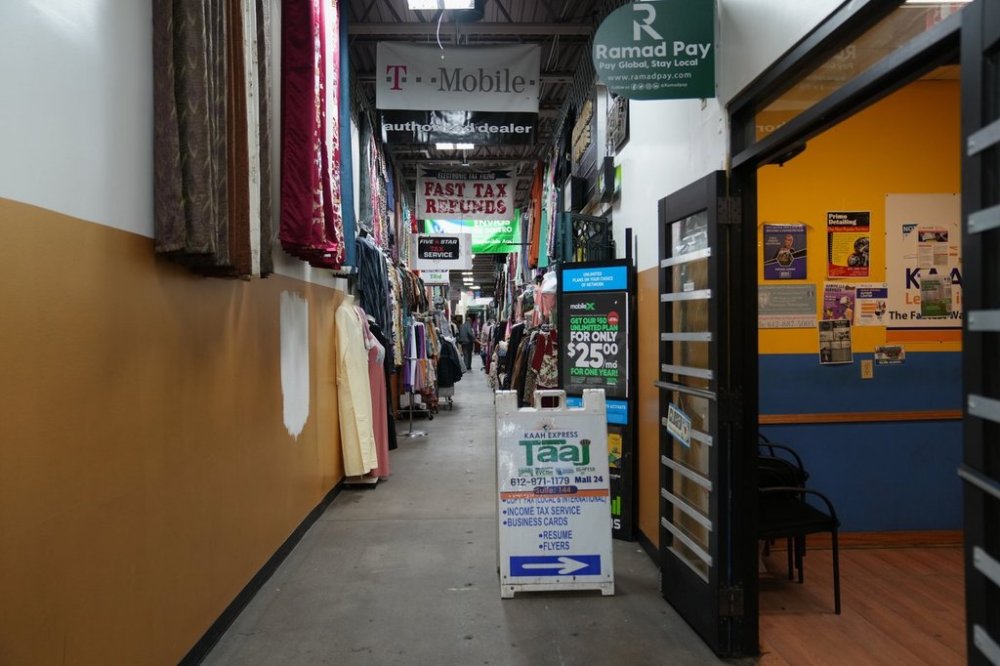
“It’s been like this for three weeks now,” said Abdi Wahid, who works at his mom’s convenience store in the mall. “Everywhere it’s all been closed up, all the stores.”
Karmel Mall is an economic hub for the area’s Somali population, which is the largest in the U.S. But it also features housing, a mosque and Quran classes, serving as a robust community center for the area.
The economic impact of the Trump administration’s “Operation Metro Surge” stretches beyond the Somali community: many immigrants are on edge, afraid to go to work or leave their homes amid the immigration crackdown.
But President Donald Trump has made the Somali community a special target of his deportation rhetoric after recent government fraud cases in Minnesota in which a majority of defendants had Somali roots. Since December, Trump has made numerous jabs at the community, calling them “garbage” and saying “they contribute nothing.”
Wahid said early afternoons at the family business once meant 15 to 20 customers. These days, it’s tough to get one.
Wahid is a citizen, but he said the fear extends beyond just immigrants. Citizens are also scared of coming in, especially following the killing of Renee Good and the ICE raid at Roosevelt High School in south Minneapolis.
“I think that caused a lot of people to not even want to come,” he said, because they could be targeted “just because of their race.”
Homeland Security assistant secretary Tricia McLaughlin said in a statement that law enforcement uses “reasonable suspicion” to make arrests under the fourth amendment.
“A person’s immigration status makes them a target for enforcement, not their skin color, race or ethnicity,” she said.
Upstairs, Bashir Garad runs Safari Travel & Accounting Services. Not only has the crackdown in Minneapolis meant he’s lost almost all his customers, but his existing clients are canceling upcoming trips because they’re worried they won’t be let back into the country.
“They see a lot of unlawful things going on in the city,” he said. “They look at something bad, and then they think some bad things may happen to them.” The majority of his clients are East African, and nearly all are U.S. citizens. They still hesitate to travel.

“The government is not doing the right thing,” he said. “If there’s a criminal, there’s a criminal. Regardless, there are ways to find the criminal, but to marginalize the community’s name, and a whole people, that is unlawful.”
Ibrahim Dahiye, who sells electronics, said winter always used to be slow, “but now it’s totally different. No one comes here. All the stores are closed, few are open.”
Since the crackdown began, Dahiye said his business is down $20,000 monthly, and he’s now pooling funds to make rent.
He said he’s lost most of his customers. His employees are too frightened to come to work. He tapped his jacket pocket, saying he keeps his passport on him at all times.
“I don’t know what we can do,” Dahiye said. “We believe in Allah, but we can’t do anything.”
The Free Press acknowledges the financial support it receives from members of the city’s faith community, which makes our coverage of religion possible.