A glossary to help cut through seed-packet jargon and confidently plant indoors
Advertisement
Read this article for free:
or
Already have an account? Log in here »
To continue reading, please subscribe:

Digital Subscription
One year of digital access for only $205*
- Enjoy unlimited reading on winnipegfreepress.com
- Read the E-Edition, our digital replica newspaper
- Access News Break, our award-winning app
- Play interactive puzzles
*First annual payment billed as $205.00 + GST for one year. This annual subscription will automatically renew at $233.00 + GST every 52 weeks (10% off the regular annual price of $259.35). Offer available to new and qualified returning subscribers only. Cancel any time.
To continue reading, please subscribe:
Add Free Press access to your Brandon Sun subscription for only an additional
$1 for the first 4 weeks*
- Enjoy unlimited reading on winnipegfreepress.com
- Read the E-Edition, our digital replica newspaper
- Access News Break, our award-winning app
- Play interactive puzzles
*Your next Brandon Sun subscription payment will increase by $1.00 and you will be charged $17.95 plus GST for four weeks. After four weeks, your payment will increase to $24.95 plus GST every four weeks.
Read unlimited articles for free today:
or
Already have an account? Log in here »
Hey there, time traveller!
This article was published 03/03/2026 (204 days ago), so information in it may no longer be current.
Planting seeds sounds straightforward and, frankly, it should be: Buy a seed, plant it, add water and watch it grow. But one look at the back of a jargon-filled seed packet can have you spewing expletive-filled rants to no one in particular.
Fear not. With this handy glossary at your side, you’ll not only understand exactly what you’re buying and what it will expect from you, but you’ll also avoid attracting sideways glances at the nursery.
Most packets advise starting seeds indoors a set number of weeks (“4-6,” “6-8,” etc.) before the average last frost date in your region. To find your date, enter your ZIP code into this tool from The Old Farmer’s Almanac.
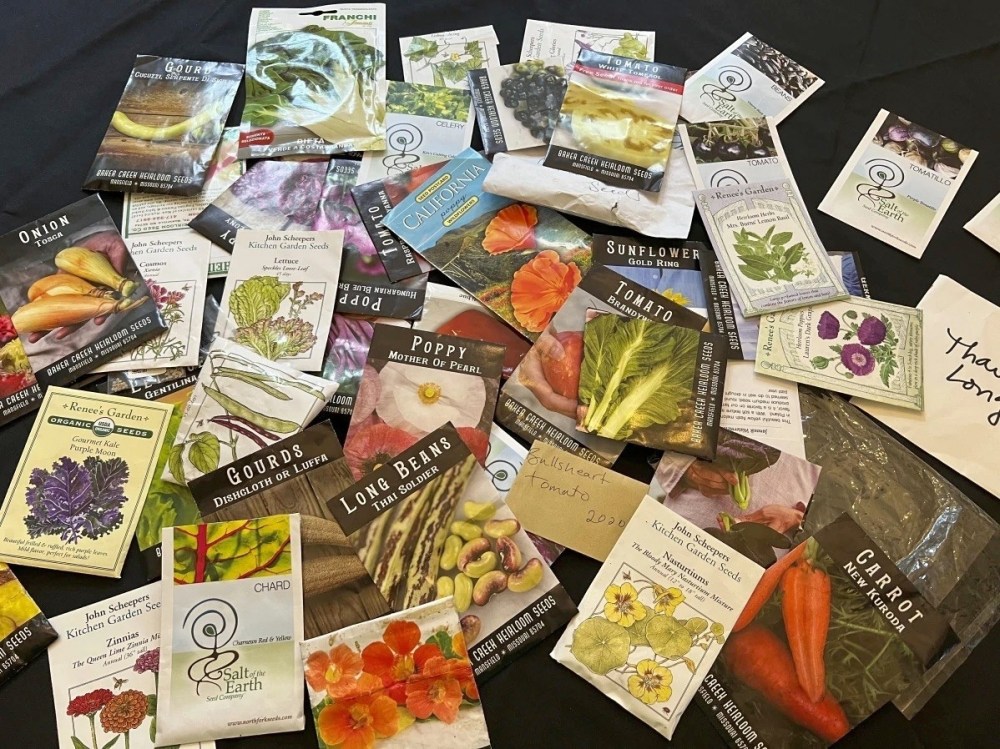
Find that date on your calendar and count back the number of weeks recommended on your seed packet. Starting seeds indoors at the right time ensures they are ready to transplant outdoors on the target date.
If, however, the instructions read, “When the danger of frost has passed,” that’s a different story. The “average last frost date” isn’t a guarantee — it’s an average. “When the danger has passed” can be about a month later, depending on your region.
Learning the lingo
Some other terms to understand before you go shopping:
Annual: A plant that completes its life cycle in one year.
Biennial: A plant that completes its life cycle in two years, typically producing seeds only in its second year.
Perennial: Plants with a life cycle longer than two years. Perennials may die back to the ground over winter and return year after year, or remain active throughout their life span, depending on where they’re growing. In warmer places, perennials continue to grow year-round.
Broadcast: Spreading seeds over a large area instead of planting in rows. Usually recommended for small seeds, which must later be “thinned” to create a recommended distance between seedlings.
Thinning: Removing extra or overcrowded seedlings to allow the strongest to access the nutrients, water, sunlight and air circulation they need. Thinning a group of seedlings to, say, 2 or 3 inches apart is usually required after broadcasting seeds.
Direct sowing: Planting seeds directly in the garden rather than starting them indoors in containers.
Germination rate: A number, usually expressed as a percentage, that correlates to the number of seeds that should be expected to sprout from the seed packet’s contents.
Days to maturity: How long it will take for a plant to produce a harvest. For seeds sown directly outdoors, days are counted from germination; for those started indoors, the clock starts when they are transplanted into the garden.
Sunlight requirements: ”Full sun” means the plant should be in a spot that receives a minimum of 6-8 hours of direct sunlight daily. “Part sun” indicates a sunlight requirement of 4-6 hours daily; “part shade,” 3-6 hours; “full shade,” less than 3 hours; and “deep shade” means sunlight seldom, if ever, gets through trees or past buildings to reach the site. Sunlight filtered through overhead tree branches, resulting in light, spotty shade, is referred to as “dappled.”
Resistance: The plant was bred to resist a specific disease or insect infestation, indicated by an abbreviation, such as A: Anthracnose; LB: Late blight; N: nematodes; PM: powdery mildew; VF: Verticillium and Fusarium wilts, etc.
Open-pollinated: A plant that has been naturally pollinated. Open-pollinated seeds can be saved from year to year and planted to produce offspring that “grow true,” or hold the same characteristics as the plants from which they were collected.
Heirloom: An open-pollinated plant that has been saved and passed down for at least 50 years, often holding historical, cultural or sentimental value.
Hybrid: A plant variety that has been cultivated in a controlled setting, usually by cross-pollinating with at least one other variety, to acquire new characteristics such as bloom color, disease resistance, fragrance, size, hardiness, taste or shelf life. Planting its seeds will not produce plants identical to the parent.
F1: Short for “first filial,” which means “first child,” an F1 seed is the first generation that results from the cross of two parents. In other words, it’s a hybrid.
Non-GMO: Short for “nongenetically modified,” this designation indicates that the seeds’ DNA has not been altered in a laboratory, with or without DNA from another species.
Scarify: Scratching, soaking, nicking or otherwise compromising the hard surface of a tough seed to facilitate germination.
Stratify: Exposing seeds or bulbs to cold temperatures, typically in a refrigerator or freezer, for an extended period of time to mimic outdoor winter conditions necessary for spring germination.
___
Jessica Damiano writes weekly gardening columns for the AP and publishes the award-winning Weekly Dirt Newsletter. You can sign up here for weekly gardening tips and advice.
___
For more AP gardening stories, go to https://apnews.com/hub/gardening.