Simple ways to make meetings work better for employees on the autism spectrum
Advertisement
Read this article for free:
or
Already have an account? Log in here »
To continue reading, please subscribe:

Digital Subscription
One year of digital access for only $205*
- Enjoy unlimited reading on winnipegfreepress.com
- Read the E-Edition, our digital replica newspaper
- Access News Break, our award-winning app
- Play interactive puzzles
*First annual payment billed as $205.00 + GST for one year. This annual subscription will automatically renew at $233.00 + GST every 52 weeks (10% off the regular annual price of $259.35). Offer available to new and qualified returning subscribers only. Cancel any time.
To continue reading, please subscribe:
Add Free Press access to your Brandon Sun subscription for only an additional
$1 for the first 4 weeks*
- Enjoy unlimited reading on winnipegfreepress.com
- Read the E-Edition, our digital replica newspaper
- Access News Break, our award-winning app
- Play interactive puzzles
*Your next Brandon Sun subscription payment will increase by $1.00 and you will be charged $17.95 plus GST for four weeks. After four weeks, your payment will increase to $24.95 plus GST every four weeks.
Read unlimited articles for free today:
or
Already have an account? Log in here »
NEW YORK (AP) — Before Megan Pilatzke was diagnosed with autism, she wondered why she always felt drained when she got home from work.
All day long, she’d labored to understand when to speak up or stay silent in meetings. She replayed conversations in her head, worrying she’d misunderstood or said the wrong thing. Noisy environments distressed her. She watched her peers receive promotions when she didn’t.
“I would come home burnt-out, anxious,” Pilatzke said of her days working as an insurance claim specialist. “That just kept going, week after week, day after day.”
Her communication difficulties, sensitivity to noise and other problems at work began to make sense following her diagnosis, she said.
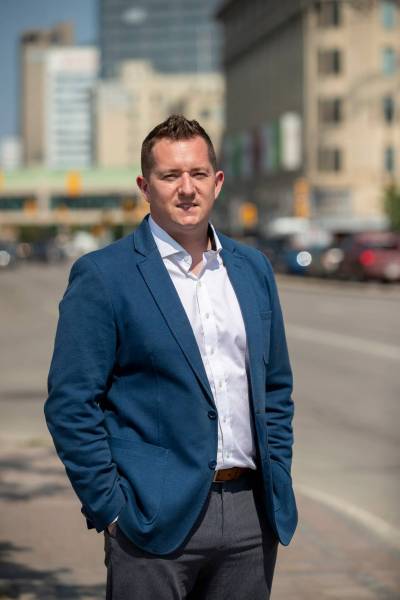
Pilatzke, 36, now spends her days teaching employers how to make workplaces more accommodating for people on the autism spectrum. She works as an inclusion specialist at Specialisterne Canada, a nonprofit that helps organizations to better support employee neurodiversity.
She also reframed the way she thinks about traits often associated with autism, viewing her ability to focus intensely and provide honest, direct feedback as strengths.
Below are some ways to make meetings and other work rituals more accessible for autistic people, according to several adults with autism and neurodiversity experts.
It begins with understanding
Autism spectrum disorder is a developmental disorder that affects about 1 in 45 adults in the U.S., according to Autism Speaks, a nonprofit organization that supports autistic people and their families by funding research, providing resources and doing advocacy work.
It presents in a variety of ways but can create challenges with social skills, speech and nonverbal communication. Some common characteristics include repetitive behaviors and sensitivity to noise.
“Start by learning about different communication styles and being open-minded,” Subodh Garg, who appeared in the first season of the Netflix reality TV show “Love on the Spectrum,” said. “Inclusion begins with giving people a chance and making space for diverse ways of thinking and working. Employers can start with small intentional steps.”
Garg works part-time at a Southern California deli, where he handles invoices and restocks pastries. He also is studying to earn a bachelors degree and is a “champion of change” advocate at Autism Speaks.
Employers may have preconceived ideas about what autism means, when “the reality is, it is a massive spectrum,” said Rita Ramakrishnan, who is autistic and founded a consulting company that provides leadership coaching for neurodivergent executives. “There’s a community of people with much higher support needs, and then there are folks who are twice exceptional or otherwise extraordinarily high functioning. Their support needs are not as high, and their production capabilities are different. But they’re all valid autistic experiences.”
Organizations should consult autistic employees when crafting policies that are designed to make workplaces more inclusive, Ramakrishnan said.
“No one’s expecting you to be an expert in this, but we are expecting a level of curiosity, not judgment, and we would love the ability to have a conversation around our needs,” she said. “It doesn’t mean you have to accommodate all of them or redesign for all of them, but at least listening is the first step.”
Making meetings more accessible
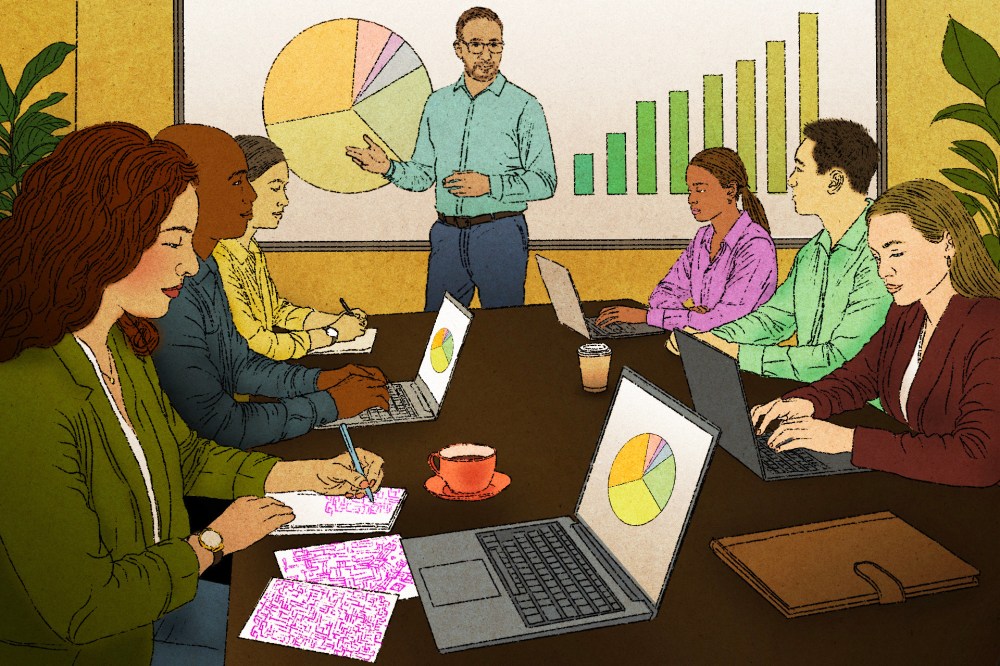
Face-to-face communication can be difficult for some people with autism, so having the ability to participate in meetings online or through writing can be helpful, experts said.
“Changing the expectations for social engagement during a meeting is really important,” Ramakrishnan said. “In a neurotypical normative situation, things like eye contact are highly prized. I trust someone who makes eye contact with me. But for an autistic person, that is a scary thing.”
Making camera use optional during virtual meetings is a useful accommodation since said people with autism often feel pressure to “mask” their natural behaviors by mimicking the facial expressions of neurotypical colleagues, Pilatzke said.
“Things like that can actually cause a lot of anxiety for individuals that are neurodivergent,” she said. “So having that pressure removed can be helpful.”
Some people with autism find it’s easier to focus during virtual or in-person meetings when they’re doodling or walking around, said Natalie Longmire, a professor of organizational behavior at Tulane University’s Freeman School of Business. Managers can make it explicit that those behaviors are accepted, she said.
Employees also can seek and normalize these types of accommodations by saying something like, “Hey if I get up and walk around, I’m doing that so I can be more engaged in what you’re saying,” Longmire suggested.
Share agendas in advance
Keith Wargo, president & CEO of Autism Speaks, said his organization sends out meeting agendas in advance and sometimes shares additional details.
“That kind of clarity is really helpful, … even sometimes sort of saying, ‘This is going to be a 45-minute meeting and we’re breaking it down into five parts,’” Wargo said. “We may deviate from that a little bit, but having that kind of structure is good practice.”
Allowing written input before and after meetings — and not prioritizing only what is spoken out loud during the allotted time — enables organizations to honor and take advantage of autistic individuals’ contributions, Ramakrishnan said.
“Be explicit about, for each agenda item, is this a discussion? Is this a brainstorm? Are we making a decision here?” Ramakrishnan added. “That gives an autistic person the chance to prepare what they need to.”
“These are the folks that are going to come up with the ideas that nobody else thinks about,” she added.
Enable various modes of communication
Have multiple lanes available to participate in meetings, such as chat windows for attendees to type their contributions, said Abigayle Jayroe, senior vice president for strategic operations at NEXT for Autism. “There may be people who just don’t feel comfortable speaking,” Jayroe said. Turning on captions can help people who prefer to process information by reading, she added.
Normalizing the use of noise-canceling headphones and written communication can help, experts say. To reduce feelings of sensory overwhelm, an autistic participant could try saying, “I might ask a question over chat instead of raising my hand because it’s easier for me,” Longmire said.
Garg, who was diagnosed with autism when he was 3 years old, said he was non-verbal early on but learned over time how to communicate and connect with other people.
“One of the biggest challenges has been interviews because they focus a lot on social skills instead of the actual work,” he said. “Sometimes people misunderstand my communication style or underestimate what I can do. Even small things like clear instructions or written feedback really help me do my best.”
Encouraging naysayers
An issue some autistic people encounter at work or in social situations is having their tendency to speak in a forthright way misinterpreted as callousness, Ramakrishnan said. Colleagues can be explicit about whether it’s OK to be direct or whether they need to soften the language, she said.
In Pilatzke’s view, many autistic people possess a strong sense of right and wrong, and feel a need to speak up when they perceive injustices. “I describe myself as a blunt person. I’m very honest. I’m going to say what I think,” she added.
Organizations can benefit from staffers’ frankness by building a culture where everyone isn’t expected to agree. Have a designated naysayer or devil’s advocate in brainstorming meetings, Jayroe suggested.

“The best ideas are built off of poking holes in what everyone agrees on. So it lays the groundwork longer term for a company to have their employees feel comfortable raising red flags or building on ideas,” she said.
___
Share your stories and questions about workplace wellness at cbussewitz@ap.org. Follow AP’s Be Well coverage, focusing on wellness, fitness, diet and mental health at https://apnews.com/hub/be-well
___
This story was first published on Apr. 16, 2026. It was updated on Apr. 20, 2026 to correct how the organization Autism Speaks structures its meetings.