‘Extraordinary’: Back on Earth, Jeremy Hansen describes his long journey in space

Advertisement

Advertise with us

HOUSTON - When Canadian astronaut Jeremy Hansen first floated to the window after the Orion capsule's bone-rattling launch into space early this month, what he saw and felt left him grasping for words.

Read this article for free:


or

Already have an account? Log in here »

To continue reading, please subscribe:

Subscribe and receive a limited-edition Free Press branded hat or tote.

Digital Subscription

One year of digital access for only $205*

  • Enjoy unlimited reading on winnipegfreepress.com
  • Read the E-Edition, our digital replica newspaper
  • Access News Break, our award-winning app
  • Play interactive puzzles

*First annual payment billed as $205.00 + GST for one year. This annual subscription will automatically renew at $233.00 + GST every 52 weeks (10% off the regular annual price of $259.35). Offer available to new and qualified returning subscribers only. Cancel any time.

To continue reading, please subscribe:

Add Free Press access to your Brandon Sun subscription for only an additional

$1 for the first 4 weeks*

  • Enjoy unlimited reading on winnipegfreepress.com
  • Read the E-Edition, our digital replica newspaper
  • Access News Break, our award-winning app
  • Play interactive puzzles
Start now

*Your next Brandon Sun subscription payment will increase by $1.00 and you will be charged $17.95 plus GST for four weeks. After four weeks, your payment will increase to $24.95 plus GST every four weeks.

HOUSTON – When Canadian astronaut Jeremy Hansen first floated to the window after the Orion capsule’s bone-rattling launch into space early this month, what he saw and felt left him grasping for words.

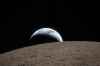
He saw the sweep of the ocean first, and then, drifting into view, the rich, dusty red of Australia. And behind it all was the vastness of space, with the edge of Earth’s atmosphere shining like a bubble of blue glass in the black.

“It was pretty extraordinary,” Hansen told The Canadian Press at NASA’s Johnson Space Center in Houston Thursday.

The enormity of what Hansen and his Artemis II crewmates experienced is still settling in a week after they returned to Earth, splashing into the Pacific Ocean following a 10-day lunar fly-around.

The four-person crew — commander Reid Wiseman, pilot Victor Glover and mission specialists Hansen and Christina Koch — were the first human beings to go to the moon in more than 50 years. Hansen and his crewmates have travelled farther from the surface of the Earth than anyone before them.

Hansen, 50, of London, Ont., grew up like millions of kids around the world — looking up into the night sky and dreaming about what it might be like to travel there.

Floating in space offered a unique perspective that was nothing at all like the flat, planetarium-type imagery Hansen had expected. There was a depth there, he said — a clear sense of boundless distances.

“Seeing the moon the same way and the Earth again and just seeing how they related to one another was really a unique human experience,” he said.

The mission fulfilled a lifelong goal for Hansen. It was also a Canadian achievement. He became the first non-American to travel beyond low Earth orbit and the first person to speak French while en route to the moon.

Hansen credits Canada’s long-term investment in space technologies for setting the stage for successful collaboration with NASA and the other international partners behind the Artemis project.

Unlike the Apollo program, which sent men to the moon from 1968 through 1972, the Artemis program is preparing for a more permanent human lunar presence and is laying the groundwork to someday send astronauts to Mars.

Canada was the first of dozens of nations to join the Artemis program. The famous Canadarm robotic manipulator system has been a key tool for space missions since the early 1980s, and is used on the International Space Station.

Investing in these technologies does more than just push forward the frontiers of human space travel, Hansen said — it also helps to tackle problems here on Earth.

“We can participate in human space exploration and robotic space exploration in a way that helps us solve problems we have for society on the planet,” he said.

Space robotics has terrestrial applications, such as remote health care, he said. By learning how to feed and supply astronauts in a future permanent lunar base, he said, Canada can improve food security in its remote North, while investments in energy production in space can advance energy technology on the ground.

“Canada’s got a lot of expertise in nuclear that can really help us in space exploration, but at the same time, small modular reactors would be an enormous capability for Canadians as we try to develop our infrastructure in the country,” Hansen said.

The Artemis mission also gave the world something else: inspiration.

Canadian Space Agency astronaut Jeremy Hansen, a member of the NASA's Artemis II crew, listens to a question during a press conference on Thursday, April 16, 2026, in Houston. (AP Photo/Ashley Landis)

It united people around the globe at a time of war and geopolitical tumult. Social media exploded with ecstatic posts about the crew’s visible displays of camaraderie, awe and joy as they circled the moon and swung back to Earth.

Space travel reminds us all, said Hansen, that “the next step for humanity is to truly learn to collaborate.” He credited the United States and NASA for leading the Artemis program and creating an environment where many nations could come together to break boundaries and “do hard things.”

“We need to be creating together, not tearing one another down,” he said. “Lifting one another up is just what we have to do as a human race.”

Hansen was a fighter pilot when he became one of two recruits selected for the mission by the Canadian Space Agency in 2009. He said fighter jets didn’t quite prepare him for the experience of being shoved out of Earth’s gravity well.

When you’re a fighter pilot, he said, the gravitational force feels like the blood is being pushed up to your head. With a rocket, Hansen said, the feeling is much more powerful — the acceleration continues for a long time and the gravitational force hits in a completely different way.

“It makes you giggle,” he said, smiling. “It’s just a lot of fun.”

Hansen returned to Earth just in time to spend his 23rd wedding anniversary with his wife Catherine. Space travel can be stressful for the loved ones left behind, he said, and he was relieved to get back safely to his wife and three children.

He was also delighted to get his hands on real food for the first time in two weeks. Space mission food is a long way from four-star, but Hansen said he enjoyed it.

When the Artemis crew was asked what they wanted most upon their return, Hansen said, they all said the same thing: a burger.

“We were all laying in our bed after all the medical checks were done and they brought in a hamburger,” he said. “And it was like 11 out of 10.”

This report by The Canadian Press was first published April 17, 2027.

Report Error Submit a Tip

More Stories

Province looks to seize notorious drug den

Erik Pindera 5 minute read Preview

Province looks to seize notorious drug den

Erik Pindera 5 minute read 12:00 PM CDT

Provincial justice officials are trying to seize a Dominion Street drug den that has been the source of trouble in the West End for years.

The owner of 982 Dominion St., 45-year-old Robert Edward Johnson, was most recently arrested in June along with several others after a lengthy Winnipeg Police investigation into thefts and illicit drug sales connected to the house.

“The residence has a reputation within the neighbourhood as being a location where individuals habitually attend for the purpose of purchasing and/or consuming controlled substances,” reads a statement of claim filed by the province’s director of civil forfeiture in the Court of King’s Bench last week.

“For several years, the residence has been associated with criminal activity, violence, and disorder, resulting in numerous police attendances and complaints from members of the surrounding community.”

Read
12:00 PM CDT

Clock ticks down on destruction of records documenting residential school abuses

Marsha McLeod 13 minute read Preview

Clock ticks down on destruction of records documenting residential school abuses

Marsha McLeod 13 minute read Yesterday at 12:49 PM CDT

In less than a year, a private company is set to destroy the largest cache of records detailing the widespread abuse of Indigenous children at residential schools in Canada.

The destruction, which was ordered by an Ontario court in 2014 and later upheld by the Supreme Court, is set to take place on Sept. 19, 2027.

This countdown is igniting emotional conversations that seek to balance the immense historical value of the records alongside the confidentiality survivors were promised as part of the process of providing detailed testimony about abuses they’d suffered.

The records were created as part of the Indian Residential Schools Settlement Agreement, a class-action settlement stemming from survivors who began suing the federal government in the late 1990s over the harm they’d been subjected to at residential schools.

Read
Yesterday at 12:49 PM CDT

‘Extraordinary’: Back on Earth, Jeremy Hansen describes his long journey in space

Kelly Geraldine Malone, The Canadian Press 5 minute read Preview

‘Extraordinary’: Back on Earth, Jeremy Hansen describes his long journey in space

Kelly Geraldine Malone, The Canadian Press 5 minute read Monday, May. 4, 2026

HOUSTON - When Canadian astronaut Jeremy Hansen first floated to the window after the Orion capsule's bone-rattling launch into space early this month, what he saw and felt left him grasping for words.

He saw the sweep of the ocean first, and then, drifting into view, the rich, dusty red of Australia. And behind it all was the vastness of space, with the edge of Earth's atmosphere shining like a bubble of blue glass in the black.

"It was pretty extraordinary," Hansen told The Canadian Press at NASA's Johnson Space Center in Houston Thursday.

The enormity of what Hansen and his Artemis II crewmates experienced is still settling in a week after they returned to Earth, splashing into the Pacific Ocean following a 10-day lunar fly-around.

Read
Monday, May. 4, 2026

Letters, Oct. 3

7 minute read 2:01 AM CDT

A morning in the life …

My very first lesson does not start when I walk into that lecture hall, oh no — it starts long before. It begins when I walk to my car, check the estimated arrival time to the University of Manitoba and hope that Winnipeg traffic agrees with it.

A drive that appears completely manageable changes almost immediately when I’m greeted by a tsunami of orange pylons and a line of cars that appears to go on forever. Traffic moves by the inch, lanes magically disappear and the detour I took yesterday now has a detour of its own. These factors make me do a calculation that I have become all too familiar with. How late can I arrive and still find parking, run to my class across campus and get to class with enough time left to make it worth it?

I have grown used to people saying, “Why not just leave earlier?” I do. But when I’m already leaving for my 8:30 a.m. class at 7 a.m., there’s only so much I can do. This drive that some would think is relaxing is one that feels like an assignment that I didn’t know I had to complete and is due at 8:30 a.m.

Volunteer pop-up library axed from Manitoba Youth Centre

Matthew Frank 4 minute read Preview

Volunteer pop-up library axed from Manitoba Youth Centre

Matthew Frank 4 minute read Updated: 11:25 AM CDT

Manitoba Corrections has cancelled a pop-up library program at the Manitoba Youth Centre, leaving inmates without librarian services and fewer options to borrow certain books.

The Prison Libraries Committee, part of the non-profit Manitoba Library Association, operated and funded the volunteer program since 2024 before it was shut down by the province last month. The group previously partnered with the province to offer the service because the facility has no dedicated library of its own.

“It is concerning that community members who are incarcerated, especially youth, are losing out on meaningful programming, access to information and rehabilitation efforts, which are offered at no cost to (Manitoba) Corrections. We urge Manitoba Justice to promote more library services and programming, not less,” said a Sept. 24 letter from the non-profit addressed to the justice minister.

Ashley Huot, chair of the Prison Libraries Committee, said she was puzzled when she received an email last month from Manitoba Corrections stating that the pop-up library was no longer needed.

Read
Updated: 11:25 AM CDT

Winnipeggers witness unveiling of Japanese Canadian monument in B.C.

Morgan Modjeski 6 minute read Preview

Winnipeggers witness unveiling of Japanese Canadian monument in B.C.

Morgan Modjeski 6 minute read 8:39 PM CDT

As Miki Stewart gathered with her family at the Japanese Cultural Association of Manitoba on Saturday afternoon, she was thinking of her parents, Yoshimaru and Yoshi Abe.

Both Stewart, 80, and her sister Yumi Falk, 81, alongside an older brother, were born in the Tashme internment camp in British Columbia. They were among more than 2,600 Japanese Canadians who were forcefully removed and interred at the camp following the bombing of Pearl Harbour and Canada’s declaration of war on Japan in 1941.

“They didn’t talk much about how they suffered,” Stewart said of her parents. “But they did.”

She was amongst a group of more than 150 people who gathered at the association’s McPhillips headquarters on Saturday afternoon to watch the unveiling of the Japanese Canadian Monument in Victoria B.C.

Read
8:39 PM CDT