Consumers are lost at sea as seafood sustainability grows more complex
Advertisement
Read this article for free:
or
Already have an account? Log in here »
To continue reading, please subscribe:

Digital Subscription
One year of digital access for only $205*
- Enjoy unlimited reading on winnipegfreepress.com
- Read the E-Edition, our digital replica newspaper
- Access News Break, our award-winning app
- Play interactive puzzles
*First annual payment billed as $205.00 + GST for one year. This annual subscription will automatically renew at $233.00 + GST every 52 weeks (10% off the regular annual price of $259.35). Offer available to new and qualified returning subscribers only. Cancel any time.
To continue reading, please subscribe:
Add Free Press access to your Brandon Sun subscription for only an additional
$1 for the first 4 weeks*
- Enjoy unlimited reading on winnipegfreepress.com
- Read the E-Edition, our digital replica newspaper
- Access News Break, our award-winning app
- Play interactive puzzles
*Your next Brandon Sun subscription payment will increase by $1.00 and you will be charged $17.95 plus GST for four weeks. After four weeks, your payment will increase to $24.95 plus GST every four weeks.
Read unlimited articles for free today:
or
Already have an account? Log in here »
BOSTON (AP) — Don’t overfish. Don’t trawl the seabed. Keep aquaculture healthy for the fish as well as the ocean.
Some aspects of sustainable seafood are obvious and well-trod, even if the how-to intricacies likely are lost on most consumers.
But sustainability today is complicated terrain, as much about business as bycatch, and why, for your next clam chowder, human rights matter as much as healthy habitats.
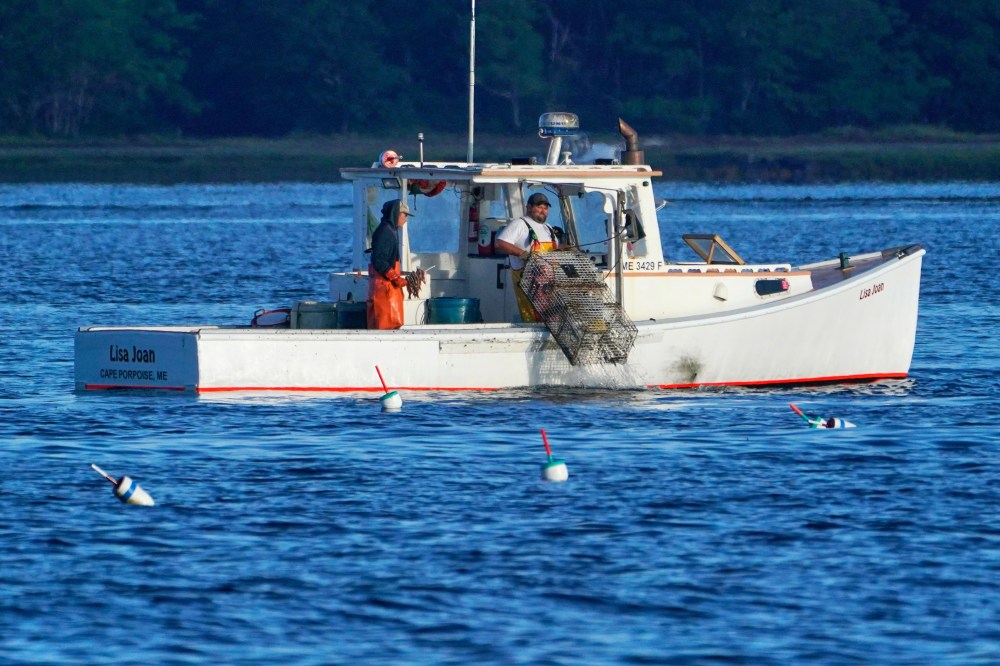
Advocates now want you considering issues of labor abuses, the rights of indigenous populations to use traditional fishing practices, the carbon footprint of a salmon fillet relative to a filet mignon, even whether the fishing boats offer free, high-speed Wi-Fi.
All of this is certified, rated and labeled by a tapestry of competing and overlapping groups.
For the already seafood-averse consumer — Americans have a notoriously limited appetite for seafood — it all can be a bit overwhelming.
“I’m an expert and I still sometimes struggle to look through some of the systems to figure out which product in the store actually matches which rating, and which label is different,” said Robert Jones, global director of aquatic foods for The Nature Conservancy.
The old ‘traffic light’ ratings
For several decades, the most recognizable expression of seafood sustainability was Monterey Bay Aquarium’s Seafood Watch program, which encouraged or admonished consumption of specific species with cards labeled green, yellow and red.
Driven largely to preserve seafood populations — eat the abundant Arctic char, but take a pass on the tenuous tuna — the simplicity resonated.
Twenty-five years ago, that was the right focus, said Jennifer Kemmerly, vice president of global ocean conservation for Monterey Bay. Overseas fisheries, the source of much of the seafood consumed in the U.S., might be immune to American regulations, but would respond if enough consumers demanded sustainable choices.
But the simple, traffic-light ratings also created a guilty-until-proven-innocent aura that lingers, said Barton Seaver, a seafood sustainability expert with National Geographic. Rather than tease out whether farmed or wild salmon is better (the answer has changed over the years), many people just opt for chicken.
“The entire category had to be exonerated,” he said. “Yes, (the information) was more easily digestible, but the end result was fear, trepidation and a general lack of participation.”
The many meanings of sustainability
Seafood Watch eventually fell silent, partly a victim of pandemic pressures. By then, the definition of sustainable had broadened dramatically. Safeguarding endangered stocks still matters, of course. But a host of other issues — treatment of workers, regenerative practices, local vs. corporate ownership of the fleet — can mitigate that.
And plenty of people in and outside the industry argue that any test of sustainability also must weigh the impact of seafood against the alternatives.
“When we do so across five very important metrics — greenhouse gas, land-use alteration, feed conversion, freshwater and antibiotics — seafood just comes out on top in the animal-protein conversation,” said Seaver.
“If you want the sustainable option for dinner, the yellow-list or even red-list seafood might be the better environmental option than chicken or beef,” he said.
The result is an equation too complex for most consumers. It doesn’t help that many of the newer sustainability issues simply aren’t intuitive to the consumer. That on-ship Wi-Fi, for example? A lifeline for workers to report labor abuses while at sea for months at a time.
The monoculture-like beef, pork and poultry industries easily align on methods and messaging (after all, everyone knows what’s for dinner and which is the other white meat.) But seafood is inherently complex, comprised of thousands of species, regions and regulations.
“The biggest loser here is the American consumer,” said celebrity chef Andrew Zimmern, whose documentary “Hope in the Water” highlighted efforts to make seafood more sustainable.
Aiming higher
Despite the information overload, Kemmerly sees the complexity as a sign of success.
“These big companies who 25 years ago made a sustainability commitment thinking it was just the environmental piece are now also on the hook — no pun intended — for reporting on environmental, social and governance issues,” she said.
The way forward, many say, is to sell confidence in American seafood. Zimmern wants to see all the players — from fishermen and wholesalers to watchdog groups — agree on regularly updated standards. It puts the onus for good choices on the industry and frees the consumer to feel good about whatever they purchase.
That may not be as wishful as it sounds. The Alaskan seafood industry benefits from a sustainability halo because regulations mandating good practices are written into the state constitution.
“We’ve always said, if you choose Alaska, it’s the easy choice from a sustainability standpoint. There’s not a single one of our fisheries that isn’t sustainably managed,” said Jeremy Woodrow, executive director of the Alaska Seafood Marketing Institute. “We’ve tried to simplify that for them.”
The best way to support the industry, Seaver said, is to let chefs and consumers focus on what tastes good. And Seafood Watch seems to agree. The program is in the midst of a relaunch that will focus on educating chefs about making sustainable choices.
So what’s a befuddled seafood shopper to do? The consensus seems to be: Buy American, local when possible. Though hardly perfect, the U.S. seafood industry is highly regulated and works with retailers who insist on sustainability standards.
“When you go to Whole Foods, you trust that they’ve done the job for you. And that’s the case for a lot of large grocery chains these days,” Woodrow said. “Consumers should feel confident when they go to the freezer case or the fresh case that that fish is going to be coming from a responsible fishery.”
___
J.M. Hirsch is a longtime food writer who was food editor of The Associated Press for nearly a decade until 2016.