New FDA analysis says US infant formula supply is safe after testing for potential contaminants

Advertisement

Advertise with us

A new analysis of chemicals in U.S. infant formula found reassuringly low levels of heavy metals, pesticides and other potential contaminants, federal health officials said Wednesday.

Read this article for free:


or

Already have an account? Log in here »

To continue reading, please subscribe:

Subscribe and receive a limited-edition Free Press branded hat or tote.

Digital Subscription

One year of digital access for only $205*

  • Enjoy unlimited reading on winnipegfreepress.com
  • Read the E-Edition, our digital replica newspaper
  • Access News Break, our award-winning app
  • Play interactive puzzles

*First annual payment billed as $205.00 + GST for one year. This annual subscription will automatically renew at $233.00 + GST every 52 weeks (10% off the regular annual price of $259.35). Offer available to new and qualified returning subscribers only. Cancel any time.

To continue reading, please subscribe:

Add Free Press access to your Brandon Sun subscription for only an additional

$1 for the first 4 weeks*

  • Enjoy unlimited reading on winnipegfreepress.com
  • Read the E-Edition, our digital replica newspaper
  • Access News Break, our award-winning app
  • Play interactive puzzles
Start now

*Your next Brandon Sun subscription payment will increase by $1.00 and you will be charged $17.95 plus GST for four weeks. After four weeks, your payment will increase to $24.95 plus GST every four weeks.

A new analysis of chemicals in U.S. infant formula found reassuringly low levels of heavy metals, pesticides and other potential contaminants, federal health officials said Wednesday.

The review was conducted as part of the Food and Drug Administration’s Operation Stork Speed project — billed as the “largest and most rigorous” to date. It found that the infant formula supply is safe, agency officials and outside experts said.

“There’s no reason not to use any available formula” in the U.S., said Dr. Steven Abrams, a pediatrics professor at the University of Texas at Austin who reviewed the findings.
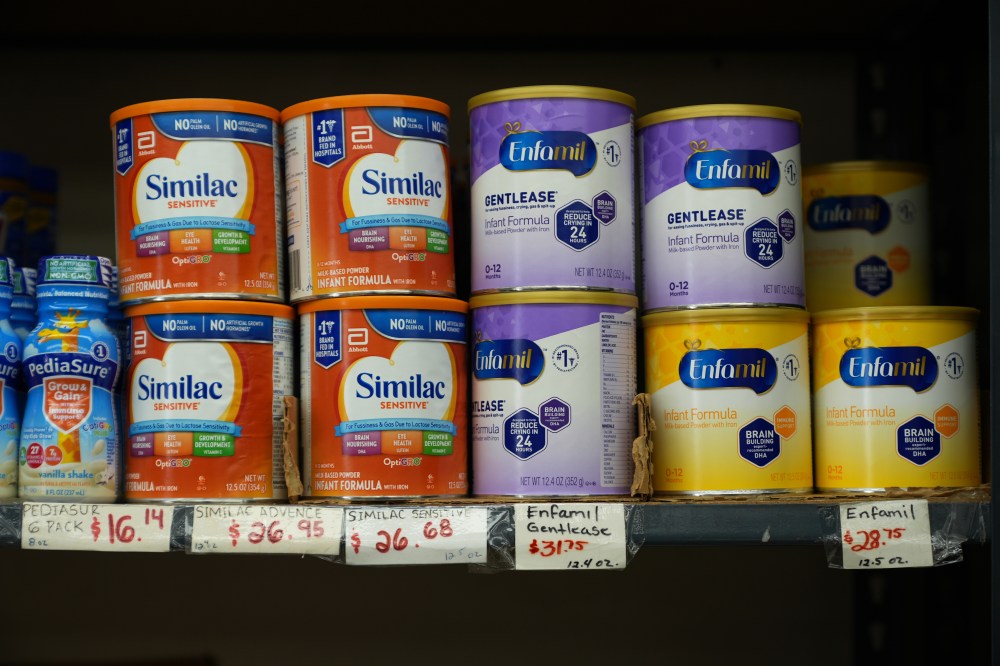
Canisters of infant formula are priced as high as $31.75 per 12.4-ounces at a market serving the Central American immigrant community in the Westlake/Pico Union area of Los Angeles, Tuesday, April 7, 2026. (AP Photo/Damian Dovarganes)

FDA officials tested more than 300 samples of commercial infant formula between 2023 and 2025 for heavy metals, including lead, arsenic, cadmium and mercury. They also tested for pesticides, chemicals found in plastics known as phthalates, and PFAS, also known as per- and polyfluoroalkyl substances, sometimes called “forever chemicals.”

Levels of all the contaminants were undetectable or very low, the agency reported. The heavy metals detected were well below U.S. Environmental Protection Agency limits for drinking water, the agency reported. No pesticides were detected in 99% of samples. The FDA found no detections for 25 of the 30 PFAS compounds tested.

Outside experts generally agreed with the government’s assessment, noting that small amounts of substances such as heavy metals are naturally occurring in the environment. But others, such as phthalates and PFAS, are not.

“These chemicals are completely synthetic,” said Dr. Sheela Sathyanarayana, a pediatrics professor at UW Medicine and the Seattle Children’s Research Institute. “The detection of some of these compounds at all is concerning.”

It points to the need for further monitoring of formula — and of the larger U.S. food supply, she added.

The Trump administration launched Operation Stork Speed in March 2025, promising to review safety and quality standards for infant formula in the U.S. for the first time in decades.

It built on previous FDA efforts to review substances like heavy metals in infant foods, which can cause problems with brain development, learning and behavior in children, Abrams said.

To date, the FDA does not have enforceable limits for heavy metals in infant formulas, unlike the European Union, Canada and Australia.

Some consumer advocacy groups have called on the FDA for years to establish firm limits for contaminants. Last year, Consumer Reports published an analysis of 41 U.S. infant formulas with results suggesting that many had worrisome levels of heavy metals and other contaminants.

However, that analysis used its own level of concern, setting it far below European Union standards. That report garnered wide public attention and prompted some parents to stop using commercial formula, even when it was necessary, Abrams noted.

Abrams called for the FDA to continue monitoring infant formula for contaminants and to share the results.

Abbott, one of the nation’s largest formula makers, urged the FDA to set scientific standards for contaminants in infant formula.

“We believe that producing infant formula at scale in the U.S. is a matter of national security,” Abbott spokesman John Koval said in an email. “These results affirm the safety of our current domestic supply.”

___

The Associated Press Health and Science Department receives support from the Howard Hughes Medical Institute’s Department of Science Education and the Robert Wood Johnson Foundation. The AP is solely responsible for all content.

Report Error Submit a Tip

More Stories

‘She was looking to destroy me’: convicted harasser faces new charges

Dean Pritchard 6 minute read Preview

‘She was looking to destroy me’: convicted harasser faces new charges

Dean Pritchard 6 minute read Yesterday at 6:54 PM CDT

When Agnieszka Ciochon-Newton moved into the 55-plus apartment building on Stradbrook Avenue last year, she came across as “timid, soft-spoken and sensitive,” said building manager Tanya Owen.

Little did Owen know the meek-looking 58-year-old woman would soon turn her life and the lives of many of her tenants upside down and threaten her career and family.

“She was looking to destroy me for a simple tenant disagreement,” Owen said Thursday.

Court records show Ciochon-Newton was arrested earlier this month and charged with seven counts of criminal harassment, two counts of uttering threats and one count each of fraud, breaking and entering, attempting to obstruct justice, intimidation of a justice official, mischief and defamatory libel.

Read
Yesterday at 6:54 PM CDT

A quick look at where provinces and territories stand on time changes

The Canadian Press 2 minute read Preview

A quick look at where provinces and territories stand on time changes

The Canadian Press 2 minute read Updated: 6:28 AM CDT

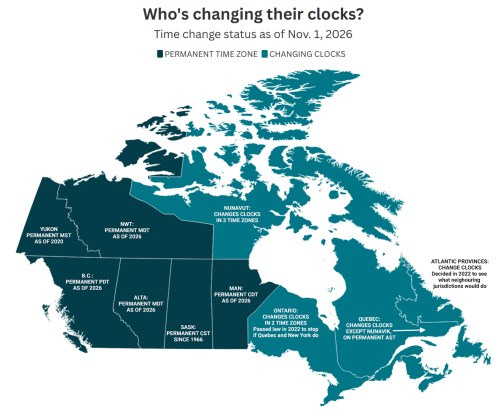
WINNIPEG - Manitoba's government said Thursday the province will be sticking with daylight time year-round, making it the latest jurisdiction to move away from twice-annual time changes. Here's a look at where things stand across Canada:

British Columbia said in March that it was moving to permanent Pacific daylight time. The change also means that parts of northeastern B.C., which have been on mountain standard time year round, are now in alignment with the rest of the province.

Alberta also switched to permanent daylight time this year in what it calls Alberta time. The change means it now has the same time as Saskatchewan year round.

Saskatchewan has been on permanent central standard time since 1966.

Read
Updated: 6:28 AM CDT

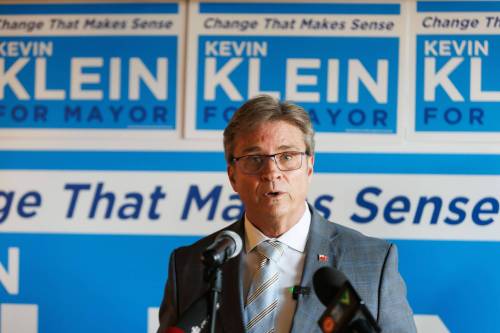
Klein launches mayoral campaign with pledge to make Winnipeg safest city in Canada

Joyanne Pursaga 2 minute read Preview

Klein launches mayoral campaign with pledge to make Winnipeg safest city in Canada

Joyanne Pursaga 2 minute read 12:47 PM CDT

Mayoral candidate Kevin Klein says he would make Winnipeg the safest city in Canada by the end of his four-year term, if elected.

“Crime is happening all over the city and we have to take steps to address it,” Klein said at his first campaign announcement Friday morning.

He promised to hire 100 to 110 more police officers, which he believes would cost between $9 million and $11 million.

“Our (officer) numbers are way down. We need to fix that now,” he said, not offering a timeline to fulfil that goal.

Read
12:47 PM CDT

‘A new future’: city dentist Cholakis donates $2M to school of dental hygiene

Melissa Martin 3 minute read Preview

‘A new future’: city dentist Cholakis donates $2M to school of dental hygiene

Melissa Martin 3 minute read Updated: Yesterday at 3:25 PM CDT

Dental hygienist training in Manitoba is getting a big boost, after a major gift from a local dentist.

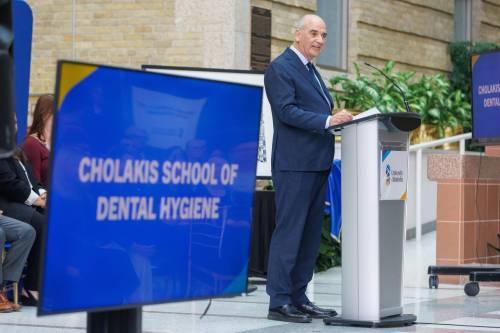
On Thursday, the dental hygiene school at the University of Manitoba’s Dr. Gerald Niznick College of Dentistry unveiled a new $2-million donation from Dr. Ernest Cholakis. It’s the largest gift the program has ever received, and in honour of the funding, the school will be named the Cholakis School of Dental Hygiene.

The gift was unveiled at a ceremony Thursday morning at the U of M’s Brodie Centre in the Health Sciences Centre complex. The benefactor and other dignitaries, including Premier Wab Kinew, were in attendance, as well as the three-year program’s current students.

Cholakis, who graduated from the U of M’s dentistry school in 1982, had high praise for the dental hygiene profession.

Read
Updated: Yesterday at 3:25 PM CDT

Puzzles Palace

1 minute read Monday, Jul. 27, 2026

To solve our puzzles, please subscribe with this special offer: |

United Way, other charities fight for dollars as donor base shrinks

Scott Billeck 7 minute read Preview

United Way, other charities fight for dollars as donor base shrinks

Scott Billeck 7 minute read 2:00 AM CDT

Winnipeg’s charitable sector is being squeezed from both sides: demand for help is growing while the pool of donors to meet that need is shrinking.

The imbalance is increasingly being carried by a relatively small group of deep-pocketed donors. Last year, 600 people — about three per cent of United Way Winnipeg’s individual donors — accounted for roughly $8 million, or 55 per cent of individual donations.

The fundraising pitch isn’t getting any easier.

Homelessness and public drug use have become increasingly visible, household budgets remain strained and the problems charities are trying to address can seem so entrenched that donors may reasonably wonder what difference another contribution can make.

Read
2:00 AM CDT