Cosmetic interventions are booming. Many say ethical conversations are lagging
Advertisement
Read this article for free:
or
Already have an account? Log in here »
To continue reading, please subscribe:

Digital Subscription
One year of digital access for only $205*
- Enjoy unlimited reading on winnipegfreepress.com
- Read the E-Edition, our digital replica newspaper
- Access News Break, our award-winning app
- Play interactive puzzles
*First annual payment billed as $205.00 + GST for one year. This annual subscription will automatically renew at $233.00 + GST every 52 weeks (10% off the regular annual price of $259.35). Offer available to new and qualified returning subscribers only. Cancel any time.
To continue reading, please subscribe:
Add Free Press access to your Brandon Sun subscription for only an additional
$1 for the first 4 weeks*
- Enjoy unlimited reading on winnipegfreepress.com
- Read the E-Edition, our digital replica newspaper
- Access News Break, our award-winning app
- Play interactive puzzles
*Your next Brandon Sun subscription payment will increase by $1.00 and you will be charged $17.95 plus GST for four weeks. After four weeks, your payment will increase to $24.95 plus GST every four weeks.
Read unlimited articles for free today:
or
Already have an account? Log in here »
LOS ANGELES (AP) — Shula Jassell is insecure about the size of her chin and has periodically considered getting filler to make it bigger.
But when the 25-year-old from Southern California gives serious thought to the idea of repeatedly having to get the cosmetic procedure — it only lasts about a year — she wonders if a surgical implant would be more practical, even though the prospect of surgery scares her.
“I just try to remember self-love, you know? Beauty is in the eye of the beholder,” she says as she verbally processes her internal struggle and talks herself out of getting any work done for now.
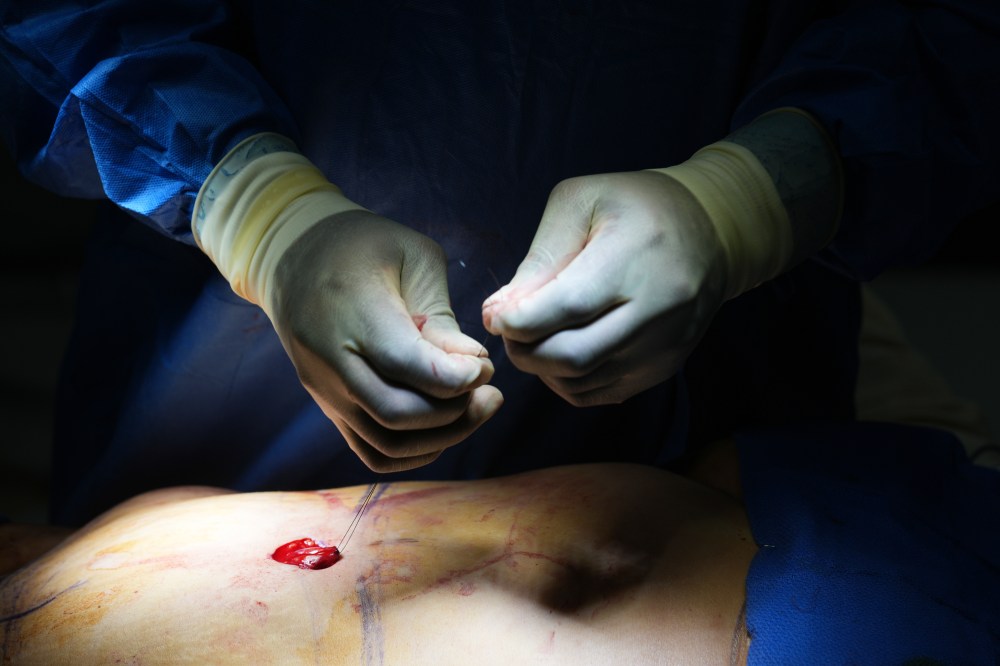
Technological advancements over recent decades have made various forms of body modification increasingly accessible — and inescapable on many social media algorithms.
As injectables like Botox, cosmetic plastic surgeries and GLP-1 medications such as Ozempic become more pervasive, people — often but not exclusively women — are grappling with the philosophical and ethical implications of turning to these interventions in a ceaseless quest for beauty, youth and conformity.
“We need to have a wider conversation about how to think about this in a way where we’re not putting the burden squarely on women, while also not taking away their moral agency,” said Natalie Carnes, a feminist theologian at Duke Divinity School. “Beauty is something that’s good. And beauty is something that is good to pursue. Botox and Ozempic and face-lifts, they’re all ways of really narrowing the cultural ideals of beauty.”
There has been little in the way of official guidance or explicit prohibitions from major religions. But a growing chorus of theologians, philosophers and bioethicists are calling for more conversations surrounding these procedures and treatments.
In March, the Vatican released a document on Christian anthropology decrying the “cult of the body.” “Once modified, often with relentless frenzy, the body becomes a body-object in which the person-subject mirrors themselves, creating a relationship in which the person is no longer his or her body but ‘owns’ a body,” it said.
Increased — and younger — demand for intervention
Demand for cosmetic surgery in the United States has increased in recent years across all age demographics and ethnic backgrounds, says Dr. C. Bob Basu, president of the American Society of Plastic Surgeons. “Forty years ago, perhaps people would think, ‘Cosmetic surgery is for the superrich or the celebrity elite. It’s not for regular folk.’ That’s not the case anymore.”
One of the biggest changes he’s seen is more young people opting for interventions.
“They’re being proactive and thinking about preventive measures, whether it be baby Botox at a younger age to prevent wrinkles from starting or maybe considering a deep plane face-and-neck-lift in the late 30s or early 40s, rather than waiting until you’re in your 60s,” he said.
But despite its increasing ubiquity, many bioethicists say plastic surgery is not prioritized in their training.
“If you’re getting into bioethics and you rotate to learn about medicine, you go to the ICU, you go to places where the palliative care is for dying people, you’re looking at transplants. Nobody rotates to plastic surgery,” said Arthur Caplan, founding head of the Division of Medical Ethics at New York University Grossman School of Medicine.
As a result, plastic surgeons often must set their own boundaries for what they will and won’t do, without much specialized ethical training.
Faith in the operating room
Many religions condemn vanity and praise modesty, which can inform attitudes toward cosmetic work.
Dr. Jerry Chidester, a member of The Church of Jesus Christ of Latter-day Saints, said he sees a broad spectrum of stances on plastic surgery within the church. Although some stricter interpretations of the faith may discourage interventions, Chidester said that attitude contrasts with the broader cultural landscape of Salt Lake City, where he’s based. Several studies suggest the area has a high number of plastic surgeons and procedures performed per capita.
When patients wrestle with whether to have an operation, Chidester tells them to not worry about what others will think.
“I’m like, ‘Look, if you want to do this or not, it’s up to you,’” he said. “It’s literally your body. Who cares if they think you’re doing it for vanity or for function or whatever? It is none of their business.”
Dr. Sheila Nazarian, a Jewish board-certified plastic surgeon, incorporates her interpretations of parts of the Torah for guidance on thinking about when it is appropriate to modify one’s body.
“If it’s bringing distress, then it’s OK,” she said. “My patient population, they’re all pretty well adjusted, happy, successful, intelligent people. But they need help with one little thing that they’d just rather not think about anymore.”
Dr. Michael Obeng, a Christian, has seen a dramatic shift in acceptance of cosmetic procedures in the nearly 20 years he’s been practicing.
“Now people are not even hiding it. They show their plastic surgery as a badge of honor, like somebody wearing their expensive bag,” he said. “We are aging slower and of course we are working much longer than our moms and grandmothers worked. In the marketplace, we have to look presentable.”
Obeng, a board-certified surgeon in Beverly Hills, specializes in a wide range of procedures from tummy tucks and Brazilian butt lifts to rib removal surgeries. He says he rarely feels tension between his faith and his work. It wasn’t until he came to a “crossroads” in 2018, when he began thinking through his willingness to perform certain gender transition surgeries.
He sought the advice of several pastors and religious leaders about what to do. “Nobody could give me an answer,” he recalled.
He said his faith ultimately led him to limit his practice to some gender-related procedures like breast augmentation, stopping short of genital gender-affirming surgeries, which he sees as harder to reverse.
Agency versus constraint
Ivory Kellogg, a 29-year-old actor in Los Angeles, has been grappling with the tension she feels as a woman while pondering cosmetic interventions.
“There’s this expectation that once you hit 35, you think about doing a mini face-lift. That’s a lot of pressure,” she said. “At the same time, I do want women to feel like they’re allowed to do whatever they want. Like if you want to have a face-lift, that’s your prerogative.”
Though opting for these interventions is often framed as a personal decision, many experts say it’s hardly that simple.
“It’s important to think about how those choices are constrained and to think about the social pressures,” said Abigail Saguy, a sociologist at the University of California, Los Angeles. “This is a social issue. It is a collective problem. But it’s continually treated as an individual issue and what individual people should do.”

In some cases, as with drugs like Ozempic, these interventions can offer real health benefits. But as their use expands beyond medical need, questions arise about how medical resources are used.
Dr. Aasim Padela, who studies bioethics and Islamic thought at the Medical College of Wisconsin, thinks a broader conversation is needed. His primary issues are the ways in which the field of medicine suffers as a result and what resources are poorly distributed when cosmetic surgery is prioritized within a society.
“The profession is supposed to be about restoring health or preventing loss of health,” he said. “Certain types of procedures, body modifications, interventions — whatever you want to call them — may not meet those goals or even be aimed at those goals.”
___
Associated Press religion coverage receives support through the AP’s collaboration with The Conversation US, with funding from Lilly Endowment Inc. The AP is solely responsible for this content.