US grocery prices rose in April, but gas spikes weren’t the only reason
Advertisement
Read this article for free:
or
Already have an account? Log in here »
To continue reading, please subscribe:

Digital Subscription
One year of digital access for only $205*
- Enjoy unlimited reading on winnipegfreepress.com
- Read the E-Edition, our digital replica newspaper
- Access News Break, our award-winning app
- Play interactive puzzles
*First annual payment billed as $205.00 + GST for one year. This annual subscription will automatically renew at $233.00 + GST every 52 weeks (10% off the regular annual price of $259.35). Offer available to new and qualified returning subscribers only. Cancel any time.
To continue reading, please subscribe:
Add Free Press access to your Brandon Sun subscription for only an additional
$1 for the first 4 weeks*
- Enjoy unlimited reading on winnipegfreepress.com
- Read the E-Edition, our digital replica newspaper
- Access News Break, our award-winning app
- Play interactive puzzles
*Your next Brandon Sun subscription payment will increase by $1.00 and you will be charged $17.95 plus GST for four weeks. After four weeks, your payment will increase to $24.95 plus GST every four weeks.
Read unlimited articles for free today:
or
Already have an account? Log in here »
Americans paid more for their groceries last month, but high gasoline prices resulting from the Iran war were only one of the reasons why.
Prices for food eaten at home rose 2.9% in April compared to the same month a year earlier, according to government figures released Tuesday. That was the highest year-over-year inflation rate for the category since August 2023.
Prices at restaurants, fast-food chains and other places to get prepared meals also increased, putting overall food prices up 3.2% in the last year, the Labor Department’s consumer price index showed.
Fuel prices have soared while the Iran war prevents cargo ships from passing through the Strait of Hormuz, a vital corridor for global oil supplies. Diesel fuel powers fishing boats, tractors and the trucks that ship 83% of U.S. agricultural products. As of Tuesday, the average price per gallon was up 61% from a year ago, according to AAA.
The meat, produce and dry goods vendors that supply Sparrow Market, a small independent grocer in Ann Arbor, Michigan, all added fuel surcharges to their deliveries in recent weeks, owner Raymond Campise said. Wholesale prices for meat, produce and some other products also have gone up, he said.
“For independent markets operating on narrow margins, even small increases can have a major impact,” Campise said.
The full impact of rising energy costs on food likely has not hit retail grocery prices yet in the U.S., according to Purdue University economists Ken Foster and Bernhard Dalheimer. Higher costs to produce, process, store and transport food can take three to six months to show up on supermarket shelves, where prices typically fall slowly once increased, they said.
“Most of what we’re seeing now in the food price chain probably predates the conflict,” Foster, a professor of agricultural economics, said. “We’re cautiously waiting to see what the June numbers and the May numbers might show as they come out in terms of … the extent to which energy shocks in the Strait of Hormuz and shipping blockades and so forth are going to impact food prices.”
The consumer price index measures changes in what people in U.S. cities paid at retail stores for meat, bread, milk, produce and other grocery staples. Over the last 20 years, grocery prices increased an average of 2.6%, according to the U.S. Department of Agriculture.
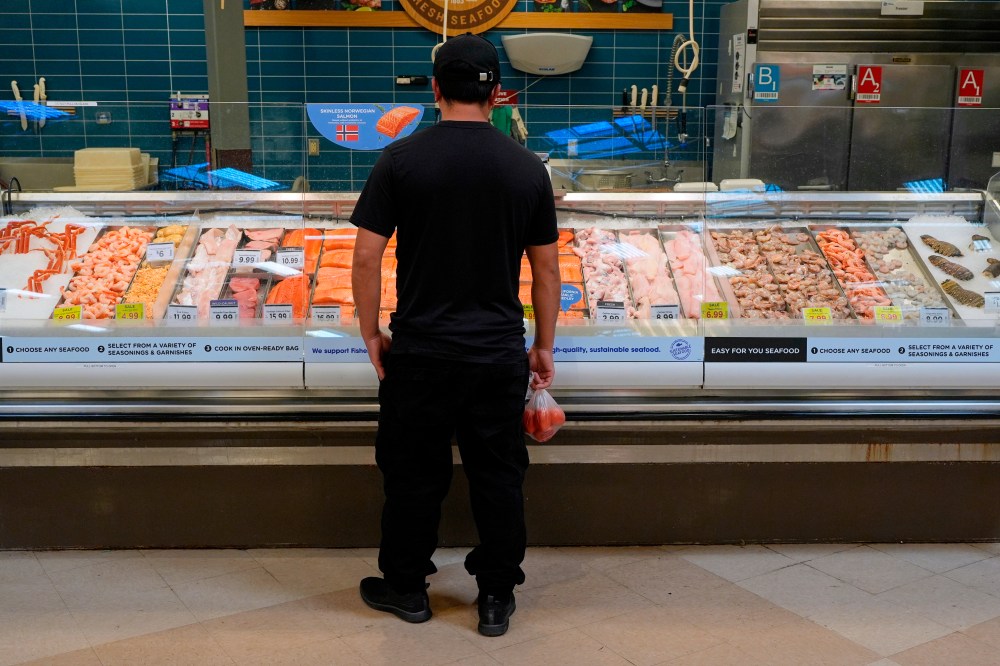
Prices for perishable and refrigerated products tend to increase faster than prices for packaged goods when energy is an issue. Consumers paid 6.5% more for fresh fruit and vegetables in U.S. cities last month than they did in April 2025, and 8.8% more for meat, the Labor Department reported.
But U.S. trade policies and extreme weather also have weighed on U.S. food prices in the last year. In July 2025, the Trump administration imposed a 17% duty on fresh tomatoes imported from Mexico; consumer prices rose 40% in the 12 months before April.
Dry weather in the Western U.S. has been one of many factors pushing up beef prices, which in April were 15% higher year-over-year. Coffee prices were up 18.5%, partly due to drought and other weather conditions that have hurt global coffee production in recent years.
“Today’s CPI showed that food prices have been rising 3.2 percent in the past year, but the story behind that number is more complicated than just an energy shock,” said Dalheimer, an assistant professor of macroeconomics and trade in Purdue’s Department of Agricultural Economics.
Prices for some foods remained more or less flat or declined over 12 months. Milk and chicken dipped slightly. Butter cost 5.8% less in April than it did a year earlier. Egg prices fell 39% as farmers rebuilt flocks that were decimated by an ongoing bird flu outbreak.
Food prices and broader inflation are likely to feature prominently in November’s midterm elections. During his 2024 campaign, President Donald Trump often cited the prices of bacon, cereal, crackers and other groceries as reasons why voters should return him to the White House.
Some food producers say they’re struggling now because of higher fuel costs. The Southern Shrimp Alliance, which represents shrimpers in eight states, said some boats haven’t left the dock this spring because they can’t catch enough shrimp to compensate for the cost of diesel.
Fuel typically makes up 30% to 50% of the costs for U.S. shrimpers, but because they supply only 6% of the shrimp that Americans consume, they have limited ability to raise prices or add surcharges for fuel, the organization said.
Higher fuel prices may also be impacting food costs in other ways. Part of April’s 5% annual increase in prices for nonalcoholic beverages may be due to the petroleum derivative that goes into making plastic bottles, Foster said.
“It’s possible some of that’s starting to seep down the supply chain and get into those prices,” he said.
Over the next year or more, Americans could also see higher food prices due to spiking fertilizer costs, since around 30% of the world’s fertilizer travels through the Strait of Hormuz.
Fertilizer costs are less of an issue for U.S. farmers this year, since many already had fertilizer supplies in place before the war began, according to Foster. But the effects could become more noticeable next year if the war drags on, he said.
“I expect the Iran conflict to impact the coming years’ food prices through a couple of channels. One, the energy costs and transportation handling. The other would be through packaging costs,” Foster said. “If the conflict were to last longer, then we might see more coming online as fertilizer prices start to impact longer-term planting decisions and cropping decisions.”