In an era when workers are returning to offices, here’s how Dropbox is making remote jobs work
Advertisement
Read this article for free:
or
Already have an account? Log in here »
To continue reading, please subscribe:

Digital Subscription
One year of digital access for only $205*
- Enjoy unlimited reading on winnipegfreepress.com
- Read the E-Edition, our digital replica newspaper
- Access News Break, our award-winning app
- Play interactive puzzles
*First annual payment billed as $205.00 + GST for one year. This annual subscription will automatically renew at $233.00 + GST every 52 weeks (10% off the regular annual price of $259.35). Offer available to new and qualified returning subscribers only. Cancel any time.
To continue reading, please subscribe:
Add Free Press access to your Brandon Sun subscription for only an additional
$1 for the first 4 weeks*
- Enjoy unlimited reading on winnipegfreepress.com
- Read the E-Edition, our digital replica newspaper
- Access News Break, our award-winning app
- Play interactive puzzles
*Your next Brandon Sun subscription payment will increase by $1.00 and you will be charged $17.95 plus GST for four weeks. After four weeks, your payment will increase to $24.95 plus GST every four weeks.
Read unlimited articles for free today:
or
Already have an account? Log in here »
NEW YORK (AP) — Many companies ended remote work arrangements that began during the coronavirus pandemic despite resistance from employees who grew accustomed to working from home.
Dropbox has no plans to return its workers to offices. After adopting a “virtual-first” staffing model in 2020, the San Francisco technology company met all of its financial goals and remains committed to making remote work the norm for the vast majority of its employees, according to Chief People Officer Melanie Rosenwasser.
“The pandemic tested our assumption that we have to be in person in order to be productive,” she said.
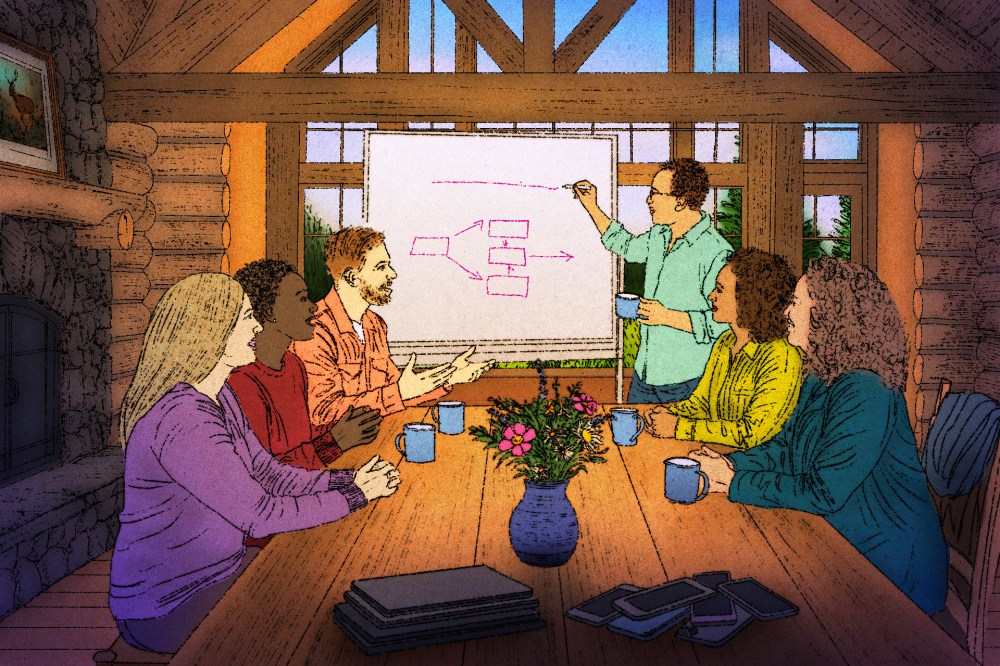
Allowing employees to work from anywhere helps Dropbox retain talent, said Rosenwasser, who leads the cloud storage provider’s human resources teams. Over time, the company refined scheduling practices, meeting protocols and employee well-being programs to better meet the needs of its “distributed” workforce, she said.
“It’s especially important to us to maintain this posture as so many other companies across many, many industries are mandating return to office,” Rosenwasser said.
In an interview with The Associated Press, Rosenwasser reflected on the ways Dropbox thrives with remote workers and creates in-person events to build community. Her responses were edited for brevity and clarity.
AP: Why did Dropbox choose a virtual-first model?
ROSENWASSER: We are explicitly not hybrid. We think this is the worst of all worlds, where employees suffer through long commutes only to sit on Zoom because most of our colleagues are distributed. We really believed in this creation of an even playing field. The rules of that are, largely, individual work is done remotely by everyone, but we still come together in person at least quarterly for strategy setting, connection, team building and bonding.
The model is fundamentally built on this notion that flexibility and agency are these new currencies of modern work. We see benefits in recruiting, engagement, employee retention and cost savings.
AP: How does it work?
ROSENWASSER: We put a lot of intention behind how we would bring this to life. We are asynchronous by default, which means we do a lot of our communication and even decision-making in writing. We have a structure called core collaboration hours. These are four-hour blocks for meetings that overlap by time zone. The rest of the time is yours for deep work, answering emails, continuing individual work on projects.
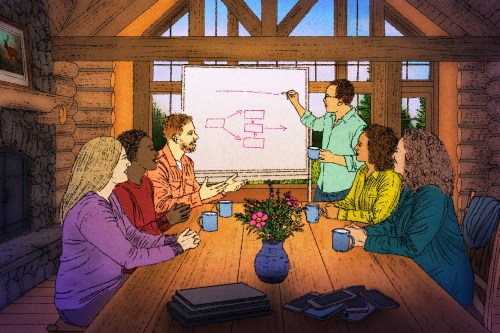
We’re also really obsessed with meeting hygiene. When we do come together and meet, we want to be really intentional on the rules of engagement. We focus on something that we call the three D’s: discuss, debate or decide. If none of those things are on the table, then a meeting is not required.
AP: Outside core collaboration hours, can people set their own schedules?
ROSENWASSER: The core collaboration hours are great because everyone knows that this is when you’re meeting with colleagues. Outside of that, you design your workday according to your preferences. Some people log off earlier in the afternoon because they have things they need to do with their children, but they log on later on at night because that is the way that they want to work. We allow for that, and every team contracts on these things so everyone knows what each other’s working schedule is and accommodates.
AP: What challenges do you face with the virtual-first model?
ROSENWASSER: The first is around burnout and the importance of setting boundaries. When you’re working from home, your personal and professional life blur, and that’s why we wanted to intentionally put into place non-linear workdays which are very much based on personal preferences.
When you’re working remotely, you’re very sedentary. We piloted a program called “Meet & Move.” We took a set of employees, and all of the meetings they took for the week were on the phone and they were moving. They could take a walk outside or move throughout their house, but they were not sitting in front of a camera.
We have this companywide meeting-effectiveness initiative. It’s not actually the number of meetings that’s the problem. It’s the fragmentation of these meetings. For example, you have a couple of meetings in the morning, then you’ve got a 15-minute break, then you’ve got another hour-and-a-half, and you’ve got a 30-minute break. When this happens, you can’t really do anything meaningful in those 15- or 30-minute breaks between meetings.
On the HR team, we eliminated all legacy meetings that no longer served us. We built our meetings where we would batch them. Mondays and Wednesdays are for one-on-ones, Tuesdays are for team meetings, Fridays are for interviews. We all tried to adhere to the same schedule. We had more efficiently restructured meetings, more focused time. Now we’re thinking about rolling this out more broadly to the company.
AP: How do you build community?
ROSENWASSER: There’s a relationship tax when you work remotely. Because you’re not in person every day, you don’t have these natural moments of connection. Quarterly off-sites are one of the best ways to build teamwork and strengthen sense of belonging. We have an off-site team that is dedicated to helping leaders put together an agenda, guest speakers, location and hotels.
We had to be really intentional about onboarding because it takes place remotely. Everyone gets an onboarding buddy, which is somebody likely on their team. They show them the ropes, meet with them every day, and eventually it turns into weekly meetings. They also get a mentor, and this could be someone that sits within their team or outside of their team.
People who live in and around the same city come together every week, every other week, for various events. It could be a volunteer event. When we have executives in town in certain cities, we’ll do fireside chats with them and invite all the folks (who work in that area) to come. Everything is basically subsidized, and they’re not mandatory.
AP: What did Dropbox leaders need to unlearn to make this work?
ROSENWASSER: There is a perception that when you’re in the office and you can actually physically see the people on your team, you can just assume they’re doing what they’re supposed to be doing. But I think we all know from working in offices that’s not necessarily true. There are tons of distractions. You’ve got gyms and on-site yoga and all kinds of things that are distracting, let alone the number of people that can walk by your desk to start a conversation when you’re midthought.

Today, every single person at Dropbox can see what every team’s responsible for, every item on the roadmap, when things are going to be done, how those things are going to be done. We’re extremely transparent about our goals and what teams are doing.
We don’t have to micromanage their presence because we set these goals and either they hit them or they don’t hit them, so this has become a really important aspect of our operating model, is assertive goal-setting and clarity.
All of our meetings start with a written document. People will, for the first five or 10 minutes of the meeting, read it and then they come on camera, and then we discuss it. It’s been really great for clarity of thought because clear writing is effectively clear thinking, so it forces you to put your thoughts and your proposal into a format that can be digested.
___
Share your stories and questions about workplace wellness at cbussewitz@ap.org. Follow AP’s Be Well coverage, focusing on wellness, fitness, diet and mental health at https://apnews.com/hub/be-well