Pulling from ancient cooling principles, the ‘swamp cooler’ remains important today

Advertisement

Advertise with us

Before air conditioning spread across the United States, before temperatures increased and the world heated up, people in the Southwest sweltered.

Read this article for free:


or

Already have an account? Log in here »

To continue reading, please subscribe:

Subscribe and receive a limited-edition Free Press branded hat or tote.

Digital Subscription

One year of digital access for only $205*

  • Enjoy unlimited reading on winnipegfreepress.com
  • Read the E-Edition, our digital replica newspaper
  • Access News Break, our award-winning app
  • Play interactive puzzles

*First annual payment billed as $205.00 + GST for one year. This annual subscription will automatically renew at $233.00 + GST every 52 weeks (10% off the regular annual price of $259.35). Offer available to new and qualified returning subscribers only. Cancel any time.

To continue reading, please subscribe:

Add Free Press access to your Brandon Sun subscription for only an additional

$1 for the first 4 weeks*

  • Enjoy unlimited reading on winnipegfreepress.com
  • Read the E-Edition, our digital replica newspaper
  • Access News Break, our award-winning app
  • Play interactive puzzles
Start now

*Your next Brandon Sun subscription payment will increase by $1.00 and you will be charged $17.95 plus GST for four weeks. After four weeks, your payment will increase to $24.95 plus GST every four weeks.

Before air conditioning spread across the United States, before temperatures increased and the world heated up, people in the Southwest sweltered.

Dry heat and minimal relief were day-to-day life, and many had to get a little creative. Some slept outdoors under damp sheets. Others adjusted schedules to avoid working outside during high daylight hours.

Then a great way to beat the heat emerged. It was dubbed the “swamp cooler.”
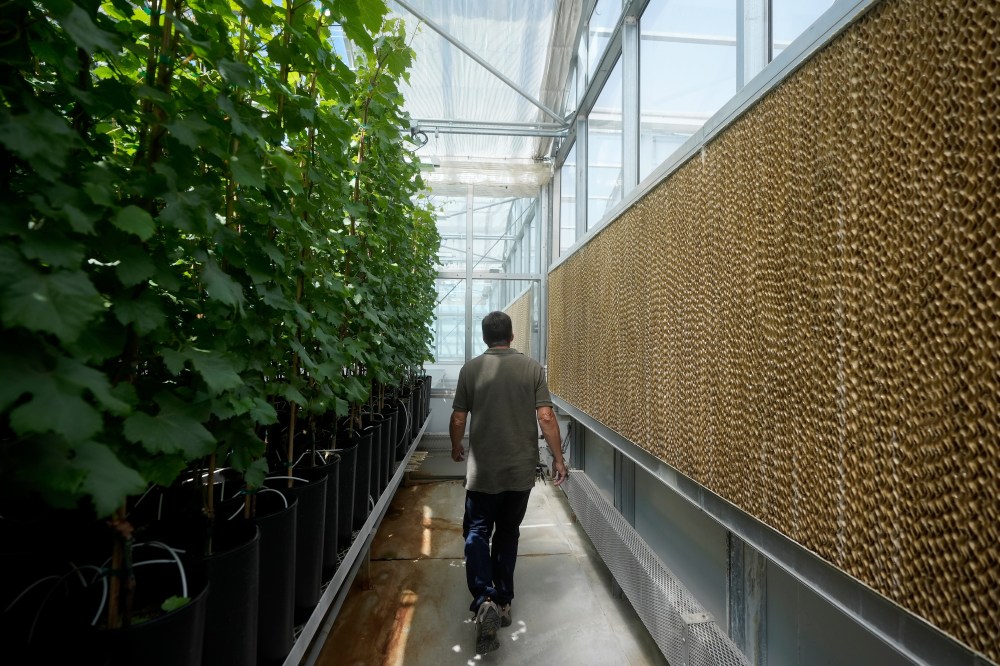
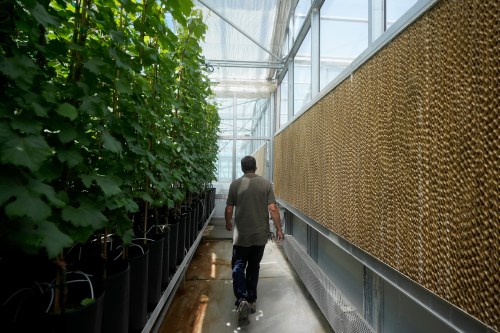
FILE - Bill Werner, lead greenhouse manager of the College of Agricultural and Environmental Sciences at the University of California Davis, walks between plants and evaporative cooling pads in a greenhouse at the Core Greenhouse Complex on the campus in Davis, Calif., May 20, 2024. (AP Photo/Jeff Chiu, File)

Basic cooling principles were used centuries ago in ancient civilizations; air was fanned by hand over water in clay pots or jars. In the early 20th century, those same principles were refined in the United States. The evaporative cooler, or swamp cooler, was the result. America’s first system using the concept of evaporative cooling was perfected by Oscar Palmer in 1908 in Arizona.

It’s relatively simple: A fan pulls a stream of fresh hot air through vertical, porous pads saturated with water. It evaporates, cooling and humidifying the air and directing it indoors.

By the 1930s, the gadgets changed entire swaths of the country, cooling southwestern states like New Mexico and Nevada. Even today, in the age of air conditioning, they play a role in making desert-like states more livable.

“If it’s really dry out, in Arizona, you’re going to get a greater cooling effect,” says Eric Verpolegen, the founder of CoolVeg, a nonprofit dedicated to evaporative cooling for fruits and vegetables.

Traditional air-conditioning units didn’t become standard in the U.S. until the 1950s, and central air conditioning remains a luxury. But the swamp cooler endures.

“Where you don’t have air conditioning and where the climate allows, evaporative coolers could be a good solution and are low cost, low energy consumption,” says Ankit Kalanki, principal of cooling at RMI, a nonprofit dedicated to clean energy.

Swamp coolers and fans fall short in humid regions because the air is already saturated and can’t handle more water. Experts say humidity has been worsening in some areas.

“There is a lot of innovation happening where people are trying to come up with hybrid solutions, where they are marrying evaporative cooling with something that can manage humidity separately,” Kalanki says, “and so now you have the best of both worlds.”

Evaporative coolers remain in use for Americans and many around the world who lack other cooling options.

“We’ve got this vicious circle where the hotter it gets, the more cooling we need,” Verpolegen says. “So you’re going to spend more energy, which could lead to more greenhouse gas emissions.” That’s where Palmer’s cooler tech and even more modern iterations come into play.

___

Part of a recurring series, “American Objects,” marking the 250th anniversary of the United States. For more American objects, click here. For more stories on the anniversary, click here. Alexa St. John is an Associated Press climate reporter. Follow her on X: @alexa_stjohn. Reach her at ast.john@ap.org.
Report Error Submit a Tip

More Stories

Paralyzed foster girl has system under a microscope

Chris Kitching 6 minute read Preview

Paralyzed foster girl has system under a microscope

Chris Kitching 6 minute read Yesterday at 2:00 AM CDT

An internal investigation by Manitoba’s Families Department is nearly complete in the case of a six-year-old girl who is paralyzed after being assaulted by her foster mother in Winnipeg.

The review by child-welfare officials is intended to prevent similar incidents, but it’s unlikely the public will learn the findings or recommendations.

“We’re working closely with the (child and family services) authority to make sure that every recommendation is taken seriously and implemented,” Families Minister Nahanni Fontaine said Monday.

“They’re important (investigations) because they help us identify what went wrong so we can make those changes to ensure something like this tragedy never happens again.”

Read
Yesterday at 2:00 AM CDT

Daycare, family centre addition will turn care home into intergenerational community hub

Maggie Macintosh 4 minute read Preview

Daycare, family centre addition will turn care home into intergenerational community hub

Maggie Macintosh 4 minute read Monday, Aug. 17, 2026

Seven-year-olds and 70-somethings will socialize daily when a 152-spot daycare opens inside of a seniors’ residence in Winnipeg in a couple of years.

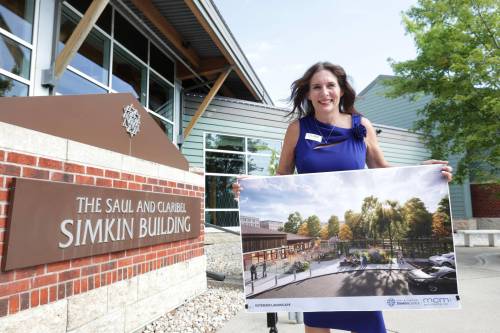
Construction on a new wing of the Saul and Claribel Simkin Centre is scheduled to begin this fall, it was announced Monday.

The project won’t be complete for at least 22 months, but it’s already being touted as a made-in-Manitoba model for intergenerational community hubs across the country.

“It’s a real good idea to mix the younger generation with the older generation,” said Allan Rutherford, a 79-year-old resident of the 200-bed personal care home in Linden Ridge.

Read
Monday, Aug. 17, 2026

No timeline to reopen city-owned fitness facility in North Kildonan after mould discovery

Joyanne Pursaga 5 minute read Preview

No timeline to reopen city-owned fitness facility in North Kildonan after mould discovery

Joyanne Pursaga 5 minute read Yesterday at 5:29 PM CDT

A city-run fitness centre that suddenly closed for repairs last October lacks a set date to reopen, while an investigation on how best to fix it is underway.

Peguis Trail Health and Fitness Centre in North Kildonan was first expected to welcome visitors back within a few weeks when it shut down due to plumbing problems on Oct. 28.

But in February, the city’s website noted a much later reopening date of Oct. 2 after mould was discovered when crews attempted to upgrade the floors.

The city has since hired a consultant to assess the site’s condition, determine what repairs must be done and estimate how much the work would cost, including mould abatement.

Read
Yesterday at 5:29 PM CDT

Working together in a trade war

Norman Brandson 5 minute read Preview

Working together in a trade war

Norman Brandson 5 minute read 2:00 AM CDT

In the Second World War, a grand coalition, held together politically by U.S. President Franklin D. Roosevelt, succeeded in defeating Nazi Germany, after many bumps in the road. The rich history of this period reinforces the truism that coalitions — bringing together parties of divergent strength and interests to face together a common challenge — are fraught with many points of potential fracture.

Canada was not only a partner in the great international war effort but also fashioned a national coalition — presided over by Prime Minister Mackenzie King — necessitated by the federalist nature of our government. It worked after a fashion — conscription notwithstanding — and we emerged as a trusted friend and ally of our southern neighbour.

Oh, how times have changed. We are again faced with an existential threat; not to be compared to a world war, but serious enough given it’s posed not by a distant foe on another continent, but by the most powerful country in the world, with whom we share 8,800 kilometres of heretofore undefended border.

The unprovoked attack on Canada has been economic; tariffs, threats of tariffs, scrapped trade agreements and so forth — measures that have already had significant impact and promise to escalate. How does a country of 10 quasi-independent provinces with a national government constitutionally pre-eminent in international relations respond?

Read
2:00 AM CDT

Pulling from ancient cooling principles, the ‘swamp cooler’ remains important today

Alexa St. John, The Associated Press 3 minute read Preview

Pulling from ancient cooling principles, the ‘swamp cooler’ remains important today

Alexa St. John, The Associated Press 3 minute read Yesterday at 11:59 AM CDT

Before air conditioning spread across the United States, before temperatures increased and the world heated up, people in the Southwest sweltered.

Dry heat and minimal relief were day-to-day life, and many had to get a little creative. Some slept outdoors under damp sheets. Others adjusted schedules to avoid working outside during high daylight hours.

Then a great way to beat the heat emerged. It was dubbed the “swamp cooler.”

Basic cooling principles were used centuries ago in ancient civilizations; air was fanned by hand over water in clay pots or jars. In the early 20th century, those same principles were refined in the United States. The evaporative cooler, or swamp cooler, was the result. America’s first system using the concept of evaporative cooling was perfected by Oscar Palmer in 1908 in Arizona.

Read
Yesterday at 11:59 AM CDT

Letters, Aug. 19

6 minute read Preview

Letters, Aug. 19

6 minute read 2:00 AM CDT

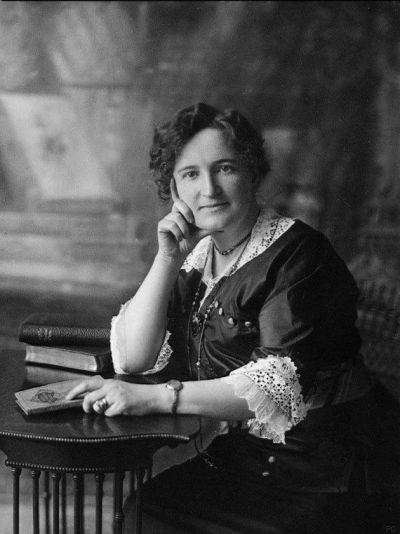
Nellie McClung was a trailblazer as both a suffragette and an elected official. As an advocate of eugenics, she supported the forced sterilization of women.

Read
2:00 AM CDT