Canada extends Ebola travel restrictions for another 30 days
Advertisement
Read this article for free:
or
Already have an account? Log in here »
To continue reading, please subscribe:

Digital Subscription
One year of digital access for only $205*
- Enjoy unlimited reading on winnipegfreepress.com
- Read the E-Edition, our digital replica newspaper
- Access News Break, our award-winning app
- Play interactive puzzles
*First annual payment billed as $205.00 + GST for one year. This annual subscription will automatically renew at $233.00 + GST every 52 weeks (10% off the regular annual price of $259.35). Offer available to new and qualified returning subscribers only. Cancel any time.
To continue reading, please subscribe:
Add Free Press access to your Brandon Sun subscription for only an additional
$1 for the first 4 weeks*
- Enjoy unlimited reading on winnipegfreepress.com
- Read the E-Edition, our digital replica newspaper
- Access News Break, our award-winning app
- Play interactive puzzles
*Your next Brandon Sun subscription payment will increase by $1.00 and you will be charged $17.95 plus GST for four weeks. After four weeks, your payment will increase to $24.95 plus GST every four weeks.
Read unlimited articles for free today:
or
Already have an account? Log in here »
Government officials say people from Ebola-affected countries will continue to be banned from entering Canada for another 30 days, prolonging the state of limbo for tens of thousands of people who have had their residency applications suspended since May.
The extension means decisions on immigration and visa applications from residents of the Democratic Republic of Congo, Uganda and South Sudan will remain on hold until Sept. 28. People from those countries who already hold valid visas will also be barred from entering Canada.
The government says the risk of Ebola in Canada is still low, but these measures are precautionary given the severity of the disease.
However, some public health experts say the decision is unjustified and “cosmetic,” going against the guidance of the World Health Organization in favour of appearing to protect Canadians.
Canada will also keep a 21-day quarantine for anyone returning from those three countries, a measure that aid agencies said impacts their ability to send humanitarians to the region.
Foreign nationals who have been in the DRC within the past 21 days will also not be allowed to fly to Canada.
On Thursday, the Africa Centres for Disease Control and Prevention and the World Health Organization declared the outbreak over in Uganda. No cases have been reported in South Sudan.
The same cannot be said in neighbouring DRC, where 2,786 people have died of 5,794 infected, deemed the fastest-growing Ebola outbreak and on track to become the deadliest on record.
Ebola spreads through bodily fluids like blood, vomit and semen, and people are only infectious when they are symptomatic. Public health experts say these factors make the risk of an imported case low and manageable for Canada, but a challenge in the DRC where there are fundamental access issues to health care and clean water, alongside threats by rebel groups.
Canadian Carolyn Nicol worried this would happen.
Nicol was living in Kampala, Uganda’s capital and her husband’s hometown, when Canada initially announced it would be closing its border to her husband, and about 67,000 others who had their visa applications and documents suspended on May 30.
“I feel like it’s just telling him, ‘You are not welcome,'” Nicol said after hearing the news.
“We like to talk about how we’re such a welcoming open society and then, it just couldn’t be more clear that Ugandans are not wanted right now and there is nothing I can do to stop it.”
Nicol had hoped to at some point live in both of their hometowns, or at least for him to meet her family and friends in Canada.
That idyllic future now feels pushed even further away, she said.
Immigration officials said 31,693 permanent residency applications and 10,465 temporary residency applications from overseas have been put on hold.
The documents of people who have been granted residency but are not in Canada have also been suspended. Officials said that includes 1,534 permanent residents and 23,415 temporary residents who are overseas.
Nicol already spent seven weeks apart from her husband, who is awaiting a decision on a spousal sponsorship application and a visitor visa he had hoped to use to attend two weddings this summer.
Instead, she had to make a split-second decision when the border restrictions were announced in May. If she didn’t leave Uganda and start her three-week quarantine, she would have missed the weddings.
Nicol says it makes no sense that she can enter Canada, but her husband cannot.
“Show me the science that says a Canadian can go to Canada and quarantine, but a Ugandan can’t come at all. Like, show me the science, where does that make any sense?” Nicol asked in frustration.
“Is the Canadian government trying to imply that somehow I’m less of a risk? Because, if so, that’s just discrimination, plain and simple.”
When Canada first announced its Ebola measures, there were a handful of cases in Uganda. That number later rose to 20, including two deaths. It’s been 42 days since the last patient was discharged on July 16.
Roojin Habibi, a global health law researcher, questioned why people entering Canada through the immigration process are not allowed to quarantine the same way as Canadians.
“Why are we applying different rules, depending on last place of residence, right? The public health argument is really weak,” said Habibi, research director of global health law at the Global Strategy Lab at the University of Ottawa and York University.
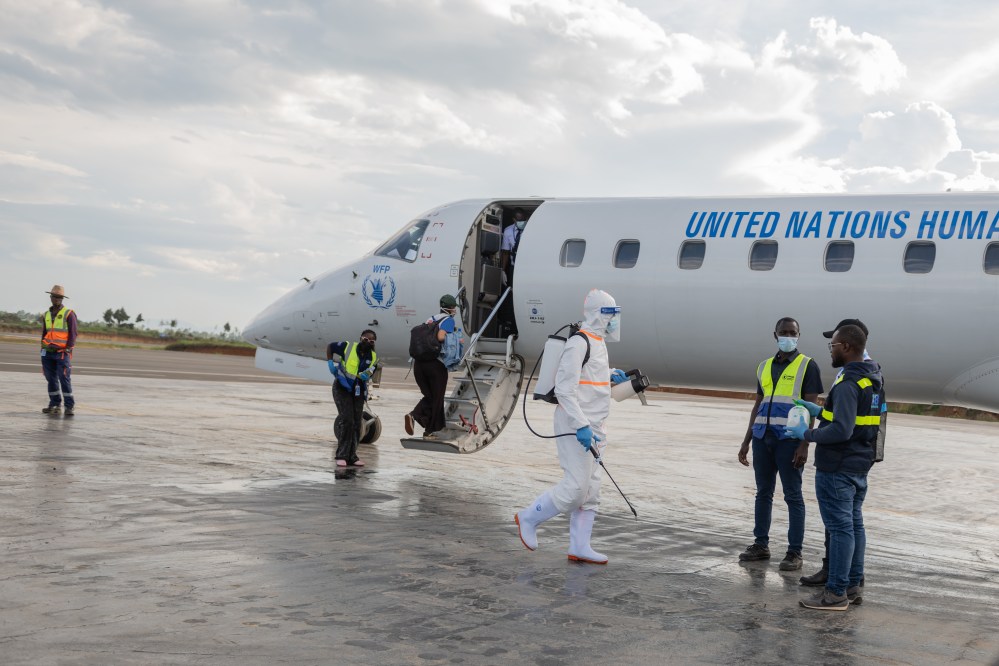
In response to criticism, a spokesperson for the Public Health Agency of Canada said that given the severity of the disease and the potential consequences of delayed detection, it’s important to “remain vigilant.”
“Although the global public health risk remains low, the consequences for affected individuals are severe, given the seriousness of the disease and the absence of licensed vaccines or therapeutics,” Mark Johnson said.
One of the added hurdles with tackling this outbreak is the rare species of Ebola responsible, the Bundibugyo virus, which currently has no specific vaccine or treatment.
Border measures were initially announced ahead of the FIFA World Cup, pitched as a precautionary safety measure aligned with the United States and Mexico. The WHO criticized the measures as being based on fear rather than science.
The WHO doubled down on its stance earlier this month, saying flights should not be suspended and travellers should not be denied entry.
Yet, Canada says it is continuing to work closely with the U.S. and Mexico to “keep Ebola out of North America.”
Habibi pointed out that Canada’s relationship with the U.S. is different after the recent collapse of trade talks.
“I was also hopeful that given our trade relationships with the United States being in the state that they are now, that we would be willing to part ways from an approach that is very American in its combination of measures involving border and immigration impacts,” she said from Ottawa.
“But it seems like that has not in fact impacted how IRCC and the Public Health Agency of Canada are going to be looking at this issue.”
Dr. Joanne Liu, director of the Pandemic and Emergency Readiness Lab at McGill University, said blanket travel restrictions are “much more a cosmetic thing,” put in place to appease people in Canada.
“It looks as if the country is doing something, but it’s not, to a certain extent. Some pieces of it are not completely rational,” said Liu, who led MSF, also known as Doctors Without Borders, during the 2014-2016 West Africa Ebola outbreak.
Speaking from Kampala before a decision on travel restrictions was announced, Nakate Flavia Priscilla said she could not even think about the possibility of an extension to the rules.
The 26-year-old leader of a Ugandan dance troupe was supposed to perform in Canada, as she has many times before on visitor visas, to raise money for primary and secondary schools in East Africa.
The group was scheduled to be a part of a FIFA World Cup event and smaller showcases, but had to stay home because of the ban.

She fears the implications for many students who have gone home to their villages instead this summer.
“Everyone will be heartbroken,” Priscilla said.
“We just pray that everything comes to normal.”
This report by The Canadian Press was first published Aug. 28, 2026.
Canadian Press health coverage receives support through a partnership with the Canadian Medical Association. CP is solely responsible for this content.
Related Articles
Ebola outbreak in eastern Congo spreads to 2 new health zones with a total of 60 areas now affected


Advertisement Advertise With Us
Advertisement Advertise With Us