Here’s what to know about flu, COVID-19 and RSV this respiratory virus season
Advertisement
Read this article for free:
or
Already have an account? Log in here »
To continue reading, please subscribe:

Digital Subscription
One year of digital access for only $205*
- Enjoy unlimited reading on winnipegfreepress.com
- Read the E-Edition, our digital replica newspaper
- Access News Break, our award-winning app
- Play interactive puzzles
*First annual payment billed as $205.00 + GST for one year. This annual subscription will automatically renew at $233.00 + GST every 52 weeks (10% off the regular annual price of $259.35). Offer available to new and qualified returning subscribers only. Cancel any time.
To continue reading, please subscribe:
Add Free Press access to your Brandon Sun subscription for only an additional
$1 for the first 4 weeks*
- Enjoy unlimited reading on winnipegfreepress.com
- Read the E-Edition, our digital replica newspaper
- Access News Break, our award-winning app
- Play interactive puzzles
*Your next Brandon Sun subscription payment will increase by $1.00 and you will be charged $17.95 plus GST for four weeks. After four weeks, your payment will increase to $24.95 plus GST every four weeks.
Read unlimited articles for free today:
or
Already have an account? Log in here »
TORONTO – Respiratory virus specialists say Canadians should get their flu shot as soon as it becomes available in their area this fall.
Most provinces will start providing the flu vaccine to the general public by the end of October and it will be free of charge.
In Ontario, both the flu and COVID-19 shots became available on Sept. 28 for people age 65 and older, residents of long-term care or retirement homes and hospital patients and staff.
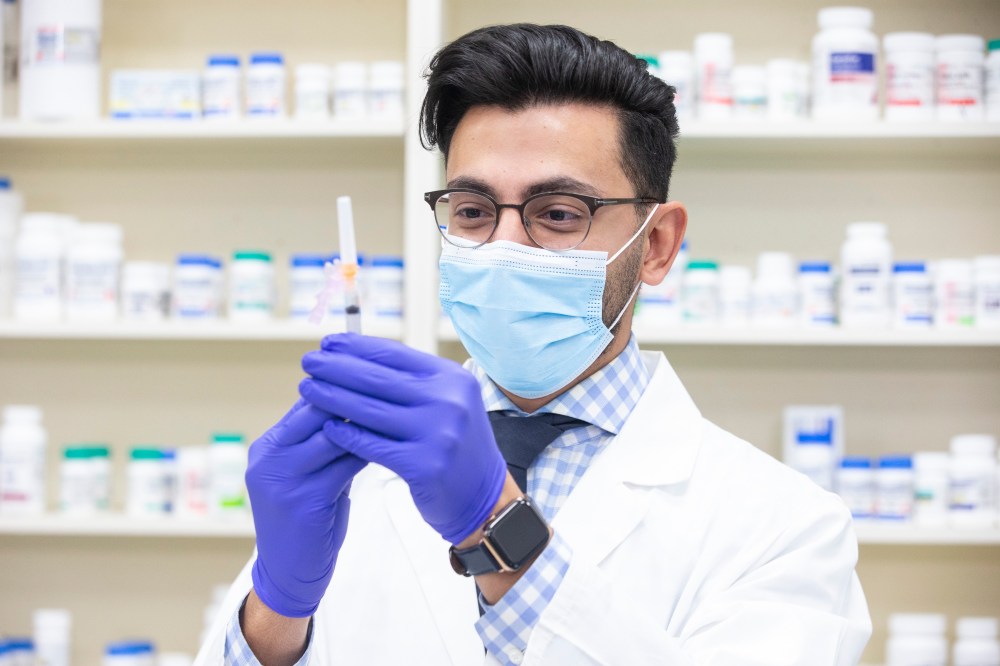
The flu vaccine is recommended for everyone six months of age and older, said Dr. Winnie Siu, a senior medical adviser for the National Advisory Committee on Immunization (NACI), during an online briefing for health-care professionals on Tuesday.
A higher-dose version of the flu shot is recommended for adults aged 65 and older because aging immune systems often need a bigger boost.
A nasal spray alternative to the flu shot, called FluMist, is approved in Canada but availability may vary between provinces and territories, Siu said.
Even though last year’s flu vaccine wasn’t an ideal match with the circulating strains, evidence still showed 40 per cent protection against requiring medical attention or hospitalization for flu infections, she said.
Dawn Bowdish, an immunologist at McMaster University and head of the Firestone Institute for Respiratory Health in Hamilton, said the flu vaccine works for about six months, but peak protection lasts for about three months.
“This year it looks like we’re heading towards an early season so the advice is pretty clear — get your flu shot as soon as you can because it looks like we’re about to tick up into the epidemic range fairly shortly,” she said in an interview on Friday.
It takes about two weeks for protection to kick in after vaccination.
Bowdish said rates of flu vaccination for children have been declining since the pandemic and urged parents to get their kids immunized.
“Flu is really, really bad for kids. Super bad for kids with asthma or any other sort of health conditions but even … healthy children need to get a flu shot,” she said.
Bowdish also said people who are pregnant sometimes don’t realize they are a priority group for vaccination against flu and other respiratory viruses.
“Serious respiratory infections — be they COVID, be they flu, be they RSV — during pregnancy can be really problematic both for mom and for baby so pregnant people should absolutely get vaccinated as well to protect themselves and their baby.”
Early data from the Public Health Agency of Canada shows that the H1N1 influenza A type is circulating in parts of the country.
Last year, H3N2 was the dominant influenza A type in Canada.
Bowdish said in general, H3N2 tends to hit older adults and long-term care homes particularly hard, while H1N1 tends to be more serious in children.
But it’s too early to tell whether H1N1 will become the primary strain for this season, she said, noting that the Southern Hemisphere had another H3N2-dominated flu season this year.
RSV
RSV — respiratory syncytial virus — infects almost all children by the time they are two years old, said Dr. Elissa Abrams, a pediatrics specialist and another senior medical adviser for NACI, at the Tuesday online briefing.
Although the symptoms are typically cold-like, RSV can also be very serious as the most common cause of bronchiolitis and pneumonia in the lungs.
NACI recommends nirsevimab or clesrovimab — ready-made antibodies — be given to all infants during their first RSV season and to high-risk infants during their second respiratory virus season, Abrams said.
The exception is non-high risk infants who got protection from their mothers who were vaccinated against RSV during pregnancy, she said.
Infants who were born prematurely, have cardiorespiratory disease, are immunocompromised, have airway problems or Down syndrome are considered high-risk for serious RSV illness, Abrams said.
Adults age 75 and older are also at higher risk for RSV during respiratory virus season and should be vaccinated, she said.
Adults between 65-74 with the same high-risk health conditions affecting infants, as well as those with neurologic or neurodevelopment conditions, diabetes, chronic kidney or liver disease or high obesity — as well as long-term care residents, stem cell or lung transplant recipients, people on home oxygen and people on dialysis — should also be vaccinated against RSV, Abrams said.
Right now, high-risk adults just get one lifetime RSV vaccine, as the evidence is not yet clear on whether it should be given each year, she said.
COVID-19
NACI strongly recommends COVID-19 vaccination for anyone 65 years of age and older, residents of long-term care, retirement homes, or assisted living.
Because COVID has not established a seasonal pattern solely in the fall and winter, a second dose is recommended each year for people age 80 and older, long-term care residents, people who are immunocompromised and people 65 or older who have underlying medical conditions.
Nicole Forbes, technical lead on COVID-19 for NACI, said in Tuesday’s briefing that age — both old and very young — is the most significant risk factor for getting seriously ill with the virus.
Seniors account for the most COVID-19 hospitalizations and deaths, she said. The next-highest risk group — even though the rate is much lower — is children under five years of age.
NACI also strongly recommends COVID-19 vaccination for children and adults with complex health needs, people who are pregnant, health-care workers and people from Indigenous or racialized communities.
The immunization advisory committee recommends that anyone six months of age and older could be offered a COVID-19 vaccine – but it’s up to the provinces and territories to decide whether they will publicly fund them for the general public.
This year’s COVID-19 vaccine targets the XFG strain of the coronavirus, a subtype of the Omicron variant.
Bowdish said it is expected to be similar to the other Omicron subvariants in terms of the illness patients experience.
Pfizer’s and Moderna’s COVID-19 mRNA vaccines are available this year, as well as a non-mRNA protein-based vaccine called Nuvaxovid by Sanofi.
Nuvaxovid can be given to anyone 12 years of age and older.
Moderna’s vaccine, Spikevax, is approved starting at 6 months of age.
Pfizer’s vaccine, Cominarty, can be given starting at 5 years of age.
B.C., Ontario, Saskatchewan, Manitoba, New Brunswick, Prince Edward Island, Newfoundland and Labrador and Yukon Territory have all confirmed that they will be providing COVID-19 vaccines free of charge to anyone who wants it.
Alberta’s website says COVID vaccines will be funded for people at risk based on NACI’s strong recommendation, as well as teachers and people who are homeless.
According to Quebec’s website, the COVID-19 vaccine will be free for people at high risk for serious infection as well as people living in remote and isolated areas.
A spokesperson for Nova Scotia said in an email that the details of its respiratory virus immunization program would be announced soon.
The Canadian Press has not yet been able to confirm the COVID-19 vaccination plans in the Northwest Territories and Nunavut.
This report by The Canadian Press was first published Oct. 9, 2026.
Canadian Press health coverage receives support through a partnership with the Canadian Medical Association. CP is solely responsible for this content.