WEATHER ALERT

Alaska’s Tlingit Code Talkers praised for secret WWII work

Advertisement

Advertise with us

ANCHORAGE, Alaska - Army veteran Richard Bean Sr. died without anyone knowing that he and four other long-deceased Alaska Natives had used their Tlingit language to outsmart the Japanese during World War II.

Read this article for free:

or

Already have an account? Log in here »

To continue reading, please subscribe:

Subscribe and receive a limited-edition Free Press branded hat or tote.

Digital Subscription

One year of digital access for only $205*

  • Enjoy unlimited reading on winnipegfreepress.com
  • Read the E-Edition, our digital replica newspaper
  • Access News Break, our award-winning app
  • Play interactive puzzles

*First annual payment billed as $205.00 + GST for one year. This annual subscription will automatically renew at $233.00 + GST every 52 weeks (10% off the regular annual price of $259.35). Offer available to new and qualified returning subscribers only. Cancel any time.

To continue reading, please subscribe:

Add Free Press access to your Brandon Sun subscription for only an additional

$1 for the first 4 weeks*

  • Enjoy unlimited reading on winnipegfreepress.com
  • Read the E-Edition, our digital replica newspaper
  • Access News Break, our award-winning app
  • Play interactive puzzles
Start now

*Your next Brandon Sun subscription payment will increase by $1.00 and you will be charged $17.95 plus GST for four weeks. After four weeks, your payment will increase to $24.95 plus GST every four weeks.

Hey there, time traveller!
This article was published 27/03/2019 (2679 days ago), so information in it may no longer be current.

ANCHORAGE, Alaska – Army veteran Richard Bean Sr. died without anyone knowing that he and four other long-deceased Alaska Natives had used their Tlingit language to outsmart the Japanese during World War II.

Now, they are finally being hailed in their home state for their lifesaving efforts as servicemen.

Earlier this month, legislators passed a formal citation honouring the Tlingit Code Talkers. State flags were flown at half-staff and later presented to the men’s families.
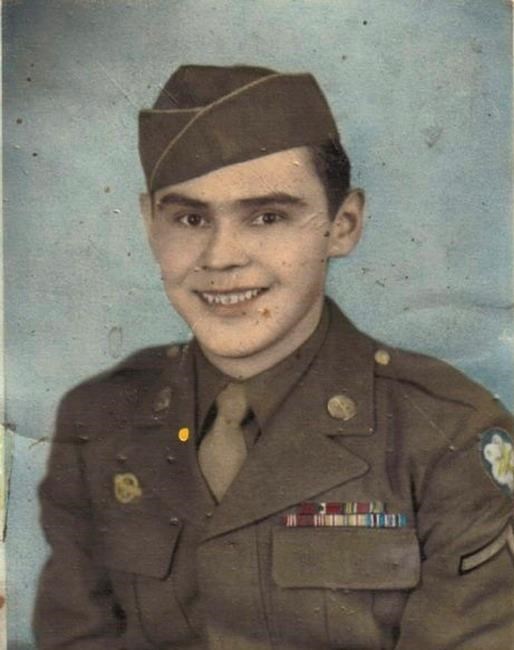
This undated photo provided by relatives shows the late Army veteran Richard Bean Sr. of Hoonah, Alaska. Bean was among five long-deceased men who are being hailed by the state in March 2019 for their life-saving efforts during World War II for using their Native language to help the military outsmart the Japanese with Tlingit codes they could not break. (Family of Richard Bean Sr. via AP)

Bean and the others had been forbidden to speak Tlingit as schoolchildren in their southeast Alaska villages. Later, they used it to provide the military with unbreakable codes, as did their more well-known peers, Navajo Code Talkers.

The language of the Alaska Natives had been suppressed by missionaries and teachers trying to “civilize” them, said Rosita Worl, president of the Sealaska Heritage Institute. The Juneau non-profit works to preserve and enhance the cultures of southeast Alaska’s Tlingit, Haida and Tsimshian tribes.

Punishments for students who spoke Tlingit included having their mouths washed out with soap and their hands struck with rulers, Worl said.

“We’re finally ecstatic that there is this recognition that our people served this country, even served this country that wasn’t always good to them,” she said.

The men’s contributions went undisclosed for decades because the U.S. military had kept the unbroken codes secret in case they were needed in future wars.

“Their orders were not to talk about it,” Ozzie Sheakley, an Army veteran and Tlingit leader, said about the five Alaska Natives. “They took those orders seriously.”

Even their closest relatives had no clue about the wartime endeavours of Richard Bean Sr. of Hoonah and Robert “Jeff” David Sr. of Haines; Sitka brothers and Navy men Mark Jacobs Jr. and Harvey Jacobs; and Sitka resident George Lewis Jr., who served in the Army.

Bean’s wife died before Congress posthumously recognized the men. His 85-year-old nephew, Ron Williams, never knew either, even though the two were close.

Williams said there was only one hint. His uncle told him a platoon leader had overheard him speaking Tlingit with Jeff David while the two served together in the Philippines. They were in the same company but different platoons.

The Army official asked how the men would like to handle communications then gave each a walkie-talkie.

That was all Bean said, and Williams never pushed for more, sensing his uncle didn’t want to talk about it. Richard Bean died in 1985.

“Even the guys that knew him all his life, you know, they didn’t know what he did either because he never said anything about it,” Williams said.

David never said anything about the wartime duties to his son, Jeff David Jr., either.

“He just said he was in special services,” the son said.

The military declassified the Navajo Code Talker program in 1968. But it was decades before recognition came to the Tlingit servicemen, after the passage of the Code Talkers Recognition Act of 2008.

Sheakley, commander of the Southeast Alaska Native Veterans, got a call from Department of Defence officials.

They told him the five Alaskans had been identified as Code Talkers from the Tlingit tribe, along with others from 32 Lower-48 tribes. Soon they would get the recognition long afforded the Navajos, who made up the largest group of Code Talkers.

In 2013, Congress recognized the Code Talkers, who were posthumously awarded silver medals. Sheakley also received a Congressional Gold Medal on behalf of the entire Tlingit tribe.

Alaska state Rep. and Tlingit Vietnam veteran Bill Thomas thought state recognition would soon follow.

“I just waited and waited and waited,” Thomas said. “I finally said, ‘Hey, it’s time to pay tribute to these men.'”

State lawmakers agreed after Thomas and the Sealaska Heritage Institute pushed the idea.

The role the men played in history was a stunning discovery for the family of George Lewis Jr.

His son, Ray Lewis, was born after the war and never knew his father was in the military.

“I’m very proud of it,” Ray Lewis said of the new recognition. “My father was instrumental in saving a lot of lives out there.”

___

Follow Rachel D’Oro at https://twitter.com/rdoro .
Report Error Submit a Tip

More Stories

Together Project helps newcomers feel at home

AV Kitching 10 minute read Preview

Together Project helps newcomers feel at home

AV Kitching 10 minute read 6:00 AM CDT

When refugee families first arrive in Winnipeg they are plunged into an alien culture.

Often fleeing dangerous circumstances, discrimination or war, displaced families are forced to navigate bewildering societal norms and cultural expectations in an unfamiliar environment.

It can often feel utterly overwhelming.

And while government settlement agencies are an invaluable foundational resource, nothing can replace human connection and peer-to-peer guidance.

Read
6:00 AM CDT

Ref ‘dominates’ game in Sea Bears loss to Honey Badgers, says coach

Joshua Frey-Sam 7 minute read Preview

Ref ‘dominates’ game in Sea Bears loss to Honey Badgers, says coach

Joshua Frey-Sam 7 minute read Saturday, Jul. 25, 2026

Following a festive Christmas-in-July-themed Saturday afternoon inside Canada Life Centre, Winnipeg Sea Bears head coach Mike Raimbault didn’t mince words about who he thought was the Grinch in a hard-fought 88-86 loss to the visiting Brampton Honey Badgers that ended in controversy.

As the Sea Bears owned a one-point lead in Target Score Time, Brampton guard Sean East II was awarded three free throws — all of which he converted — after a questionable foul called on Teddy Allen by official Perry Stothart.

Raimbault, who has been known to bite his tongue on such topics, left nothing to the imagination about where he stood on the game-deciding judgment made in a game that had major post-season implications.

“I just felt like it was a fitting ending to the game where Perry Stothart had dominated the flow of the game from the start,” he said. “For him to call a bit of a guess foul and end the game on the foul, I felt like it’s disappointing that he can come in and dictate how the game’s going to be played and flow, and (that) continues to be a bit of an M.O. for him. So I think we’re disappointed with the fact that the league continues to let that happen.”

Read
Saturday, Jul. 25, 2026

Daycare grapples with five-year-old’s outbursts, choking incidents

Maggie Macintosh 4 minute read Preview

Daycare grapples with five-year-old’s outbursts, choking incidents

Maggie Macintosh 4 minute read Friday, Jul. 24, 2026

A Windsor Park child-care facility is weighing a five-year-old’s right to care versus the safety of other children who have been choked.

Little People’s Place expelled a pre-schooler in the spring in response to his aggressive behaviour toward other children and staff.

The child’s family has appealed to the province for him to be reinstated.

The case is raising concerns about inclusion support resources and measures to protect everyone at the Cottonwood Road daycare.

Read
Friday, Jul. 24, 2026

Alaska's Tlingit Code Talkers praised for secret WWII work

Rachel D'Oro, The Associated Press 4 minute read Preview

Alaska's Tlingit Code Talkers praised for secret WWII work

Rachel D'Oro, The Associated Press 4 minute read Wednesday, Mar. 27, 2019

ANCHORAGE, Alaska - Army veteran Richard Bean Sr. died without anyone knowing that he and four other long-deceased Alaska Natives had used their Tlingit language to outsmart the Japanese during World War II.

Now, they are finally being hailed in their home state for their lifesaving efforts as servicemen.

Earlier this month, legislators passed a formal citation honouring the Tlingit Code Talkers. State flags were flown at half-staff and later presented to the men's families.

Bean and the others had been forbidden to speak Tlingit as schoolchildren in their southeast Alaska villages. Later, they used it to provide the military with unbreakable codes, as did their more well-known peers, Navajo Code Talkers.

Read
Wednesday, Mar. 27, 2019

What are we teaching children at the rodeo?

Danae Tonge 5 minute read 2:01 AM CDT

Every summer in Manitoba, rodeo season brings thousands of children to local rodeos and the Manitoba Stampede. They arrive with cowboy hats and cotton candy in hand, excitement in their eyes.

Yet, as a mother who works in education, I can’t help but wonder: what are we teaching them in those stands?

Inside classrooms, we teach children that kindness matters. We encourage empathy, discourage bullying and ask students to consider how their actions affect others. Students are taught that animals experience fear, pain and distress, just like us. Yet when school ends, we celebrate events built around chasing, restraining, roping and riding animals for entertainment.

This contradiction is difficult to ignore.

An eroding Winnipeg neighbourhood looks to new foundations

Ian Bickis, The Canadian Press 6 minute read Preview

An eroding Winnipeg neighbourhood looks to new foundations

Ian Bickis, The Canadian Press 6 minute read Updated: 8:54 AM CDT

WINNIPEG - The lot Jesse Bettcher lives on in Winnipeg's north end used to be a pile of burnt rubble. Same with the one next door. And the one across the street.

But he's now the proud owner of a two-storey house with blue-grey siding and white trim, so new the orange construction fencing is still out front.

It's a dream home for Bettcher, and the latest hope for a city seeking to knock down, clean up and revitalize neighbourhoods that have seen hundreds of homes left vacant, leading to safety hazards and worries about the future.

He bought the house as part of a pilot project aimed at creating affordable home ownership. It let him and his family move out of a rental that he said was falling apart.

Read
Updated: 8:54 AM CDT