An Indigenous mystery
Sioux chef's quest to learn what his ancestors ate becomes a cookbook where nothing is wasted
Advertisement
Read this article for free:
or
Already have an account? Log in here »
To continue reading, please subscribe:

Digital Subscription
One year of digital access for only $205*
- Enjoy unlimited reading on winnipegfreepress.com
- Read the E-Edition, our digital replica newspaper
- Access News Break, our award-winning app
- Play interactive puzzles
*First annual payment billed as $205.00 + GST for one year. This annual subscription will automatically renew at $233.00 + GST every 52 weeks (10% off the regular annual price of $259.35). Offer available to new and qualified returning subscribers only. Cancel any time.
To continue reading, please subscribe:
Add Free Press access to your Brandon Sun subscription for only an additional
$1 for the first 4 weeks*
- Enjoy unlimited reading on winnipegfreepress.com
- Read the E-Edition, our digital replica newspaper
- Access News Break, our award-winning app
- Play interactive puzzles
*Your next Brandon Sun subscription payment will increase by $1.00 and you will be charged $17.95 plus GST for four weeks. After four weeks, your payment will increase to $24.95 plus GST every four weeks.
Read unlimited articles for free today:
or
Already have an account? Log in here »
Hey there, time traveller!
This article was published 20/11/2017 (3162 days ago), so information in it may no longer be current.
What’s a quintessential Native American dish?
Sean Sherman offers a gentle laugh when he hears that question.
“That’s like asking someone for a typical European meal,” he said. “The assumption is that all those people are the same.”
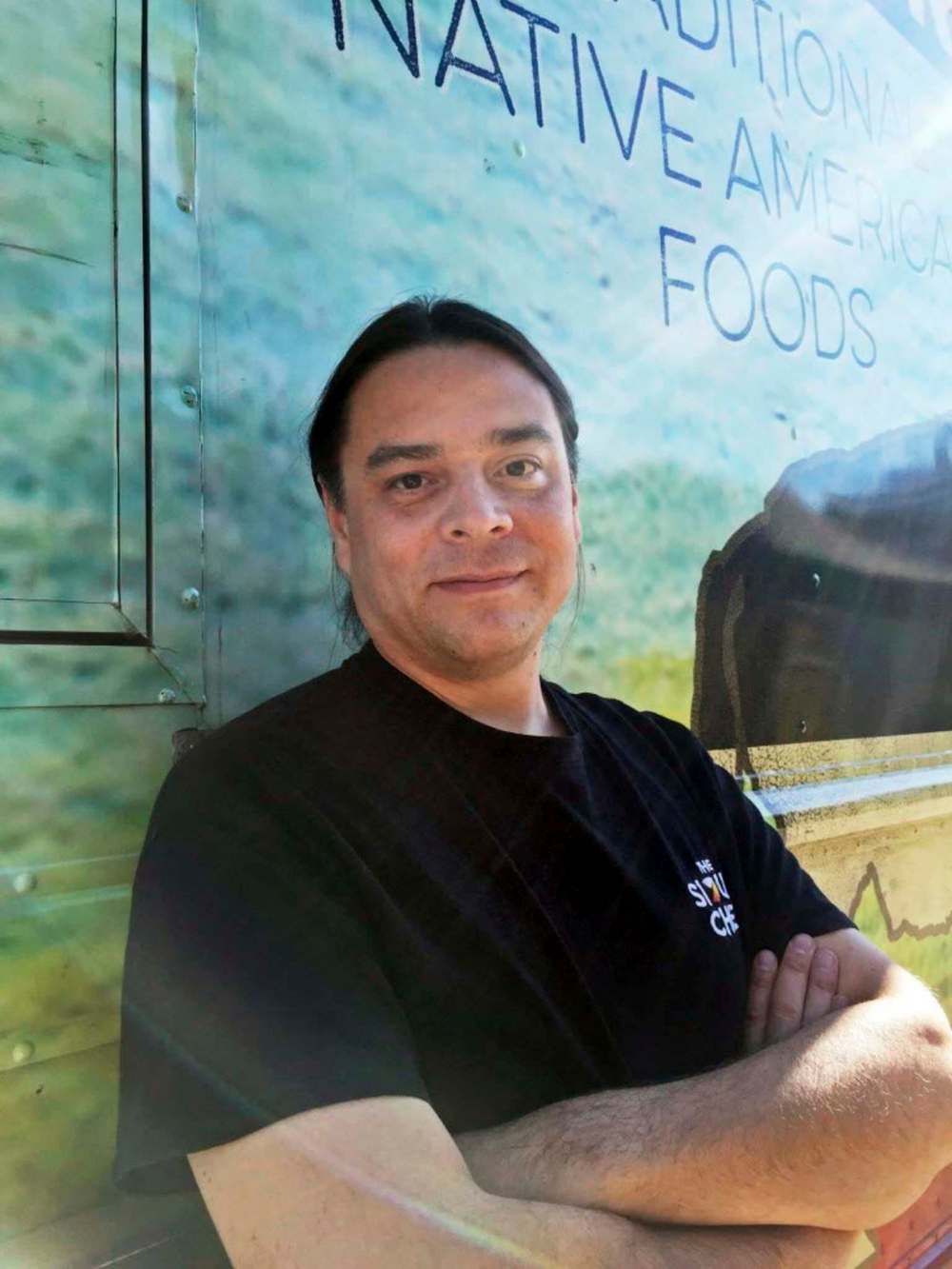
Sherman recites the numbers to prove his point: 567 tribes in the United States and another 634 in Canada. Three out of 10 Mexicans speak an Indigenous language.
That’s a lot of diversity, even before you get to the dinner table.
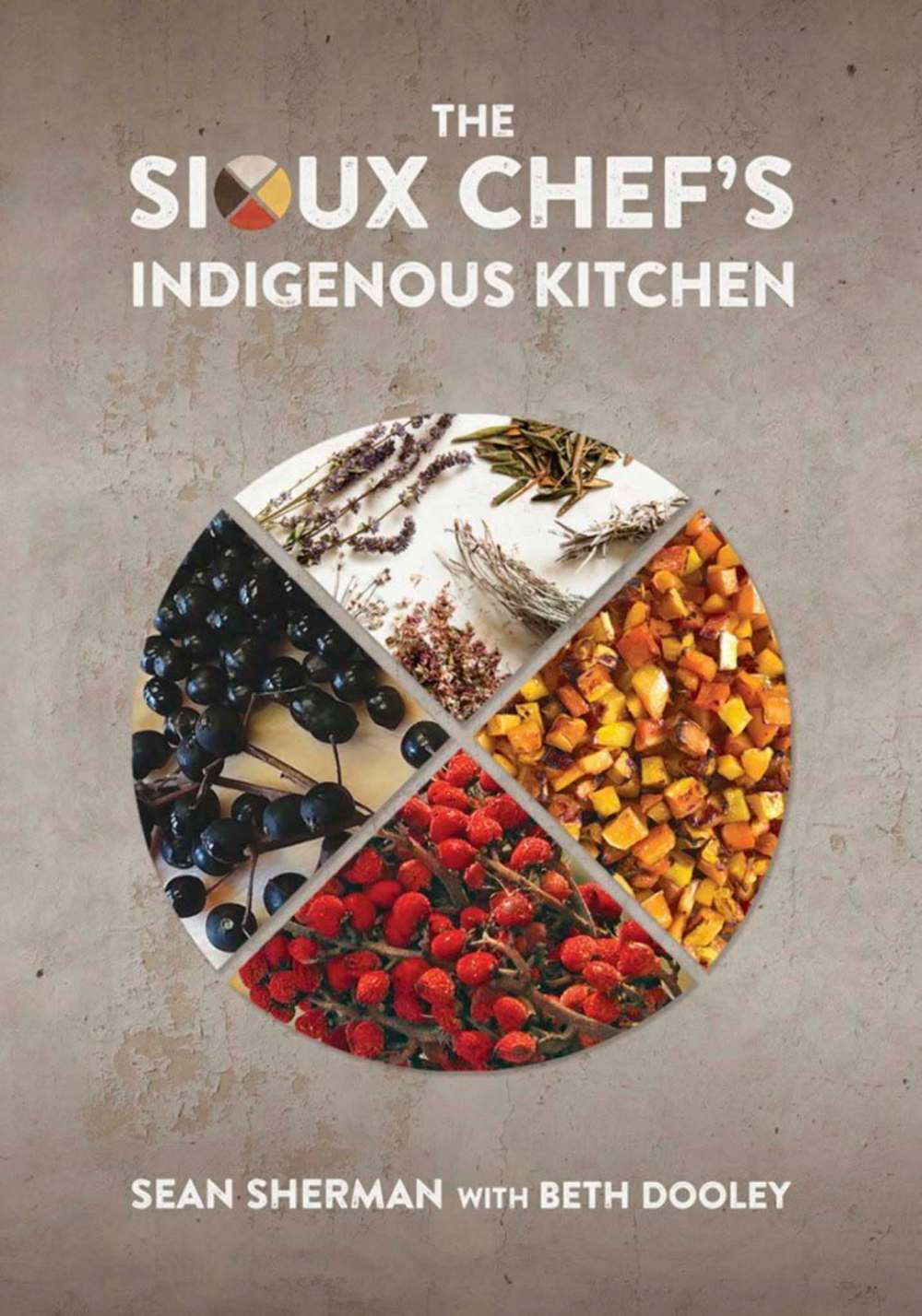
Sherman explores this as he looks at the relationship of food and Indigenous people in the Midwest in his first book, written with author Beth Dooley, The Sioux Chef’s Indigenous Kitchen (University of Minnesota Press, 226 pages, C$45.50).
He and Dooley sat down to talk about the book recently, while Sherman’s team of cooks prepped 500 bison meatballs, amaranth crackers and more in the commercial kitchen in the next room. The soft-spoken chef, who conveys a sense of calm, speaks in the rat-a-tat manner of one with a message that must be delivered. This skill has taken him around the nation and beyond to speak before groups, including the Culinary Institute of America, the James Beard Foundation, New York University, Brown and Yale and in Italy and India.
Sherman, who is Oglala Lakota, spent his early years on the Pine Ridge Reservation in southwest South Dakota, a vista of wide-open prairies and plenty of family. He learned to cook at a young age out of necessity, when his mother was in school yet working multiple jobs.
At 13, Sherman landed his first job in a restaurant, where he bused and washed dishes and prepped food. By the next year, he had worked his way up to the grill in the kitchen at a local resort. After that, he was hooked on the profession.
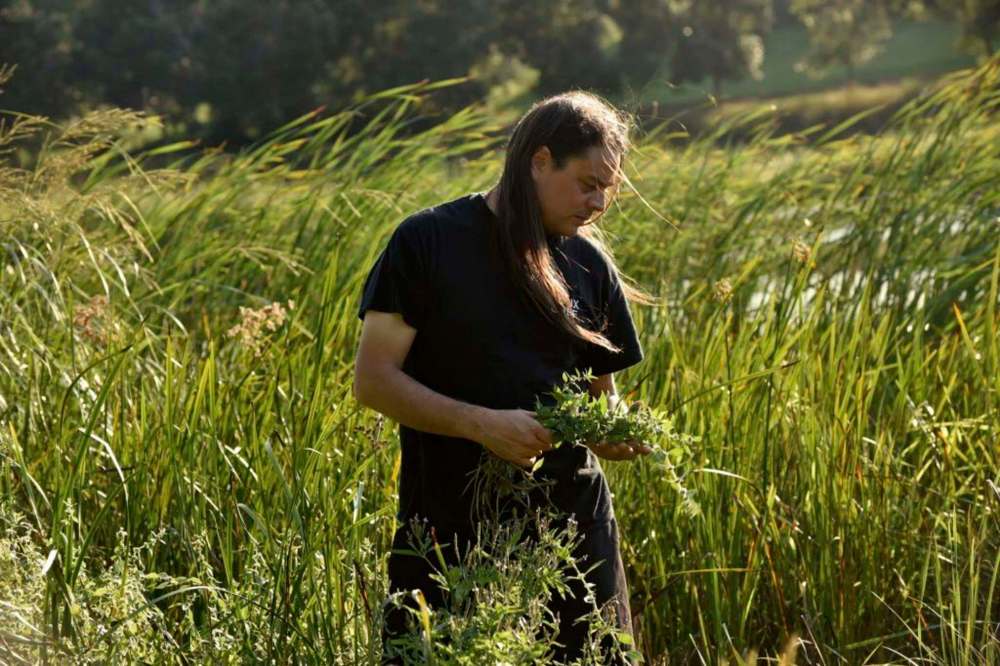
A summer working for the U.S. Forest Service followed, where his job was to identify plants, which may have inspired his fascination with the edible flora around him.
There was a move to Minneapolis and years spent in various Twin Cities restaurant kitchens, including Broders’ Pasta Bar, where he became sous chef.
But it was during a year off in Mexico that he had an epiphany as he observed how a restaurant there worked with an extreme local focus.
What did his own ancestors eat before Europeans arrived in America? Sherman wanted to find out.
He dug into the subject and gained an understanding of how tribes in the past managed their food security.
Which led him to his own vision: to work with Indigenous ingredients, using simple tools and basic techniques, for the purpose of making change. “The statistics on reservations are humble; they are broken. We felt that food could create change,” he said.
In 2014 Sherman started the Sioux Chef, a business that managed catering, pop-up dinners and a food truck (”What better way to test the interest in Native American foods?” he said).
He brings that sense of wonder to his book as he advocates for an Indigenous diet that would seem to follow all of today’s culinary trends: hyperlocal, ultraseasonal, healthful (without processed foods, sugar, wheat, dairy or high-cholesterol animal products).
If that’s not enough to grab your dietary attention, the foods are also naturally low-glycemic, high-protein, low-salt and plant-based.
“It’s what paleo wants to be,” said Dooley, with a laugh. “And nothing gets wasted. If you have extra cornmeal, make cornmeal cakes. Make enough wild rice to repurpose it. This is the theme that runs throughout the book.”
Most of the recipes lean on familiar ingredients, with some finishing touches that may be unfamiliar: Juniper, for example, can be used like pepper. Maple sugar adds sweetness and a sense of place; sumac (the staghorn variety) a lemony note. Bear appears in a hunter’s stew, but there’s an easy substitute of lamb or bison, or even elk or antelope.
Sherman does not offer a recipe for fry bread because, although it’s often seen as a native dish, it’s one that arose 150 years ago and reflects government-issued commodities that included flour, sugar and lard. The resulting fry bread reflects “perseverance and pain, ingenuity and resilience,” Sherman said.
Better to serve up corn cakes wrapped around braised bison or smoked duck, he said.
His research continues. “This is a beginning,” he said.
“We are not calling ourselves masters of this. We are learning more each season. There are still people who use indigenous foods today, and we can find out more from them directly.”
— Minneapolis Star Tribune
Wild Rice Cakes
Makes 4 to 6
Note: Use for breakfast, as a snack or as the base for a well-seasoned bison braise or duck. They’re especially good topped with smoked fish and a sorrel sauce. Make them tiny for an appetizer or big for dessert slathered in a maple-berry sauce. These are made from overcooked wild rice, pureed into thick dough. Stir in a little cooked wild rice for texture. Maple sugar is available in many stores; substitute light brown sugar, if needed. From The Sioux Chef’s Indigenous Kitchen, by Sean Sherman.
500 ml (2 cups) cooked wild rice (see recipe), divided
750 ml (about 3 cups) water
Pinch salt
Generous pinch maple sugar (see note)
45-60 ml (3 to 4 tbsp) sunflower oil, or more as needed
Put 375 ml (1 1/2 cups) cooked wild rice and 750 ml (3 cups) water into a saucepan. Place over high heat, bring to a boil and reduce heat to a simmer. Cook until rice is very soft and the water has evaporated. Drain. In a food processor fitted with a steel blade, purée rice into a sticky dough. Place dough into a medium bowl and work in the salt, sugar and remaining (125 ml (1/2 cup) cooked rice.
Scoop out a scant 60 ml (1/4 cup) dough for each patty and shape into rounds about 1 cm (1/2 inch) thick. Heat oil in a heavy skillet and brown patties about 5 to 8 minutes per side until lightly browned. Transfer patties to a baking sheet and place in a warm oven until ready to serve.
Wild Rice
Serves about 8
Note: Hand-harvested wild rice takes less time to cook than the paddy rice that’s often found at supermarkets.
250 ml (1 cup) hand-harvested wild rice (see Note)
1 L (4 cups) water (or enough to cover rice in the pot by 5 cm or 2 inches)
Salt to taste
Wash the rice thoroughly by putting into a colander and running it under cold water until the water runs clear. Place the wild rice, 1 L (4 cups) water and salt into a large, heavy saucepan and bring to a boil. Reduce heat and simmer about 15 to 20 minutes.
Variation: Season the cooking water with a small branch of cedar. Finish the rice with a sprinkling of juniper salt or maple syrup.
Sorrel Sauce
Makes 430 ml (1 3/4 cup)
Note: The sumac called for here is from the Staghorn variety, which has a lemony note. Its berries are a bright orange or red. It’s available in some supermarkets, co-ops and specialty stores. Lemon juice is a substitute. Smoked salt is available in stores or online. It can be prepared over a grill with indirect heat and wood chips on the coals. Spread coarse salt in a thin layer in an aluminum foil pan and place away from the fire. Cover grill and adjust for medium heat. Smoke for 1 hour and cool. From The Sioux Chef’s Indigenous Kitchen.
2 shallots or wild onions

30 ml (2 tbsp) sunflower oil
1 L (4 cups) chopped fresh sorrel
Sumac to taste (see Note)
Smoked salt to taste (see Note)
In a food processor fitted with a steel blade, process shallots, oil and sorrel. Season with sumac and salt.
History
Updated on Monday, November 20, 2017 8:47 AM CST: Adds photos