Agency collects animals killed by cars, poachers for tribes

Advertisement

Advertise with us

FLAGSTAFF, Ariz. - Arizona Native American tribes on the hunt for animal hides, antlers, teeth and other parts for cultural and religious use have a unique new resource: the state's wildlife agency.

Read this article for free:


or

Already have an account? Log in here »

To continue reading, please subscribe:

Subscribe and receive a limited-edition Free Press branded hat or tote.

Digital Subscription

One year of digital access for only $205*

  • Enjoy unlimited reading on winnipegfreepress.com
  • Read the E-Edition, our digital replica newspaper
  • Access News Break, our award-winning app
  • Play interactive puzzles

*First annual payment billed as $205.00 + GST for one year. This annual subscription will automatically renew at $233.00 + GST every 52 weeks (10% off the regular annual price of $259.35). Offer available to new and qualified returning subscribers only. Cancel any time.

To continue reading, please subscribe:

Add Free Press access to your Brandon Sun subscription for only an additional

$1 for the first 4 weeks*

  • Enjoy unlimited reading on winnipegfreepress.com
  • Read the E-Edition, our digital replica newspaper
  • Access News Break, our award-winning app
  • Play interactive puzzles
Start now

*Your next Brandon Sun subscription payment will increase by $1.00 and you will be charged $17.95 plus GST for four weeks. After four weeks, your payment will increase to $24.95 plus GST every four weeks.

Hey there, time traveller!
This article was published 01/04/2019 (2687 days ago), so information in it may no longer be current.

FLAGSTAFF, Ariz. – Arizona Native American tribes on the hunt for animal hides, antlers, teeth and other parts for cultural and religious use have a unique new resource: the state’s wildlife agency.

A recently launched program allows Arizona’s nearly two dozen tribes to make requests to the state Game and Fish Department for animals that have died from poaching or natural causes, or after being hit by a vehicle.

Agency game managers, researchers and other employees then keep an eye out for the carcasses as part of their regular work.
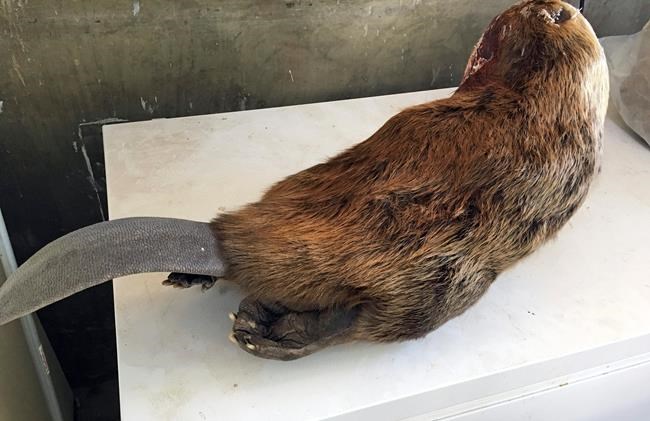
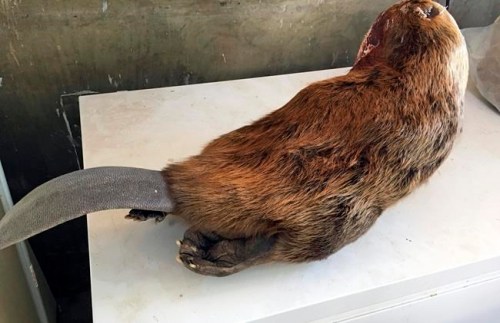
In this Thursday, March 28, 2019 photo, a badger is seen in a freezer at the Arizona Game and Fish Department offices in Flagstaff, Ariz. Arizona wildlife officials are on the lookout for bear, bison, badger and other carcasses for Native Americans' religious and cultural use under a unique new program that allows tribes to make requests for various animal parts. Arizona's nearly two dozen tribes tell the state wildlife agency which items they're looking for, such as tortoise shells for making rattles, and game rangers, biologists and other employees keep an eye out for them as part of their regular work. (AP Photo/Felicia Fonseca)

“It’s all just opportunistic collection of what we find out in the field,” said the department’s tribal liaison, Jon Cooley, who grew up on the Fort Apache reservation in eastern Arizona.

So far, the program’s biggest customers are the Navajo Nation, which has collected bear and mule deer carcasses, and the Hopi Tribe, which has requested turtle shells, and turkey and water fowl feathers. The agency also gathered turtle shells for New Mexico pueblos, often used as ankle or hand rattles in ceremonial dances.

The animal parts — as long as they are not badly decayed — are taken to several freezers across the state for pickup. Typically, they would be left for scavengers, thrown away or even burned.

The Game and Fish Department had been working informally with tribes for years to deliver animal parts, and Cooley said it’s become more formal now with an established shopping list of sorts, and better communication with tribes and wildlife officials.

Native American tribes traditionally have made use of all parts of an animal. Bones and antlers were crafted into spoons, knife handles and weapons. Clothing and shoes were made from animal hides and pelts. Glue could be drawn from hooves. Tribal regalia is adorned with feathers, bone breast plates and necklaces made of animal teeth.

Parts of the animal were eaten as soon as they were killed, and some was dried and saved for later.

The repository doesn’t distribute feathers from eagles or other federally protected migratory birds. The federal government has a repository in Denver for tribes to legally obtain eagle feathers. The Comanche Nation in Oklahoma and a wildlife rescue organization near Phoenix distribute feathers from hawks, falcons and other birds to members of federally recognized tribes.

In Arizona, the items highest in demand are tortoise shells. Also on the tribes’ lists are mountain lions, bison, deer, antelope, and game birds like turkeys. The requests are specific, so Cooley said the department doesn’t want the public donating animals or gathering them from the roadside.

“What we don’t want to become is a depot for dead critters. That’s not the intent,” Cooley said.

One thing Game and Fish employees won’t store is bears that have been tranquilized, because chemicals could be in the fatty tissues and some tribes prefer not to take animals that have been drugged, Cooley said.

While the Navajo and Hopi have been the biggest beneficiaries so far, the plan is to allow tribes in a broader area — including Southern California, Nevada, Utah, Colorado and parts of Texas and Oklahoma — to draw from the repository if Arizona tribes don’t need what’s there, Cooley said.

The Arizona program appears to be unique in the West. States like New Mexico and Montana allow people to salvage animals that have been killed on the road, sometimes for free, but it’s not specific to tribal members. Alaska accommodates requests for wildlife from Native people on a case-by-case basis.

The Native American Fish and Wildlife Society floated the idea at one of its conferences of buying freezers for the Arizona Game and Fish Department to store animals and “everyone was on board, everyone was in support of it,” said Darren Talayumptewa, who sits on the society’s board of directors. The society purchased four freezers for Arizona.

“In the past, if the tribes had seen something dead, if it was roadkill, they would try to see how they could obtain it,” he said. “Back in the day … there was really no process for Native Americans obtaining various parts.”

For Hopi, the carcasses allow the tribe to honour the animals, offering them up in prayer.

“No part of the animal is squandered or discarded,” said Clayton Honyumptewa, director of the tribe’s Department of Natural Resources. “The ultimate veneration of any animal is through its use in ceremonies and prayers conducted for the renewal and continuation of life.”


Report Error Submit a Tip

More Stories

Luxury and livability

Todd Lewys 5 minute read Preview

Luxury and livability

Todd Lewys 5 minute read Yesterday at 2:00 AM CDT

Those in the market for a new luxury home tend to be looking for two things.

First, the home must be unique — which is to say it possesses defining design characteristics that set it apart from other homes. Second, while the home must be different, it also must be livable.

Problem is, many home builders get too focused on fashion, which often makes for a visually arresting home that, sadly, isn’t as functional as it could be.

Fortunately, that’s not the case in Maric Homes’ stunning bungalow show home at 2 Woodland Lane in Headingley’s Forest Grove Estates.

Read
Yesterday at 2:00 AM CDT

Fish go cold as Saltdogs put end to franchise record win streak

Staff 1 minute read Preview

Fish go cold as Saltdogs put end to franchise record win streak

Staff 1 minute read Yesterday at 9:17 PM CDT

The Goldeyes went cold for the first time in 13 games Saturday night in Lincoln.

The Saltdogs grabbed a 12-2 win over the visitors, stopping the club’s franchise win streak record at 13.

The Fish still boast a 40-32 record with 27 games left in the regular season. Last year represented a major step back, with a 41-58 record, which led to missing the playoffs entirely. This season, the club has its sights set on first place in the division.

The Goldeyes wrap up the road series on Sunday, with first pitch scheduled for 1:05 p.m. The Fish are back at Blue Cross Park on Tuesday, hosting the Sioux Falls Canaries to begin a six-game homestand.

Read
Yesterday at 9:17 PM CDT

Today’s horoscope

Georgia Nicols 4 minute read Preview

Today’s horoscope

Georgia Nicols 4 minute read 2:00 AM CDT

MOON ALERT: After 3 a.m. there are no restrictions to shopping or important decisions today. The moon is in Cancer.

ARIES (March 21-April 19)

Tread carefully when talking to family members, especially female relatives, as well as partners, spouses and close friends, because confusion is rampant. It’s easy to misunderstand someone. It’s also easy to innocently mislead people. Yes, it’s that kind of day.

TAURUS (April 20-May 20)

Read
2:00 AM CDT

Agency collects animals killed by cars, poachers for tribes

Felicia Fonseca, The Associated Press 5 minute read Preview

Agency collects animals killed by cars, poachers for tribes

Felicia Fonseca, The Associated Press 5 minute read Monday, Apr. 1, 2019

FLAGSTAFF, Ariz. - Arizona Native American tribes on the hunt for animal hides, antlers, teeth and other parts for cultural and religious use have a unique new resource: the state's wildlife agency.

A recently launched program allows Arizona's nearly two dozen tribes to make requests to the state Game and Fish Department for animals that have died from poaching or natural causes, or after being hit by a vehicle.

Agency game managers, researchers and other employees then keep an eye out for the carcasses as part of their regular work.

"It's all just opportunistic collection of what we find out in the field," said the department's tribal liaison, Jon Cooley, who grew up on the Fort Apache reservation in eastern Arizona.

Read
Monday, Apr. 1, 2019

50 years of rare tall grass prairie celebrated

Aaron Epp 4 minute read Preview

50 years of rare tall grass prairie celebrated

Aaron Epp 4 minute read Yesterday at 7:11 PM CDT

Kristin Bestvater is always glad when she heads to Winnipeg’s St. James neighbourhood and visits the Living Prairie Museum.

“It’s beautiful,” Bestvater said of the 13-hectare site, which is one of the last remaining tall grass prairies in North America. “I don’t know how many other cities would have something like this.”

The Island Lakes resident and her nine-year-old son were among the hundreds of people who gathered at the museum on Saturday to celebrate its 50th anniversary.

Designated a park in 1974, it officially became the Living Prairie Museum in 1976 with the opening of an interpretive centre which houses a gallery of exhibits, a gift shop and an observation deck.

Read
Yesterday at 7:11 PM CDT

Champion curler Meleschuk never lost his passion for the game

Joshua Frey-Sam 9 minute read Preview

Champion curler Meleschuk never lost his passion for the game

Joshua Frey-Sam 9 minute read Yesterday at 3:00 AM CDT

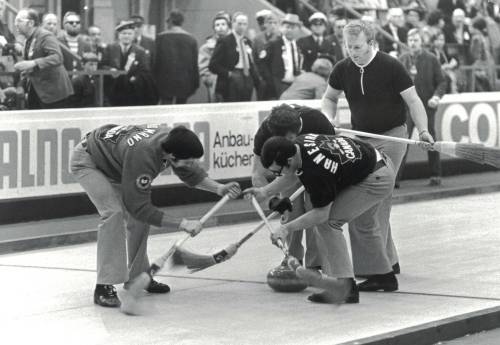
At the height of his curling career, Orest Meleschuk balanced ferocity and finesse like almost no one else.

The Winnipeg product was a fierce competitor skilful enough to thread a rock through a window and find the button.

Known as “The Big O,” he curled competitively for over six decades, finding success at the local, provincial, national and global level, and his longevity on the pebble was notable before lengthy careers became the norm.

Meleschuk is still tied with his good friend John Usackis for the most appearances in the Manitoba men’s provincial playdowns, at 30.

Read
Yesterday at 3:00 AM CDT