Austrian town claims tallest bonfire after 3 months’ work
Advertisement
Read this article for free:
or
Already have an account? Log in here »
To continue reading, please subscribe:

Digital Subscription
One year of digital access for only $205*
- Enjoy unlimited reading on winnipegfreepress.com
- Read the E-Edition, our digital replica newspaper
- Access News Break, our award-winning app
- Play interactive puzzles
*First annual payment billed as $205.00 + GST for one year. This annual subscription will automatically renew at $233.00 + GST every 52 weeks (10% off the regular annual price of $259.35). Offer available to new and qualified returning subscribers only. Cancel any time.
To continue reading, please subscribe:
Add Free Press access to your Brandon Sun subscription for only an additional
$1 for the first 4 weeks*
- Enjoy unlimited reading on winnipegfreepress.com
- Read the E-Edition, our digital replica newspaper
- Access News Break, our award-winning app
- Play interactive puzzles
*Your next Brandon Sun subscription payment will increase by $1.00 and you will be charged $17.95 plus GST for four weeks. After four weeks, your payment will increase to $24.95 plus GST every four weeks.
Read unlimited articles for free today:
or
Already have an account? Log in here »
Hey there, time traveller!
This article was published 17/03/2019 (2689 days ago), so information in it may no longer be current.
BERLIN – An Austrian town has burned what organizers says is the world’s tallest bonfire, clocking in at 60.646 metres (198.97 feet).
The local bonfire group in Lustenau, near the Swiss border, took three months to build the structure. It burned down in less than half an hour Saturday evening. The previous record structure was a 47-meter (154.2-foot) bonfire in Alesund, Norway in 2016.
Western Austria has a tradition of bonfires called “Funken,” or sparks. It’s believed to go back to pagan times when people lit fires to banish winter and welcome the arrival of spring.
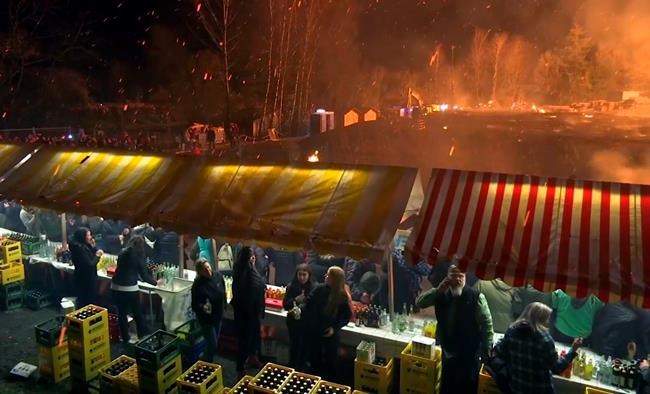
The big bonfire drew criticism from members of the Green party and the Austrian Association for the Protection of the Alps, which said it was “the wrong signal” at a time of concern about climate change.