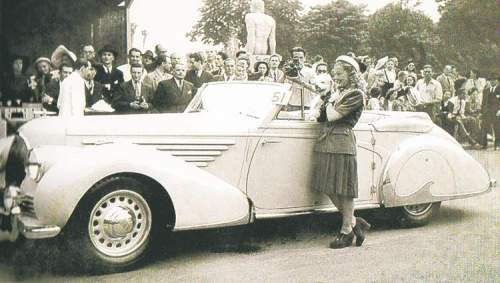
Delahaye a stunning example of high-art deco
Advertisement
Read this article for free:
or
Already have an account? Log in here »
To continue reading, please subscribe:

Digital Subscription
One year of digital access for only $205*
- Enjoy unlimited reading on winnipegfreepress.com
- Read the E-Edition, our digital replica newspaper
- Access News Break, our award-winning app
- Play interactive puzzles
*First annual payment billed as $205.00 + GST for one year. This annual subscription will automatically renew at $233.00 + GST every 52 weeks (10% off the regular annual price of $259.35). Offer available to new and qualified returning subscribers only. Cancel any time.
To continue reading, please subscribe:
Add Free Press access to your Brandon Sun subscription for only an additional
$1 for the first 4 weeks*
- Enjoy unlimited reading on winnipegfreepress.com
- Read the E-Edition, our digital replica newspaper
- Access News Break, our award-winning app
- Play interactive puzzles
*Your next Brandon Sun subscription payment will increase by $1.00 and you will be charged $17.95 plus GST for four weeks. After four weeks, your payment will increase to $24.95 plus GST every four weeks.
Read unlimited articles for free today:
or
Already have an account? Log in here »
Hey there, time traveller!
This article was published 08/06/2012 (5196 days ago), so information in it may no longer be current.
I just had the immense good luck to locate and purchase one of the great cars of the world. It was brought to my attention by an acquaintance who lives on the island of Malta. When he forwarded the car’s photographs and details, I knew immediately it was a piece of art that I had to obtain.
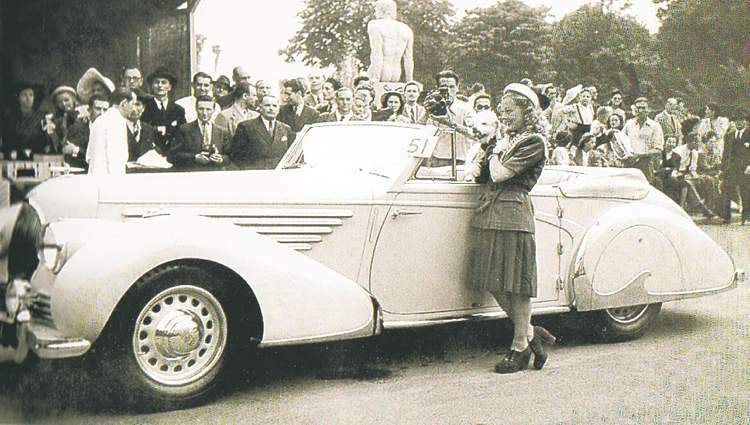
The car is a 1948 Delahaye 135 MS cabriolet by coach-builder Franay. The 135 series cars were actually pre-war models, which were continued in a limited fashion post-war.
This individual car is a stunning example of both the coach-builder’s art and one of the last expressions of high-art deco in automotive design. It also represents the swan song of European coach-building. In the late 1940s, American mass-production techniques honed and refined during the war put an end to most coach-building as a viable means of production.
This particular car was in storage a few kilometres north of Barcelona, Spain. Luckily, I was able to scoop it up before someone else in a blisteringly hot market did the same. Too often these days, if you pause or even take a moment to ponder acquiring an important car, it is whisked away from you in an instant. Other buyers quicker on the trigger are quite happy to leave you with nothing but regrets and a stinging lesson on hesitation.
One of the wonderful things about this car is it is featured in one of the most significant books on the Delahaye company, a book called Delahaye, la belle carrosier franßais. I found a copy on eBay, bought it and was delighted to find this example is wonderfully illustrated in three pictures (one with a sexy model in full skirts and gloves).
There is nothing better than having original pictures of a car, especially one such as this where the provenance is a very important part of its value.
The Delahaye came from a French car builder whose vehicles were contemporaries of Ettore Bugatti’s famous cars in the ’20s and ’30s. Delahaye, like Bugatti, even managed to survive for a short while post-war. Delahayes were, in their heyday, far more luxurious than almost any Bugatti to come from Molsheim and, in many cases, they were far more extravagant. Delahayes also ran on the tracks of Europe but not to the extent of Bugatti’s creations.
Like Bugattis, Rolls-Royces and other great European pre-war luxury cars, most Delahayes were coach-built by independent companies to the whims and wishes of their purchasers. This resulted in many Delahayes numbering among some of the most exotic and unique cars in history. Any major concours d’elegance worth its weight in salt needs at least one on display. These cars also have a history of winning major events all over the world, including the most prestigious — Pebble Beach.
This particular one-off car, as mentioned earlier, was coach-built by a company called Franay. This builder had a reputation for the highest quality and engineering of any of the European carrossiers. It also had a talent for creating great works of elegance. While not as dramatic as some other cars by carrossiers such as Figoni et Falaschi, Franay-built Delahayes are distinctive and masterful works of art.
This car is no exception. It features long, voluminous front fenders, elegant grille work and side trim replete with fabulous French curves. The interior in its original leather is just as elegant as the exterior. The coach-builder tipped its hat to the second half of the 20th century by created a transparent crystalline steering wheel and dash knobs. These are very fortunately immaculate, as restoring them would actually entail recreating them.
It is presently unrestored and was originally white. A previous owner (the gentleman who located it for me) owned it many years ago and, not liking the white, had it painted green. Now it needs a total repaint, which will be no hardship as the car is in immaculate original condition. It was well cared for and has no corrosion or battle damage. (French and Spanish highways qualify as battlegrounds.) The trouble is, with a repaint, no matter how old, the car cannot be claimed as an original unmolested example, so the mechanicals, interior and trim will all have to be restored along with the paint.
That will be costly, especially to the level demanded by a car of this calibre. However, it will not exceed the car’s market value and may actually be only a percentage of the investment potential. While it cost as much as a top-of-the-line Mercedes and then some, it has the potential of being worth up to $1 million or more in the next few years. A very similar car, well-restored, sold for $1.3 million recently, so I am pretty chuffed about its potential. Of course, I will no doubt whine like a little child when it eventually goes to a new owner. But, first, I can enjoy its refurbishing and, more importantly, its stewardship for a few years.
Right now, it sits in a container waiting to be loaded onto a ship for its journey to and a new life in the New World.
I hope we meet with its approval over here in the colonies.
— Postmedia News