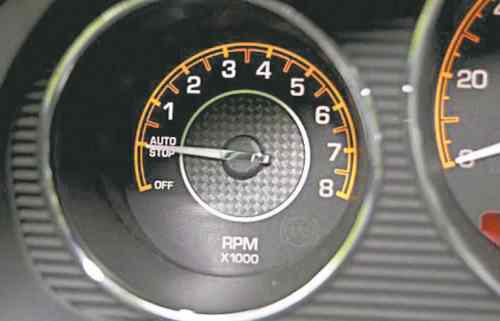
AUTO TECH: AutoStop saves money while you idle
Advertisement
Read this article for free:
or
Already have an account? Log in here »
To continue reading, please subscribe:

Digital Subscription
One year of digital access for only $205*
- Enjoy unlimited reading on winnipegfreepress.com
- Read the E-Edition, our digital replica newspaper
- Access News Break, our award-winning app
- Play interactive puzzles
*First annual payment billed as $205.00 + GST for one year. This annual subscription will automatically renew at $233.00 + GST every 52 weeks (10% off the regular annual price of $259.35). Offer available to new and qualified returning subscribers only. Cancel any time.
To continue reading, please subscribe:
Add Free Press access to your Brandon Sun subscription for only an additional
$1 for the first 4 weeks*
- Enjoy unlimited reading on winnipegfreepress.com
- Read the E-Edition, our digital replica newspaper
- Access News Break, our award-winning app
- Play interactive puzzles
*Your next Brandon Sun subscription payment will increase by $1.00 and you will be charged $17.95 plus GST for four weeks. After four weeks, your payment will increase to $24.95 plus GST every four weeks.
Read unlimited articles for free today:
or
Already have an account? Log in here »
Hey there, time traveller!
This article was published 28/02/2014 (4569 days ago), so information in it may no longer be current.
We all like to save money, and being able to drive farther on a tank of fuel is a very visible way of saving money.
With fill-ups now costing in the $60 range for economy cars and well over $100 for larger trucks and SUV’s, saving five per cent on fuel costs starts to make a significant difference. That is what the AutoStop feature can potentially do for you.
AutoStop is a feature or program that automatically turns off the vehicle’s gasoline engine after a short period when you’re sitting at idle. As soon as you’re ready to move, the engine starts again.
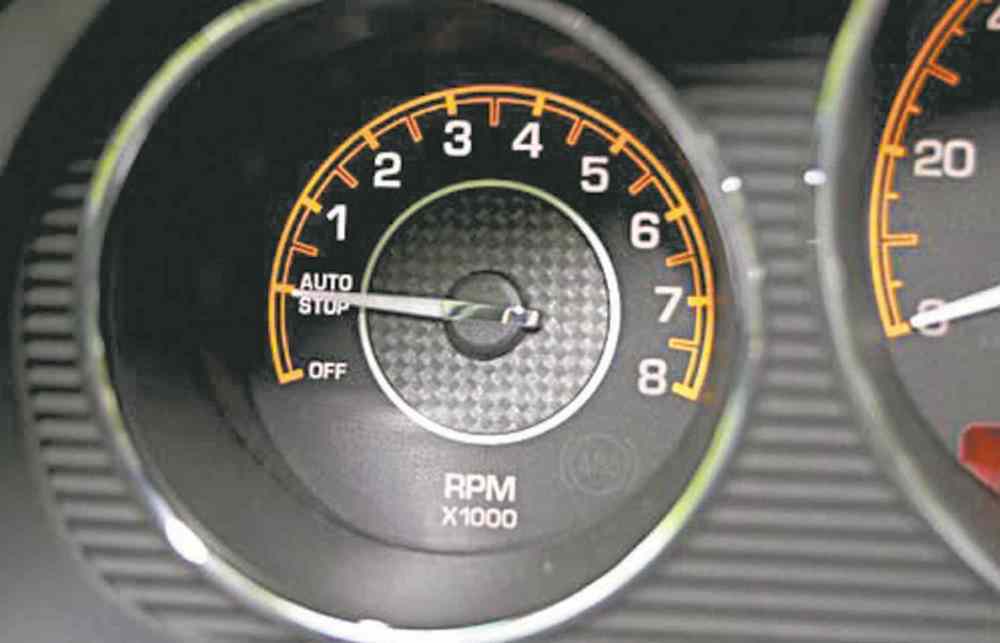
The AutoStop feature may seem like it wouldn’t save a lot of fuel, but a study by the U.S. Treasury Department estimates commuters encounter an average of 10 to 15 red lights on a typical 30-kilometre commute, which can add up to 15 minutes or more of idle time. And we all know that an idling vehicle gets zero for fuel economy, so turning off the engine can maximize fuel use.
Only a couple years ago, AutoStop was limited to hybrid vehicles, but now almost all new vehicles on the market have AutoStop. To provide this feature, the manufacturers had to work with several vehicle systems and components.
Let’s compare AutoStop in a hybrid vehicle versus a conventional gas engine. In the hybrid vehicle, the gasoline engine is turned off by the engine computer and restarted by the hybrid system electric motor. This is a silent and smooth operation.
In conventional vehicles, the engine computer still turns off the engine, but the regular starter motor is used to restart it. The starter motor has to operate much more often, so the manufacturers had to build a starter motor that would handle the repeated startups over several years of operation. This was relatively easy compared with everything else involved,
For the AutoStop feature to operate, safety must be ensured. In automatic-transmission vehicles, an electric-motor-driven pump was typically added to the transmission so the transmission would stay in gear when the gas engine stopped running. Brake systems needed to be modified so there would still be power-brake operation without the gas engine running.
On some vehicles, this meant installing a bigger brake vacuum booster so there was more reserve. Others use electric assist, and many of the vehicles use a hill-hold feature that keeps the wheel brakes applied at a stop until either the vehicle starts to move or the brake pedal has been released for a couple seconds. Power steering also needed changes. Electric power steering has become common, and this allows power steering at all times when the key is on.
Other concerns were with passenger comfort. The gasoline engine is used to produce interior heat and window defrost. It wouldn’t do to have the engine turn off when the passenger compartment is still cold, so it is designed to stay running until interior temperatures have reached the desired level. The same goes for air-conditioning operation. A passenger compartment can quickly become hot and muggy if the A/C is turned off.
Most A/C compressors are belt-driven by the gas engine, so in these models, the engine will stay running or restart if the interior temperature starts to rise too much. A few cars now use electrically driven A/C compressors, so the gas engine can be turned off more of the time.
Because of the need to integrate passenger-compartment temperatures to the AutoStop feature, most vehicles now use automatic climate controls, where a computer senses the interior temperature and sends signals to the engine computer when it’s OK to operate the AutoStop feature.
As for driver operation, it is virtually seamless. I’ve personally driven many AutoStop-equipped vehicles and only occasionally have I experienced any roughness — and this has occurred when the computer is stopping the engine just as I go to move again.
Switches and inputs on the pedals, climate control and powertrain tell the computer to turn off the engine when the vehicle is stopped and idling. As soon as you release the brake pedal or start to engage the clutch (if a manual transmission), the computer will restart the engine. It starts smoothly, quietly and in many cases almost unnoticeably.
Jim Kerr is a mechanic, instructor of automotive technology, freelance journalist and member of the Automobile Journalists’ Association of Canada.
kerr.jim@sasktel.net