Nothing beats the original 426 Hemi.
There's just no replacement for displacement
Advertisement
Read this article for free:
or
Already have an account? Log in here »
To continue reading, please subscribe:

Digital Subscription
One year of digital access for only $205*
- Enjoy unlimited reading on winnipegfreepress.com
- Read the E-Edition, our digital replica newspaper
- Access News Break, our award-winning app
- Play interactive puzzles
*First annual payment billed as $205.00 + GST for one year. This annual subscription will automatically renew at $233.00 + GST every 52 weeks (10% off the regular annual price of $259.35). Offer available to new and qualified returning subscribers only. Cancel any time.
To continue reading, please subscribe:
Add Free Press access to your Brandon Sun subscription for only an additional
$1 for the first 4 weeks*
- Enjoy unlimited reading on winnipegfreepress.com
- Read the E-Edition, our digital replica newspaper
- Access News Break, our award-winning app
- Play interactive puzzles
*Your next Brandon Sun subscription payment will increase by $1.00 and you will be charged $17.95 plus GST for four weeks. After four weeks, your payment will increase to $24.95 plus GST every four weeks.
Read unlimited articles for free today:
or
Already have an account? Log in here »
Hey there, time traveller!
This article was published 11/04/2014 (4518 days ago), so information in it may no longer be current.
The Republic P-47 Thunderbolt was already a hell of an aircraft — and then Chrysler crammed a Hemi into it.
The biggest piston-powered, single-engine fighter ever built, the “Jug” (for Juggernaut) was nearly indestructible. It racked up the kills by simply flying at enemy airplanes head-on. Why dodge when you can ram?
Into the nose of this colossal single-seat machine, capable of hauling half the bomb load of a B-17 Flying Fortress, the wartime Chrysler company inserted a 16-cylinder inverted-V engine displacing 36 litres and weighing over a metric ton.
It was a Hemi, one of the first such engines built by Chrysler, and its turbocharged 2,500-horsepower thrust the P-47 past the 800-kilometre-an-hour mark.
Sadly, the Chrysler-powered P-47 showed up too late to be any use in the Second World War. Too bad: It’s easy to imagine a well-perforated Messerschmitt spiralling down toward Normandy, its bewildered Luftwaffe pilot hanging from his parachute straps and asking the cheekily waving Jug pilot, “Achtung! Dass ding haben eine Hemi?”
Nope, the flying elephant that was the Thunderbolt fighter-plane only got Hemi power as a one-off. Happily for anyone with gasoline in their veins and a close-ratio gearbox for a heart, it wasn’t the last time Chrysler’s Hemi would get a chance at battle.
Far from it: This year marks a half-century since the legendary 426 Hemi engine showed up and did to the competition what the P-47’s eight .50-cal Browning machine guns did to Axis-power aircraft.
For such a powerful piece of equipment, the Hemi has a friendly-sounding name that’s derived in the simplest of ways. Remove the heads on any one of the engines Chrysler produced between its 1940s aircraft experiment and the 1964 debut of the renowned 426, and you’ll likely find a row of combustion chambers shaped like a dome — a hemisphere.
With a spark plug centrally located to provide a nice even burn and a pair of valves, a hemispherical combustion chamber lets an engine make decent horsepower levels.
By no means was this a Chrysler-only development: Before the war, everybody from Stutz to Duesenberg were already building engines with dome-shaped combustion chambers. The design genius behind the V8 Corvette, Zora Duntov, got his start machining hemispherical heads for the Ford flathead V8.
The Chrysler group built and developed a whole series of engines of differing displacements and cylinder numbers right through the 1950s, calling their motors Firepower, Fire-Dome and Red Ram. Bean-counting executives decided to shelve further development of these Hemi engines and phased out first-generation motors by 1958. The iconic Hemi name wouldn’t come until 1964, with the racing 426.
The 426 cubic inches equal approximately seven litres, a huge amount of displacement to work with. Chrysler turned its big block into a sledgehammer with the high natural volumetric efficiency of the Hemi engine design: Because of the way the large valves are situated inside the combustion chamber, a Hemi can ingest air and expel exhaust gases with greater speed than a conventional design.
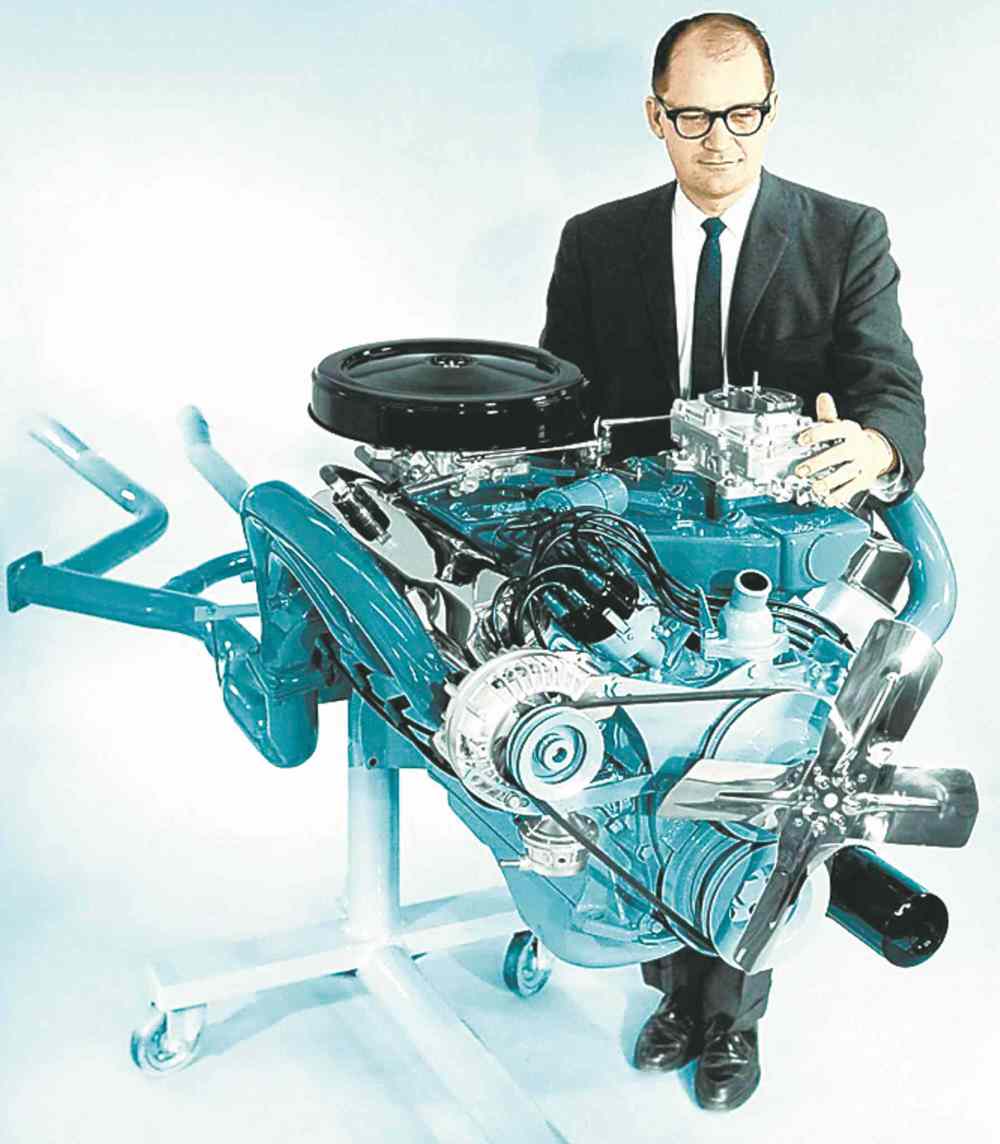
However, this wasn’t just bolting better heads on an already existing design. While Chrysler’s “Wedge” engine was already enjoying drag-racing success, the 426 Hemi racing engine it created for NASCAR had a few issues.
The gestational period of an elephant is two years. The gestational period of what would come to be known as the Elephant engine was less than eight months. In April of 1963, Chrysler gave the go-ahead to its engineering team to try adapting Hemi technology to its 426 Wedge big block. They trademarked the “Hemi” name and set a target to compete at the Daytona 500 in the spring of the next year.
Chrysler already had an in-house group of drag racers called the Ramchargers, who had been running hot-rodded Plymouths since the late 1950s. Between the enthusiastic gearheads and the more-careful eggheads on the team, a prototype engine ran under its own power in December of ’63.
Shoehorning this behemoth into a race-prepped chassis soon showed up a potentially fatal flaw. Under stress, the engines were cracking their cylinder bores.
It was the end of January 1964, and the planned debut at Daytona was just three weeks away. Engineers shuttled back and forth between the engine forges in Detroit and the speedway in Florida, hauling parts and engines overnight and spending sleepless nights in the pits.
Race day came: Feb. 23, 1964. On the racetrack, the elephant roared its battle cry for the first time. Eight hundred kilometres later, it showed what it could do.
As the crowd watched, open-mouthed, the Hemi-powered Plymouths bellowed past the checkered flag 1 – 2 – 3 – 4: That thing got a Hemi? That thing got a Hemi? Those things got Hemis, too?
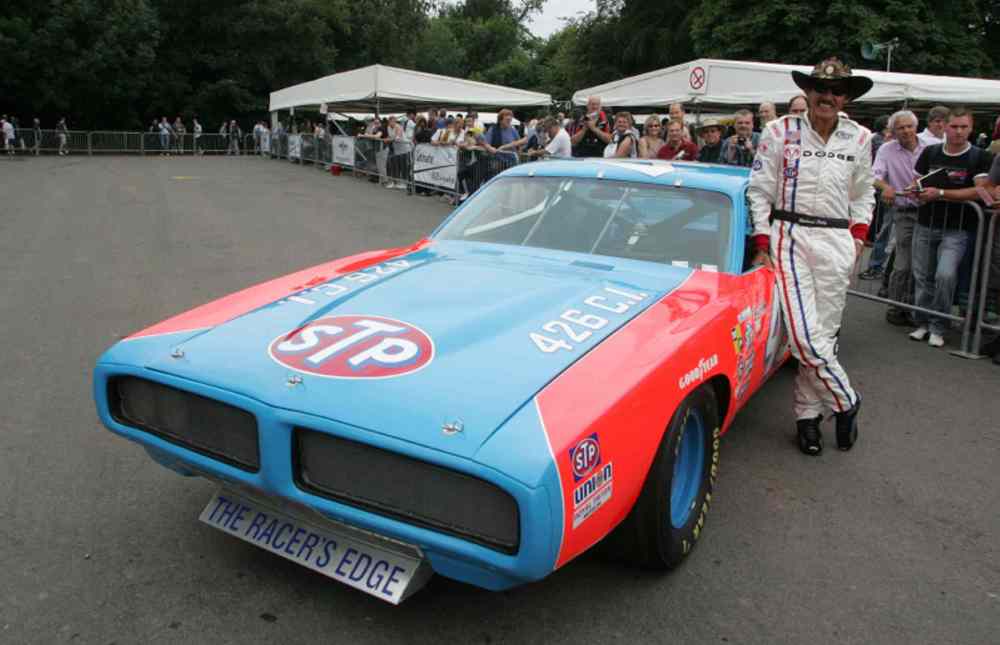
Yup, yup, yup and yup. The pack was led by one Richard Petty, a NASCAR driver who would come to be called “The King.” It was the first of seven wins he’d have at Daytona, his first ride on the way to becoming the most successful NASCAR racer of all time, equalled only by Dale Earnhardt. And a Hemi got him his first Daytona checkered flag.
After the fleet of Hemi-powered racers decimated the field repeatedly over the season, NASCAR responded by banning the engine. However, this theoretical setback was the best possible thing that could have happened as far as car enthusiasts were concerned.
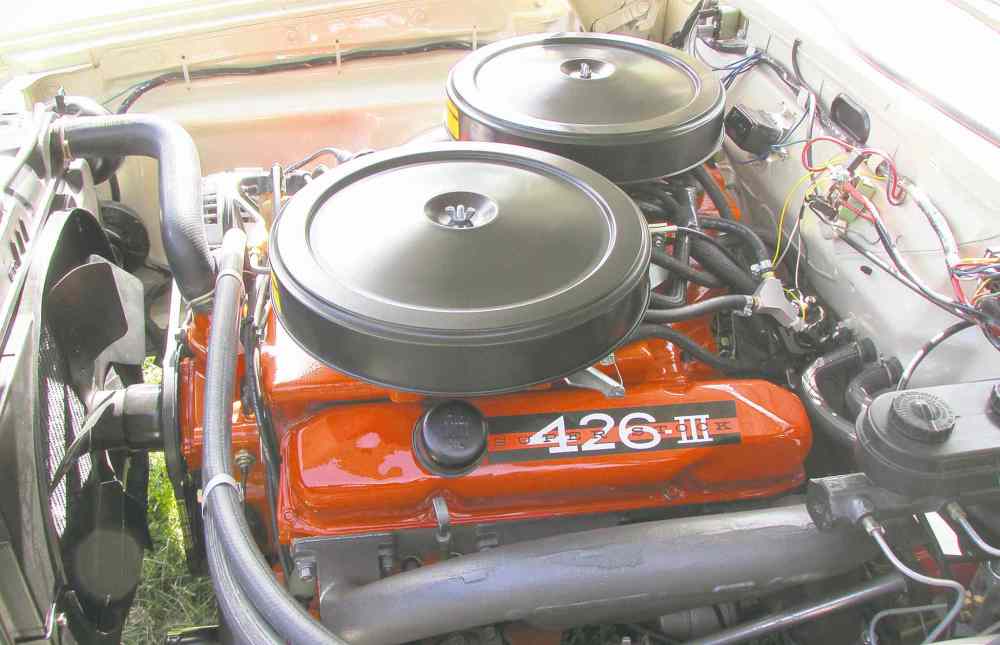
NASCAR’s specific objection was the race-only status of the 426, which forced Chrysler to develop something they called the Street Hemi. Tweaked for passenger-car applications, the road-going version had a lower compression ratio, iron heads instead of aluminum and different exhaust and intake manifolds.
While engineers were working on a milder, streetable 426 Hemi, the Chrysler racing team dropped out of NASCAR for a year and went drag-racing instead. Here, on the steamy two-lane blacktop, is where the 426 would find its second success.
Don “Big Daddy” Garlits received the drag-race version of the 426 Hemi in early 1964, hacked it up to fit into his Swamp Rat top fuel dragster, and was immediately disappointed. The 426 put out less power than the tried-and-true Chrysler 392 Wedge engines he was used to running, so he decided to blow up the Elephant engine by jacking forward the spark advance to a lethal level.
He didn’t kill it. He just made it angry.
With an extremely ticked-off, nitromethane-fed 426 Hemi crammed up front of the driver, Garlits’ skinny Swamp Rat blitzed down the quarter-mile at more than 320 km/h and straight into the record books. He would later say of Chrysler’s Hemi, “No engine, to my knowledge, has the ability to produce so much raw power and still stay together.”
The 426 Hemi would continue to crush both the drag strip and racetrack, powering everything from Petty’s race-winning Plymouth to the Snake versus Mongoose drag-racing funny-car battles of Don Prudhomme and Tom McEwen. More importantly, the Hemi was now out on the street.
The first civilian-spec 426 Hemi engines showed up in 1966 with the Dodge Coronet and Charger, and the Plymouth Belvedere. Buyers could spec Hemi power from the options list and then roam around town with 425 hp under the hood saying, “They call me Mr. Belvedere.”
However, the colossal strength of the Elephant engine was its real boon to the hot-rodders of the era. Cranking a 426 well over the 500-hp mark was as easy as swapping a few parts to be more like the race engines, but strapping on a supercharger really uncorked the power.
The Roadrunner, the Charger, the Challenger, the Dart, the Super Bee, and the pointy-nosed Superbird — all were available with Hemi power if you could afford the option. In something like the iconic Barracuda, opting for a 426 Hemi added a full third to the purchase price of the car.
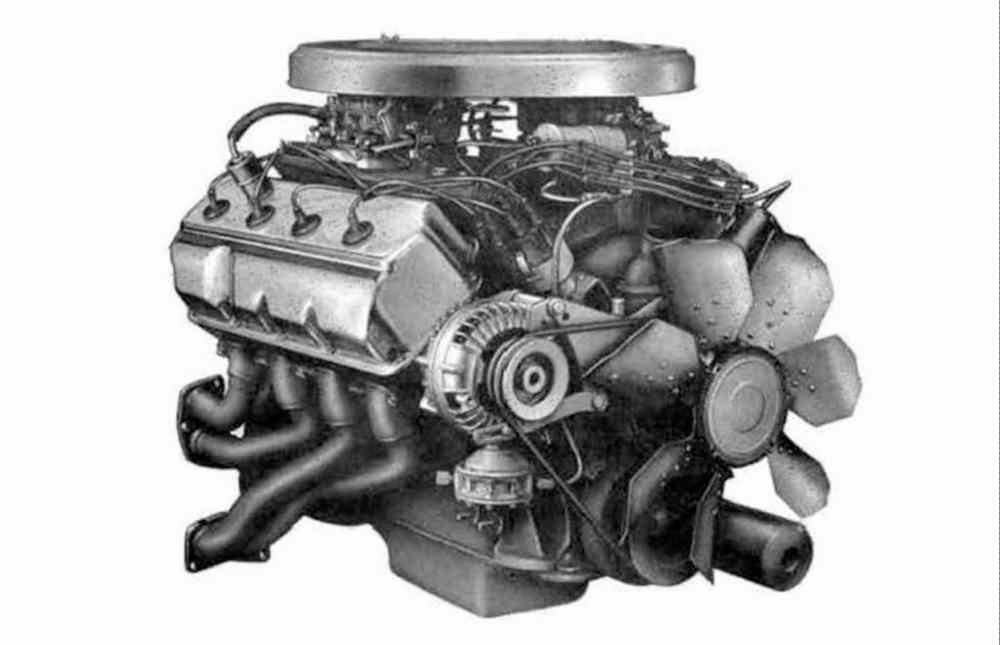

As such, original 426 Hemi Chrysler-group cars are rare, collectible and expensive. Numbers-matching examples routinely cross the block in the quarter-million-dollar range, and a very rare Hemi ‘Cuda convertible recently sold for nearly $3 million.
For that kind of scratch, you lock the car up in a museum and don’t drive it. It’s not so much a thundering elephant as a stuffed mastodon, to be put on display and preserved.
However, a half-century since its debut, Chrysler will sell you a 426 Hemi crate engine based on its third-generation motor, cranking out 540 horsepower and 530 pound-feet of pachyderm. Drop it in the nose of a modern Challenger and you can relive the glory days when the Hemi ruled the streets.
Best of all, if someone asks you whether “that thing’s got a Hemi in it,” you don’t have to answer. You can just show ’em.
— Postmedia Network Inc. 2014