The best car inventions for normal people

Advertisement

Advertise with us

I know fuel-injected engines were a major upshift from carburetors, and I appreciate them. The use of lighter materials to get better fuel economy, crumple zones and airbags to save our precious cargo, and windshields that don’t explode like a shattering firework are all spectacular inventions.

Read this article for free:


or

Already have an account? Log in here »

To continue reading, please subscribe:

Subscribe and receive a limited-edition Free Press branded hat or tote.

Digital Subscription

One year of digital access for only $205*

  • Enjoy unlimited reading on winnipegfreepress.com
  • Read the E-Edition, our digital replica newspaper
  • Access News Break, our award-winning app
  • Play interactive puzzles

*First annual payment billed as $205.00 + GST for one year. This annual subscription will automatically renew at $233.00 + GST every 52 weeks (10% off the regular annual price of $259.35). Offer available to new and qualified returning subscribers only. Cancel any time.

To continue reading, please subscribe:

Add Free Press access to your Brandon Sun subscription for only an additional

$1 for the first 4 weeks*

  • Enjoy unlimited reading on winnipegfreepress.com
  • Read the E-Edition, our digital replica newspaper
  • Access News Break, our award-winning app
  • Play interactive puzzles
Start now

*Your next Brandon Sun subscription payment will increase by $1.00 and you will be charged $17.95 plus GST for four weeks. After four weeks, your payment will increase to $24.95 plus GST every four weeks.

Hey there, time traveller!
This article was published 08/07/2016 (3721 days ago), so information in it may no longer be current.

I know fuel-injected engines were a major upshift from carburetors, and I appreciate them. The use of lighter materials to get better fuel economy, crumple zones and airbags to save our precious cargo, and windshields that don’t explode like a shattering firework are all spectacular inventions.

But over the past 20 years, the following are the things that have made the biggest difference in how our cars serve us day to day and how our families drive across town or across the country. Some of them were always the purview of those breathing more rarefied air, but now this list is within the clutches of even many entry-level or near entry-level vehicles. You know, the ones so many of us drive.

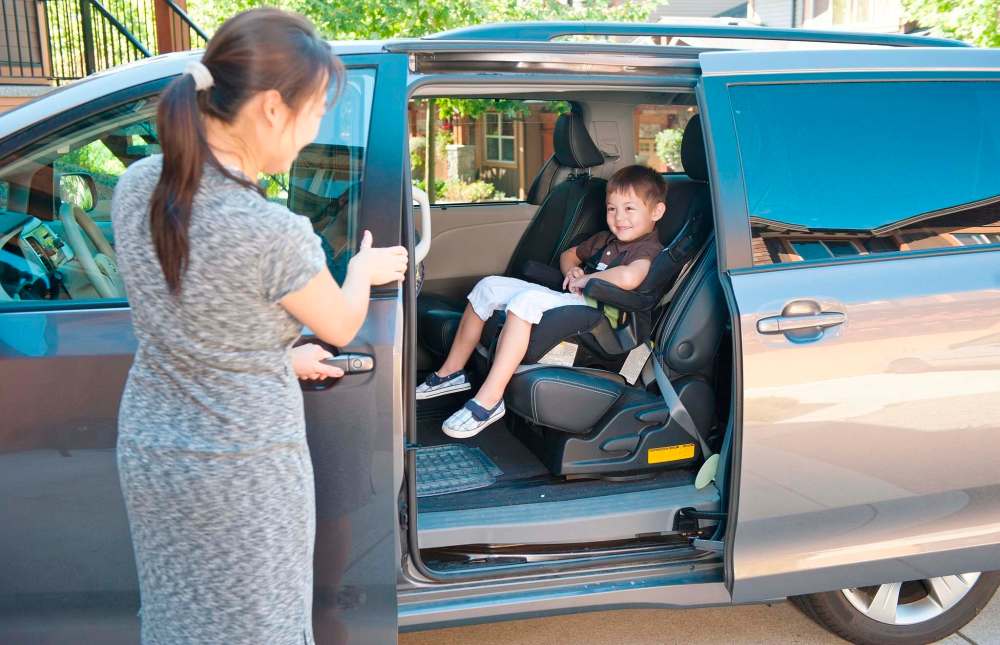
The sliding door on a minivan:
Getty Images
The sliding van door is a marvel of modern engineering.
Getty Images The sliding van door is a marvel of modern engineering.

This concept should have won a Nobel Peace Prize. Young children jack open their doors with a mighty boof not because they are wild animals, but because they are young children. “Yay, we’re here!” coupled with, “I can do my own door” meant a ding in a neighbouring car before a parent was even out of the driver’s seat. Some kids are brats. Some parents are lax. But most kids are just not big-picture thinkers and sliding doors give them a little buffer while they grow up.

Two sliding doors on minivans:

If you’ve done that brutal reach that leaves you and your lower back feeling like a Sherpa who carried a socialite up Mount Everest, you know that the advent of dual sliding doors was almost as glorious as discovering one door could slide. Add the introduction of remote-powered sliding doors on minivans, and I’m not sure my heart can take this trifecta of parenting liberation.

Heated seats:

These got more important for us peasants right around the time that many jurisdictions starting introducing stricter idling bylaws. Most parts of Canada serve up some notorious winter weather, and the days of starting the car and leaving it to warm up for 15 minutes (or more) are long gone. Heated seats give you a near-instant cradle of warmth and allow you to putt along in relative comfort until the car’s heater finally kicks in.

Bluetooth connectivity:

Manufacturers like Hyundai learned early this was a safety feature, and as such, a need-to-have feature, not just a nice-to-have one. With a cellphone in every pocket, it’s antiquated thinking to believe this connectivity should be an option. While I rarely hook up a phone when I’m driving (the stats are right: hands-free is nearly as dangerous as hand-held), nobody should not have the option. And standard USB ports are about more than customized playlists, as well; they’re about a phone being charged when you need it the most.

Navigational systems:

Whether via your phone or in-dash, the advent of this tech was by a terrible breech birth followed by an even worse puberty. Early systems were crap, and I applaud the first adopters who waited out the shotgun marriages of car manufacturers and Silicon Valley until we arrived where we are today. I still hate touch screens (though I’m open to anything that is at least consistent), and I still think we owe it to future generations to show them how to use (and fold) a paper map. There will always be horror stories of people getting lost, but then, there always were. It’s too bad we can’t factor time and fuel saved by getting there correctly the first time into official fuel-economy numbers.

Push-release fuel doors:

Yay! If I never have to hunt for a fuel release lever again, it’ll be too soon. Especially to find it on the floor covered in slush or a floor mat, or stuck behind the shifter which hides it when it’s in park. Ford got here first in the mainstream, and by doing away with gas caps altogether they made me very happy. Remember finding out the narrow plastic tether on your gas cap is broken? And watching your gas cap roll under the car? Yeah, that. No thanks.

All of these inventions lead me to my No. 1 question, one apparently I will still have when they pluck my cold dead fingers from my keyboard: why can’t the vast majority of manufacturers sort out the fundamental problem they have with their daytime running-light systems? Why am I still seeing so many dark rear-ends on cars of drivers who do not realize they don’t have their full lighting system on?

It’s easy to blame drivers for not understanding how their cars work, but automakers share the blame because they light up the cars’ dashboards with just the daytime running lights on, and for decades, the lit-up dash was the first, best visual clue to drivers that their full lights were on.

Automakers take note: please toggle the wiring harness to respect that rear visibility is just as important as forward visibility and do not light up the dash unless a full lighting system has been activated, either by a driver or an automatic setting. And be consistent across your brand, like Mercedes-Benz.

We’re spoiled with levels of safety and comfort and entertainment from all over the automotive spectrum, but when it comes to lighting systems, most of you carmakers need to get your lit together.

— Postmedia Network Inc. 2016
Report Error Submit a Tip

More Stories

Rogers, Telus deny blame for June twister alert barrage

Malak Abas 3 minute read Preview

Rogers, Telus deny blame for June twister alert barrage

Malak Abas 3 minute read 2:01 AM CDT

Telecom companies say they aren’t to blame for the barrage of tornado alerts Manitobans received during severe thunderstorms in early June.

The Canadian Radio-television and Telecommunications Commission announced in August it would investigate the unusually high number of alerts, and called on the Pelmorex Corp., which operates the national Alert Ready system, along with telecom companies Bell, Rogers and Telus to respond to a number of questions.

They were given until last Friday to describe their possible roles in the creation, receipt, processing or distribution of alerts issued from Environment and Climate Change Canada in the midst of the June 9 storm.

Telus said in its response that it received 133 alert requests targeted to Manitoba created by Environment Canada and forwarded by Pelmorex between 2:35 p.m. June 9 and 3:29 a.m. the following day. While the majority of those messages contained identical information and were automatically suppressed, 17 were ultimately sent out as alerts in Winnipeg.

Read
2:01 AM CDT

Film fest showcases Africa’s best

Ben Waldman 5 minute read Preview

Film fest showcases Africa’s best

Ben Waldman 5 minute read 2:00 AM CDT

Winnipeggers are sometimes accused of living within the Perimeter, meaning a visit to Ouagadougou, the capital city of Burkina Faso, might be out of the question for your weekend travel plans.

But the African Film Festival in Manitoba — which kicked off Monday and runs to Sept. 20 — gives local audiences three feature-length opportunities to embrace stories from a nation that’s widely considered the home of African cinema.

Chief among these is Katanga, a tense re-imagining of Shakespeare’s Scottish play told in the Fulah language. Directed and written by Dani Kouyaté, the film was the winner of the the Etalon D’or — the top prize — at last year’s FESPACO, a biennial celebration of Pan-African film and television held in Ouagadougou.

Starring Mahamadi Nana and Prosper Compaore, the film also features a striking, late-career performance by Rasmané Ouédraogo, who starred in the Palme d’Or winner Tilaï — in which a man returns to his village to find his fiancee has become his father’s second wife — in 1990.

Read
2:00 AM CDT

‘Didn’t realize how close I was’ to getting hit, pedestrian says

Scott Billeck 5 minute read Preview

‘Didn’t realize how close I was’ to getting hit, pedestrian says

Scott Billeck 5 minute read Updated: Yesterday at 3:18 PM CDT

A West Broadway pedestrian says it was like a scene straight out of the movies as he narrowly avoided being plowed into during a midday police pursuit.

Adam Orbanski was crossing Langside Street along Broadway Friday and had just made it to the curb when a vehicle slammed into another metres away from him.

“It’s pretty crazy,” Orbanski said Monday after viewing security footage of the incident captured by a nearby business. “I didn’t realize how close I was, I guess, until my friend sent me the security footage. I’m lucky to be alive.”

Orbanski said he was walking home from work when he began to hear sirens. As he crossed Langside, he could see one vehicle approaching him quickly.

Read
Updated: Yesterday at 3:18 PM CDT

Premier touts Port of Churchill opportunities at Canadian investment summit

Carol Sanders 5 minute read Preview

Premier touts Port of Churchill opportunities at Canadian investment summit

Carol Sanders 5 minute read Updated: Yesterday at 6:58 PM CDT

Premier Wab Kinew announced Monday that major capital investments in the Port of Churchill Plus project will receive an exemption from Manitoba’s seven per cent retail sales tax.

Kinew made the announcement at the start of the two-day Canada investment summit in Toronto. The premier made the pitch to a room of 250 Canadian and global investors representing more than US$13 trillion in assets.

“We are here in Toronto to tell global investors that the Port of Churchill is open and ready to expand,” Kinew told the Canadian Global Growth Forum, a provincial government news release said.

“These new capital incentives make it easier for investors to get in on the ground floor of the largest project featured at the Canada investment summit. The grain and critical minerals we are already shipping out of the port are reaching Europe faster than the Port of Vancouver. With the right investments we can ship commodities year-round, strengthening trade between reliable partners and creating good jobs,” the premier, who was not made available for an interview, said in the release.

Read
Updated: Yesterday at 6:58 PM CDT

A rural Manitoba physician is warning that Ste. Rose du Lac could face significant emergency department closures after its doctors were stretched thin helping absorb the fallout from the flooding and prolonged shutdown of Dauphin Regional Health Centre.

When Dauphin was evacuated July 1, Ste. Rose expanded its emergency department to 24-7 service and nearly doubled its in-patient load. But with Dauphin’s ER reopening last week and staff that had been temporarily working in Ste. Rose returning to their regular posts, Dr. Ashley Blais says her hospital, located about 50 kilometres southeast of Dauphin, has been left without enough physicians to maintain reliable emergency coverage.

“We answered the call when Manitoba’s health-care system needed us,” Blais said Monday. “Now we are asking the Manitoba health-care system to answer ours.”

Blais, who penned an open letter to Manitoba Health Minister Uzoma Asagwara, is calling on the province, Shared Health and Prairie Mountain Health to urgently develop a sustainable staffing plan for Ste. Rose, with direct input from physicians working there.

50 years ago, we thought we could change the world

Robert Milan and Miriam Cooley 8 minute read Preview

50 years ago, we thought we could change the world

Robert Milan and Miriam Cooley 8 minute read Updated: Yesterday at 9:48 AM CDT

We began as a small loose unorganized group of teaching friends and educators who shared the same political and social convictions.

Read
Updated: Yesterday at 9:48 AM CDT