Do you change your oil too often?

Advertisement

Advertise with us

QUESTION: I keep hearing that synthetic oil is better and lasts longer than regular oil. If this is so, why does the manufacturer of my vehicle require an oil change every four months or 8,000 kilometres? After one year I still haven’t reached 8,000 km and was required to have four oil changes. I’m just wondering what your opinion is on the situation. Ray Answer: The manufacturers base their oil change intervals on average driving patterns, which for Canadian drivers is 20,000 km per year. You’re obviously driving much less than this.

Read this article for free:


or

Already have an account? Log in here »

To continue reading, please subscribe:

Subscribe and receive a limited-edition Free Press branded hat or tote.

Digital Subscription

One year of digital access for only $205*

  • Enjoy unlimited reading on winnipegfreepress.com
  • Read the E-Edition, our digital replica newspaper
  • Access News Break, our award-winning app
  • Play interactive puzzles

*First annual payment billed as $205.00 + GST for one year. This annual subscription will automatically renew at $233.00 + GST every 52 weeks (10% off the regular annual price of $259.35). Offer available to new and qualified returning subscribers only. Cancel any time.

To continue reading, please subscribe:

Add Free Press access to your Brandon Sun subscription for only an additional

$1 for the first 4 weeks*

  • Enjoy unlimited reading on winnipegfreepress.com
  • Read the E-Edition, our digital replica newspaper
  • Access News Break, our award-winning app
  • Play interactive puzzles
Start now

*Your next Brandon Sun subscription payment will increase by $1.00 and you will be charged $17.95 plus GST for four weeks. After four weeks, your payment will increase to $24.95 plus GST every four weeks.

Hey there, time traveller!
This article was published 21/10/2016 (3593 days ago), so information in it may no longer be current.

QUESTION: I keep hearing that synthetic oil is better and lasts longer than regular oil. If this is so, why does the manufacturer of my vehicle require an oil change every four months or 8,000 kilometres? After one year I still haven’t reached 8,000 km and was required to have four oil changes. I’m just wondering what your opinion is on the situation. Ray

Answer: The manufacturers base their oil change intervals on average driving patterns, which for Canadian drivers is 20,000 km per year. You’re obviously driving much less than this.

There are two reasons for changing the engine oil.

First, it wears out, or as some say, “breaks down.” Oil molecules consist of long chemical chains, and as the engine operates these chains are cut or broken. The shorter the oil’s chain, the less protection it provides moving engine parts. Additives can be added by the oil manufacturer to help reduce this breakdown or improve the protection capabilities, as oil from different parts of the world has different-length chemical molecules when it’s just a base oil. Synthetic oil chains are more durable, but they do break down over time.
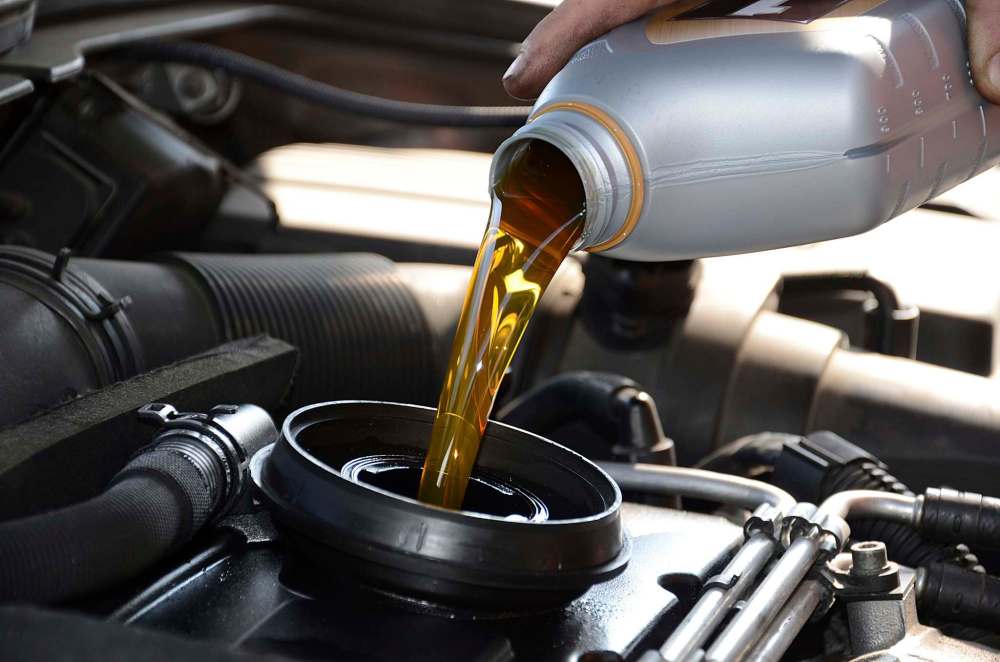
FOTOLIO
With synthetic oil blends and modern car technology, car owners don't have to change their oil as frequently.
FOTOLIO With synthetic oil blends and modern car technology, car owners don't have to change their oil as frequently.

The other reason for changing oil is to remove impurities in the engine that are trapped in the engine oil. This includes water and acids formed by the combustion process, carbon, unburned fuels and metal particles. If an engine is left to sit for long periods of time (several months), the acids in the oil can eat into the internal engine parts and cause premature wear.

Synthetic oils are better at protecting the engine in extreme heat or load conditions while also providing quick flow and lubrication in very cold weather starts. However, they still collect impurities in the oil just like conventional oils.

I like synthetic oils because of the protection factor, but they’re definitely more expensive. As for oil-change frequency, routine maintenance such as an oil change is necessary to ensure new-vehicle warranty. In your situation, you are well below mileage change intervals and I’d recommend dropping your changes to a couple a year — one in autumn and another in the spring. Winter is the hardest time on oils, as engines experience colder starts and more driving where the engine doesn’t warm up completely. If you weren’t driving in the winter, you could probably get by with just doing an oil change every 8,000 km.


Question: I was in a small accident with my Chevrolet Malibu and had it repaired at my local body shop. This happened about two weeks ago and involved repairing the hood and grille. Everything looked good after the repair but now I’ve noticed that the remote start on my key fob doesn’t work anymore. It worked this past summer but I hadn’t used it until the weather started to get colder this week. The only work I have had done to the car was at the body shop so I took it back to them to see if it was something they did and they said no — it was only a minor repair and they didn’t even disconnect the battery. Is the remote start problem a coincidence or do you think the jar from the accident caused other problems?

Answer: I don’t think the hit from the accident caused other problems, but the repair may have caused your lack of remote starting. The remote starter is designed not to operate if the hood is open. This protects someone who may be working under the hood if the remote starter button is pressed.

A switch in the hood latch signals the computer and starting system to indicate if the hood is open or closed and either this switch was damaged in the accident or has become misadjusted. Many body shops aren’t great with electrical repair, so they may not recognize this needed to be checked as part of the repair. I suspect if you have them adjust or replace the hood latch, your remote start will work again.

  • james.kerr@sasktel.net


Report Error Submit a Tip

More Stories

Puzzles Palace

1 minute read Monday, Jul. 27, 2026

To solve our puzzles, please subscribe with this special offer: |

Bombers offence stalls in 22-19 loss to Elks

Joshua Frey-Sam 8 minute read Preview

Bombers offence stalls in 22-19 loss to Elks

Joshua Frey-Sam 8 minute read Updated: Yesterday at 8:19 AM CDT

It was a microcosm of the Winnipeg Blue Bombers’ season to this point: a first half that burned bright only to be doused in cold water.

The Bombers began the first leg of their mid-season gauntlet with a 22-19 loss to the Edmonton Elks at Commonwealth Stadium in the Alberta capital on Friday night.

Elks quarterback Cody Fajardo orchestrated an eight-play, 54-yard drive that set up a 40-yard game-winning field goal by Vincent Blanchard that snuck inside the left upright with zeros on the clock.

The drive, which was plagued by poor tackling by the Bombers defence, came after Bombers kicker Sergio Castillo tied the game at 19-19 on a 53-yard boot with 1:41 remaining in the contest.

Read
Updated: Yesterday at 8:19 AM CDT

Free Press literary editor picks noteworthy Canadian fiction and non-fiction titles to watch for this fall

Ben Sigurdson 8 minute read Preview

Free Press literary editor picks noteworthy Canadian fiction and non-fiction titles to watch for this fall

Ben Sigurdson 8 minute read Yesterday at 6:00 AM CDT

For many book lovers, summer means relaxing at the beach, in the backyard or at the cottage with fun, warm-weather page-turners — easy-going romance novels, gripping thrillers or even a dishy biography.

And some may long for the summer months to slow down, fall books season always offers up some of the most compelling reads for bookworms.

Here are 10 works of fiction and 10 non-fiction titles from Canadian authors slated to be published in the coming months — from Olympians to separatists, draft dodgers, plutocrats, prime ministers, bird-men and beyond, the characters in these forthcoming titles run the gamut.

FICTIONEliza Sunshine

Read
Yesterday at 6:00 AM CDT

ER wait times have hit all-time highs in Winnipeg and are impacting nearly all aspects of hospital operations

Tom Brodbeck 17 minute read Preview

ER wait times have hit all-time highs in Winnipeg and are impacting nearly all aspects of hospital operations

Tom Brodbeck 17 minute read Friday, Aug. 21, 2026

On most days at Health Sciences Centre’s adult emergency department, all 58 treatment beds are filled with sick patients. Another dozen or so brought in by ambulance line the hallways on stretchers, with only one nurse to look after them.

Out in the waiting room, about 30 or 40 people — sometimes more — are slouched in chairs in pain or discomfort, waiting hours to see a doctor. Most have been assessed by a triage nurse, but many will have to wait 10 to 20 hours to be examined by a physician because there’s no room for them in the treatment area.

Some patients leave because they can no longer tolerate the excruciating wait, only to return days later, sicker than they were before.

Welcome to the emergency department at Manitoba’s largest hospital, where some of the highest-acuity patients seek medical care but now face delays that were unimaginable a few years ago.

Read
Friday, Aug. 21, 2026

‘We got attacked’: Carney says retaliatory tariffs on U.S. to take effect next month

Catherine Morrison and David Baxter, The Canadian Press 7 minute read Preview

‘We got attacked’: Carney says retaliatory tariffs on U.S. to take effect next month

Catherine Morrison and David Baxter, The Canadian Press 7 minute read Updated: Yesterday at 3:46 PM CDT

OTTAWA - Prime Minister Mark Carney says retaliatory tariffs will hit the U.S. starting next month after Canada walked away from what he called a "bad deal."

The U.S. introduced new 50 per cent tariffs on billions of dollars in Canadian exports on Saturday after trade talks failed.

"We got attacked," Carney told reporters on Parliament Hill Saturday when asked about the escalating trade war.

Carney suspended talks with the United States late Friday and summoned his negotiators back to Ottawa.

Read
Updated: Yesterday at 3:46 PM CDT

Roadside giants towering symbols of Canada’s quirkiness

Jen Zoratti 4 minute read Preview

Roadside giants towering symbols of Canada’s quirkiness

Jen Zoratti 4 minute read Yesterday at 2:01 AM CDT

Could you imagine a Canada without Mr. PG repping Prince George, B.C.? Or the Big Nickel in Sudbury? Or, my personal favourite, Happy Rock in Gladstone?

Earlier this summer, CBC’s Cost of Living looked at the economics of these giant roadside attractions — of which there are more than 1,500 in Canada — and the cost of keeping them.

Some are falling into disrepair — this is why public art funding is necessary, by the way, not just for construction, but maintenance — and some towns are weighing whether or not that money is better spent elsewhere.

The main character of the story: Tyra the Tyrannosaurus, the rather literal symbol of Drumheller, Alta., a.k.a. the Dinosaur Capital of the World since 2000, who could be facing extinction after the lease agreement between the town and the Drumheller and District Chamber of Commerce ends in 2029.

Read
Yesterday at 2:01 AM CDT