Delivering style and economy
Ford's diminutive Courier a rebadged Mazda pickup
Advertisement
Read this article for free:
or
Already have an account? Log in here »
To continue reading, please subscribe:

Digital Subscription
One year of digital access for only $205*
- Enjoy unlimited reading on winnipegfreepress.com
- Read the E-Edition, our digital replica newspaper
- Access News Break, our award-winning app
- Play interactive puzzles
*First annual payment billed as $205.00 + GST for one year. This annual subscription will automatically renew at $233.00 + GST every 52 weeks (10% off the regular annual price of $259.35). Offer available to new and qualified returning subscribers only. Cancel any time.
To continue reading, please subscribe:
Add Free Press access to your Brandon Sun subscription for only an additional
$1 for the first 4 weeks*
- Enjoy unlimited reading on winnipegfreepress.com
- Read the E-Edition, our digital replica newspaper
- Access News Break, our award-winning app
- Play interactive puzzles
*Your next Brandon Sun subscription payment will increase by $1.00 and you will be charged $17.95 plus GST for four weeks. After four weeks, your payment will increase to $24.95 plus GST every four weeks.
Read unlimited articles for free today:
or
Already have an account? Log in here »
Hey there, time traveller!
This article was published 13/03/2020 (2360 days ago), so information in it may no longer be current.
By the early 1970s fuel costs were a big part of the car buying process. Folks wanted decent fuel mileage without sacrificing comfort and drivability. The same rang true in the pickup market.
To compete with the popularity of new compact pickups from Toyota and Datsun, in 1972 Ford partnered with Mazda and rebadged the Mazda B-Series compact truck as the Ford Courier.
With the new name and sporting a new grille and single headlamps similar to its F-150 trucks, Ford had an instant player in the compact truck class. Considering its diminutive size, the Courier had an impressive load capacity of 635 kilograms. When compared to the purchase price and operating costs of a regular pickup, it was also a pretty decent buy, and fuel economy of 15 miles per gallon in the city and 30 on the highway was further incentive to get your signature on an order sheet.
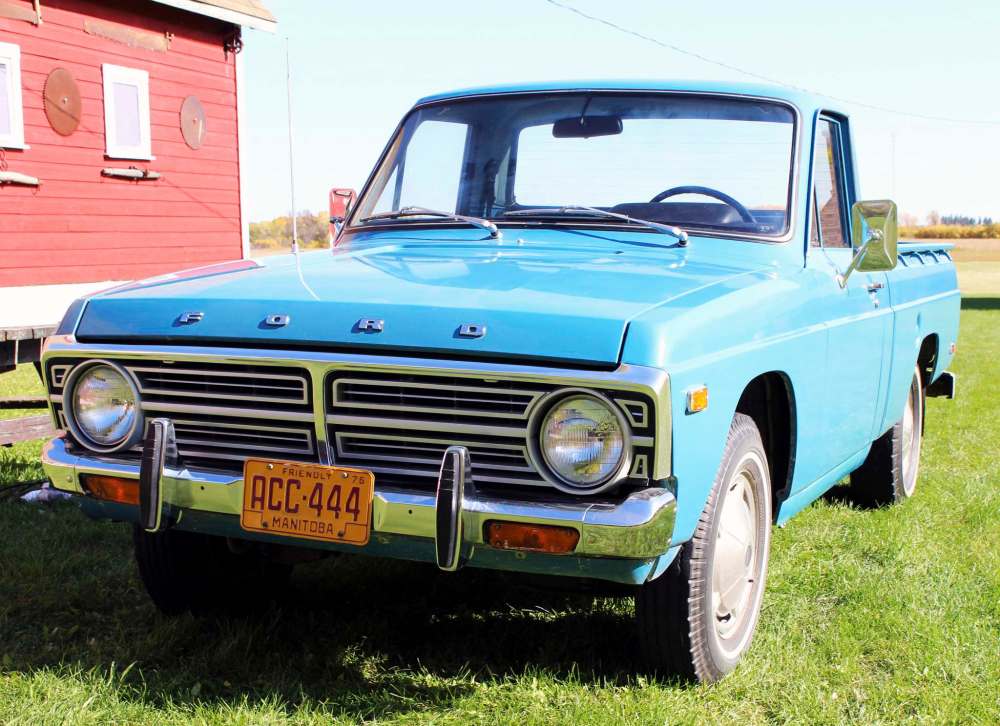
Power for the rear-wheel-drive Courier came from a spry 1.8-litre overhead-cam inline four-cylinder engine, producing 74 horsepower at 5,100 r.p.m. Buyers had a choice of the standard four-speed manual transmission or optional three-speed automatic. In 1976, the final year for the first-generation Courier, customers could also opt for a new five-speed manual for added fuel economy and greater highway cruising capability.
For Jack and Cindy Hare of Libau, their 1976 Ford Courier pickup is a time capsule. Purchased at a 2015 auction in Sperling, Jack knew the truck was a rarity. “I couldn’t remember if I had ever seen one before,” he says, “but it looked like it was in perfect shape, so I started bidding.”
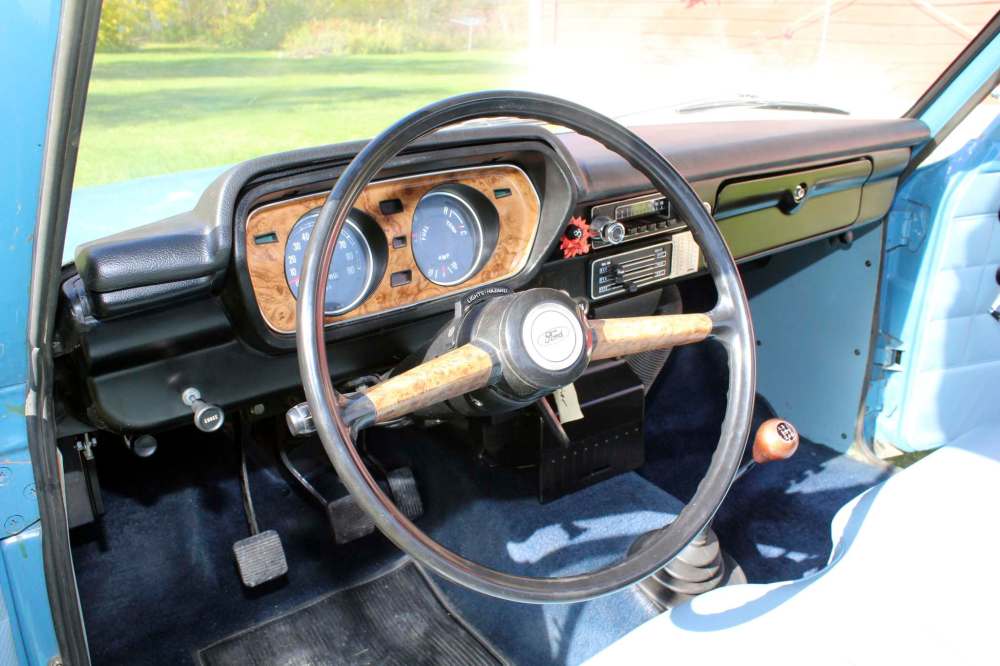
Finished in Medium Blue with a blue vinyl and cloth upholstery, the truck offers full carpeting in the cab and also features a four-speed manual transmission, deluxe AM radio, and burled walnut appliques on the dash, steering wheel and shift knob.

With only 26,200 original miles on the odometer, highlights include optional wheel covers, dual chrome mirrors, backup lamps and front bumper guards. The original four-ply polyester whitewall front tires still reside on the vehicle and the similarly constructed snow tires on the rear give the appearance the truck was at least used (or readied) for one winter.
Since it’s purchase, other than being driven around his property, the Courier hasn’t seen any road or highway use. “I always keep it maintained and it fires right up for regular jaunts around the farm,” says Jack.
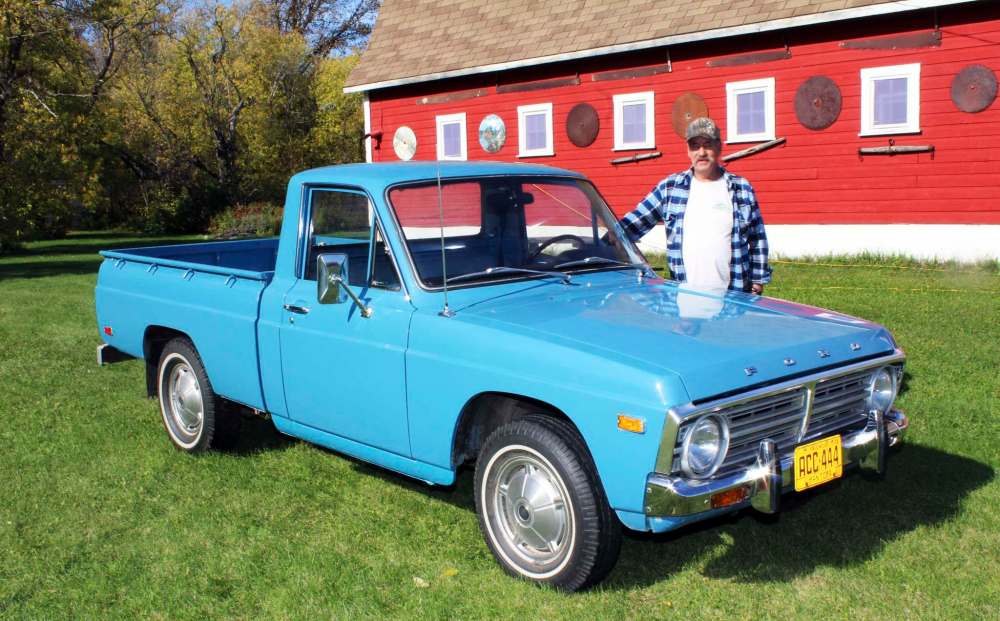
Over time, these small trucks were used and abused and many succumbed to rust from salted roadways or mechanical failure. This truck is subsequently quite rare because it’s still here and in such excellent condition.
Ford continued to invest in Mazda for more than 40 years, but the collaboration ended in 2015 when Ford sold its remaining shares in Mazda.
57ford@mymts.net