Breast implants tied to rare cancer to remain on US market

Advertisement

Advertise with us

WASHINGTON - U.S. health authorities will allow a type of breast implant linked to a rare form of cancer to stay on the market, saying its risks do not warrant a national ban.

Read this article for free:


or

Already have an account? Log in here »

To continue reading, please subscribe:

Subscribe and receive a limited-edition Free Press branded hat or tote.

Digital Subscription

One year of digital access for only $205*

  • Enjoy unlimited reading on winnipegfreepress.com
  • Read the E-Edition, our digital replica newspaper
  • Access News Break, our award-winning app
  • Play interactive puzzles

*First annual payment billed as $205.00 + GST for one year. This annual subscription will automatically renew at $233.00 + GST every 52 weeks (10% off the regular annual price of $259.35). Offer available to new and qualified returning subscribers only. Cancel any time.

To continue reading, please subscribe:

Add Free Press access to your Brandon Sun subscription for only an additional

$1 for the first 4 weeks*

  • Enjoy unlimited reading on winnipegfreepress.com
  • Read the E-Edition, our digital replica newspaper
  • Access News Break, our award-winning app
  • Play interactive puzzles
Start now

*Your next Brandon Sun subscription payment will increase by $1.00 and you will be charged $17.95 plus GST for four weeks. After four weeks, your payment will increase to $24.95 plus GST every four weeks.

Hey there, time traveller!
This article was published 02/05/2019 (2683 days ago), so information in it may no longer be current.

WASHINGTON – U.S. health authorities will allow a type of breast implant linked to a rare form of cancer to stay on the market, saying its risks do not warrant a national ban.

But the Food and Drug Administration said Thursday it is considering bold warnings for the implants and requiring stricter reporting of problems by manufacturers. The announcement is the latest in the government’s decades-long effort to manage implant risks and complications that can include scarring, pain, swelling and rupture.

In recent years, the FDA and other regulators around the world have grappled with the recently confirmed link to a rare cancer and the thousands of unconfirmed complaints of other health problems that women attribute to the implants, including arthritis, fatigue and muscle pain.
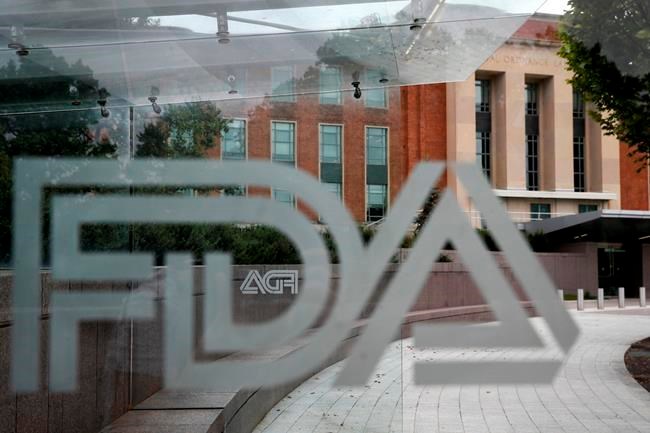
FILE - This Thursday, Aug. 2, 2018, file photo shows the U.S. Food and Drug Administration building behind FDA logos at a bus stop on the agency’s campus in Silver Spring, Md. The FDA said Thursday, May 2, 2019, that a type of breast implant linked to a rare form of cancer will be allowed to stay on the market. (AP Photo/Jacquelyn Martin, File)

FDA regulators said in a statement that while they don’t have definitive evidence that implants cause those chronic ailments, women considering implants “should be aware of these risks.” To that end, the agency said it will consider adding a boxed warning — its most serious type — to breast implants and a checklist describing various potential harms for patients considering them.

Earlier this month, French authorities issued a rare ban of breast implants associated with a form of lymphoma, including those sold by manufacturer Allergan. The FDA’s director for medical devices said the agency wasn’t ready to take that step.

“At this time, the FDA does not believe that, on the basis of all available data and information, the device meets the banning standard,” Dr. Jeffrey Shuren said in a statement.

The cancer tied to implants is not breast cancer but lymphoma that grows in the scar tissue surrounding the breasts. Almost all confirmed cases involve a type of textured implant designed to prevent slippage and to minimize scar tissue.

Shuren said that variety accounts for less than 10% of the U.S. market, which is primarily smooth implants. He noted there have been cases of the cancer with smooth implants, raising questions about whether multiple factors contribute to the disease.

There have been more than 600 cases of the cancer worldwide, among an estimated 10 million women with implants.

Diana Zuckerman, who has studied breast implant safety, said a ban may not be necessary to phase out textured ones.

“I think a lot of physicians are going to avoid them and patients are going to say they don’t want them,” said Zuckerman, president of the non-profit, National Center for Health Research, which evaluates studies and conducts its own research.

Breast augmentation is the most popular form of cosmetic surgery in the U.S., with roughly 300,000 women undergoing the procedure each year. Another 100,000 women receive implants for breast reconstruction after cancer surgery.

In a move to “promote greater public transparency,” the FDA also said Thursday that breast implant manufacturers will no longer be permitted to summarize routine injuries and complications in bulk reports. Manufacturers are required to report all serious injuries, malfunctions and deaths related to their devices. But under the FDA’s alternative summary reporting program, breast implant makers and other manufacturers could file quarterly updates representing thousands of incidents, most of which were not listed in a public database.

That practice — which the FDA has pledged to phase out — has been criticized for obscuring the true number of incidents reported to regulators. The reports filed to the FDA include submissions from companies, doctors, patients and lawyers that often include incomplete, unverified information and duplicates.

Ahead of a March meeting, the FDA revealed for the first time that it had received more than 350,000 reports related to breast implants over the last decade.

That was roughly seven times the number of reports visible in the agency’s publicly searchable database, according to Madris Tomes, a former FDA staffer who founded a company to analyze medical device reports.

“If there’s a pattern of more than 300,000 malfunctions and non-serious injuries, those should be available to the public, and let them decide if they’re serious.” Tomes said.

Bulk reports for other medical devices are permitted under a new program which plans to make them public.

___

Follow Matthew Perrone at @AP_FDAwriter

___

Associated Press writer Meghan Hoyer contributed to this story.

___

The Associated Press Health and Science Department receives support from the Howard Hughes Medical Institute’s Department of Science Education. The AP is solely responsible for all content.

Report Error Submit a Tip

More Stories

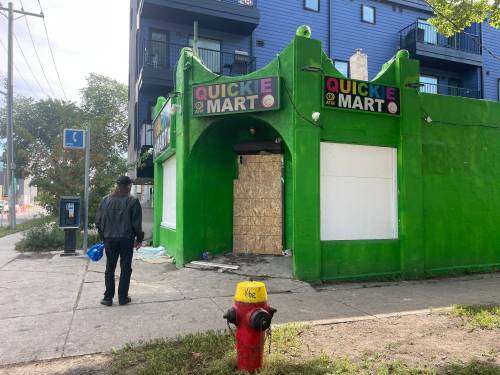
Neighbours relieved after fire strikes Quickie Mart

Morgan Modjeski 4 minute read Preview

Neighbours relieved after fire strikes Quickie Mart

Morgan Modjeski 4 minute read Wednesday, Sep. 2, 2026

As Janina McNaughton watched the Quickie Mart on River Avenue go up in flames on Tuesday, she felt relieved.

“The first thing I see is flames, like a fireball of flames inside,” McNaughton said about watching the blaze from her bedroom across the street.

On Wednesday, the bright green building, at 292 River Ave., was boarded up and charred on the outside.

Crews from the Winnipeg Fire Paramedic Service responded at 8:13 p.m. Tuesday to battle the blaze, said the city in a news release. It was under control within the hour.

Read
Wednesday, Sep. 2, 2026

Agriculture sector wary of ‘strong headwind’ from south

Laura Rance-Unger 5 minute read 2:01 AM CDT

Industry analysts talked in circles on a recent webinar as they discussed the implications for agriculture of Canada’s deteriorating relationship with its largest trading partner.

On one hand, panellists for the hastily convened Canadian AgriFood Policy Institute event acknowledged the futility of negotiating on quicksand: a deal made today with the United States might be sucked into the muck tomorrow.

But on the other, webinar panellists speculated with varying degrees of optimism over what it will take to get negotiators back to bargaining.

This disconnect isn’t unique to this cluster of analysts. However, it underscores the difficulty of coming to terms with the seismic shift in America’s attitudes towards Canada.

Billboard evangelism may look outdated but group says it’s effective

John Longhurst 5 minute read Preview

Billboard evangelism may look outdated but group says it’s effective

John Longhurst 5 minute read 2:01 AM CDT

Maybe you’ve seen them in Winnipeg — billboards that say things like: “Jesus is alive!” “Are you prepared to meet Jesus?” “After you die, you will meet God.” They include a phone number to call: 844-FIND-TRUTH.

There are two billboards in Winnipeg. One is on Henderson Highway in Elmwood. The other is on Balmoral Street, by Cumberland.

Have you ever wondered who is behind them, and why they do it?

You might be surprised to learn they are created and sponsored by an Amish/Mennonite organization called Christian Aid Ministries (CAM). Based in rural Ontario, the group is funded by Amish and some conservative Mennonite denominations and individuals.

Read
2:01 AM CDT

Smith’s pretzel logic confuses

Editorial 4 minute read Preview

Smith’s pretzel logic confuses

Editorial 4 minute read 2:01 AM CDT

Alberta Premier Danielle Smith had both sides of her mouth working overtime on Aug. 30, when she spoke at an event in Calgary to commemorate Alberta Day, the annual celebration of the province’s entry into Confederation in 1905 (officially Sept. 1, it was celebrated on the weekend).

Smith’s comments — and the things she did not say — revealed a lot about the political tightrope the premier is trying to walk over the challenges currently faced by her province. At the top of that list of challenges is a persistent campaign to separate Alberta from the aforementioned Confederation. A campaign that Smith appears to both support and oppose, depending on which day of the week it is.

Her Alberta Day remarks were an excellent case in point.

Smith has decided that on Oct. 19, Albertans will vote on a series of non-binding propositions in a province referendum. One of those questions will ask Albertans whether they want to hold a referendum on separation, thus making this fall’s vote a “referendum on whether to hold a referendum,” as some observers have dubbed it.

Read
2:01 AM CDT

Letters, Sept. 4

7 minute read Preview

Letters, Sept. 4

7 minute read Updated: Yesterday at 8:22 AM CDT

I do think it’s important to stand up and be heard — and that is why I want to add my voice to the chorus of folks condemning U.S. Defence Secretary Pete Hegseth for his recent social media post that very obviously drew attention in a negative way to the physical stature of two Canadian cadets at a military training course.

Read
Updated: Yesterday at 8:22 AM CDT

QDoc patients in tight spot over billing dispute

Chris Kitching 6 minute read Preview

QDoc patients in tight spot over billing dispute

Chris Kitching 6 minute read Thursday, Sep. 3, 2026

Manitobans have been pulled into a dispute between QDoc — a Winnipeg-based virtual health-care platform — and the NDP government over fees billed to the province for patient care.

An Aug. 24 email from QDoc to its users prompted concern or calls for clarity from Manitobans who use the 24-7 platform to see a physician or nurse practitioner through encrypted video calls.

“When I first read it, like many others, I assumed they were going to be nixing the service altogether because that’s the way it was presented,” Tyndall resident Stephanie Pituley said.

“Upon further research, obviously that’s not the case, but I am still concerned to be honest. How many people did that research, I don’t know.”

Read
Thursday, Sep. 3, 2026