Columbine survivors send kids to schools altered by attack
Advertisement
Read this article for free:
or
Already have an account? Log in here »
To continue reading, please subscribe:

Digital Subscription
One year of digital access for only $205*
- Enjoy unlimited reading on winnipegfreepress.com
- Read the E-Edition, our digital replica newspaper
- Access News Break, our award-winning app
- Play interactive puzzles
*First annual payment billed as $205.00 + GST for one year. This annual subscription will automatically renew at $233.00 + GST every 52 weeks (10% off the regular annual price of $259.35). Offer available to new and qualified returning subscribers only. Cancel any time.
To continue reading, please subscribe:
Add Free Press access to your Brandon Sun subscription for only an additional
$1 for the first 4 weeks*
- Enjoy unlimited reading on winnipegfreepress.com
- Read the E-Edition, our digital replica newspaper
- Access News Break, our award-winning app
- Play interactive puzzles
*Your next Brandon Sun subscription payment will increase by $1.00 and you will be charged $17.95 plus GST for four weeks. After four weeks, your payment will increase to $24.95 plus GST every four weeks.
Read unlimited articles for free today:
or
Already have an account? Log in here »
Hey there, time traveller!
This article was published 16/04/2019 (2675 days ago), so information in it may no longer be current.
DENVER – Dropping her kids off at school used to be the hardest part of Kacey Ruegsegger Johnson’s day. She would cry most mornings as they left the car and relied on texted photos from their teachers to make it through the day.
Now, the mother of four — and Columbine shooting survivor — sees mornings as an opportunity. She wakes early, makes breakfast and strives to send a clear message before her kids leave home: I adore you.
Twenty years after teenage gunmen attacked Columbine High School, Ruegsegger Johnson and other alumni of the Littleton, Colorado, school have become parents. The emotional toll of the shooting that killed 12 classmates and a teacher has been amplified by fears about their own kids’ safety , spiking each time yet another shooter enters yet another school.
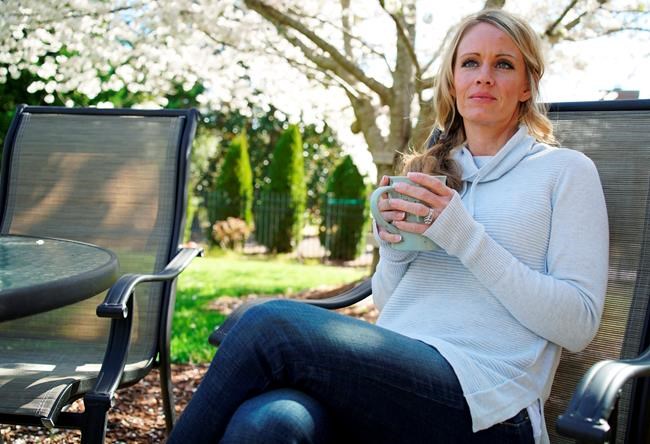
“I’m grateful I have the chance to be a mom. I know some of my classmates weren’t given that opportunity,” Ruegsegger Johnson said, tears springing to her eyes. “There are parts of the world I wish our kids never had to know about. I wish that there would never be a day I had to tell them the things I’ve been through.”
As the survivors of Columbine entered adulthood, they watched the attacks at their school and so many others — Virginia Tech, Sandy Hook, Parkland — alter the American classroom.
Drills teaching students to “lock down” inside classrooms became routine. Schools formed teams to assess threats, particularly from students. Security firms forged a multibillion-dollar industry, introducing surveillance video, panic buttons and upgraded doors and locks. And police changed their strategies for responding to a gunman intent only on killing.
Security measures came into play just days before the 20th anniversary of the massacre, when a possible threat Tuesday locked down Columbine and other Denver-area high schools. All students were safe and left their classes, officials later said, adding that the lockdowns were tied to an FBI investigation but didn’t provide details.
Some of the Columbine survivors find comfort in students being shielded by high fences or locked doors. Others find themselves frustrated by the ready acceptance of active-shooter drills in schools.
Now, many of these students-turned-parents grapple with crippling fear dwarfing pride as their children walk into their own schools.
Ruegsegger Johnson has developed her own ritual for the school drop-off. On a recent sunny spring morning, she helped her kids find their book bags and tie their shoes before ushering them to the car. She prayed aloud as they neared the school, giving thanks for a beautiful morning and asking for a day of learning and friendship.
As always, she made a silent addition: Keep them safe.
___
The prospect of Amy Over’s 13-year-old daughter starting high school could have triggered a panic attack in the not-too-distant past. But now she’s focused on helping the girl prepare for the unexpected.
She coaches her daughter when she ventures to places outside her mom’s control: Where is the closest exit? What street are you on? Who is around you?
“I never want my kids to feel an ounce of pain, the way that I felt pain,” Over said. “I know that that’s something that I can’t control. And I think that’s hard on me.”
Over was in the Columbine cafeteria when the gunmen approached the school, targeting students eating lunch outside. She escaped with no physical injuries, but has struggled emotionally for years.
Therapy and family support helped. But waving goodbye to her daughter on the first day of preschool triggered a panic attack — the first of many. She was diagnosed with chronic panic disorder, resumed therapy and found new strategies for her life as a mother of two.
Over’s daughter, Brie, was 11 when her mother first told her about Columbine, a few days before the anniversary. That April 20, they visited the school for a memorial ceremony that included a reading of the names of the 13 people killed. Afterward, the Overs walked together through the quiet school.
Here is where she hid in the cafeteria, Amy Over showed her daughter. And that is the staircase where she last saw her basketball coach, Dave Sanders, who died in a classroom awaiting rescue after valiantly trying to help evacuate the school.
For Over, opening up to her daughter was cathartic and so they have continued to attend annual memorial events, now imbued with a gentler tone with the girl by her side.
“It’s a day of reflection,” Over said. “It’s a day of love and hope. And I get to share that with my daughter.”
___
Though it sometimes seems mass shootings inside schools are a commonplace occurrence, they are relatively rare, and statistics show the number has not substantially increased since 2000.
But that is of little consolation to a swath of American parents. About 2 in 10 parents said they are not at all or not very confident in their children’s safety while at school, while a third of parents are very or extremely confident, according to a March survey by The Associated Press-NORC Center for Public Affairs Research.
Austin Eubanks, who survived being shot in the Columbine library, is among those who doesn’t fear the schools his sons, ages 13 and 9, attend.
Instead, he laments that active-shooter drills, video surveillance and armed guards are all too routine for them — as natural as a tornado drill was for him growing up in Oklahoma.
“We are so unwilling to actually make meaningful progress on eradicating the issue,” said Eubanks, who remains scarred by watching his best friend, Corey DePooter, die. “So we’re just going to focus on teaching kids to hide better, regardless of the emotional impact that that bears on their life. To me, that’s pretty sad.”
Isolation, depression, addiction and suicide are among the larger dangers he sees facing his kids’ generation, and he knows firsthand the damage those can cause.
For more than a decade after the attack, Eubanks was addicted to prescription pain medication. He got sober in 2011 and began repairing his family, including his relationship with his sons and their mother. He works at an addiction treatment facility and travels the country telling his story.
At home in Colorado, he tries to help his sons become attuned to pain others may be feeling. He encourages them to talk to an adult when peers seem so angry or afraid that they may need help. He tries to remember that — for them — all of the changes in schools are just normal.
He was horrified by videos that Marjory Stoneman Douglas students shot in Parkland, Florida, as they hid inside a classroom while a gunman moved through the halls of the high school. He has urged his own boys to always try to escape first — whatever it takes — even if the drills advise staying put.
“These are my children, and what I care about most is their safety,” he said. “And I know that for them, in a situation like that, getting away from it as quickly as possible is the best likelihood of success.”
___
When Kacey Ruegsegger Johnson’s daughter Mallory was 8, a classmate saw her mom on a Denver news station. Mallory had a question: Was her mother famous?
Ruegsegger Johnson knew it was time for the conversation she and her husband had anticipated for years. During a family vacation, she pulled her oldest daughter aside for a private talk — the one that finally explained the scars marking Ruegsegger Johnson’s right shoulder and why she was unable to reach up toward high shelves or use her right arm to lift the kids.
In 1999, Kacey Ruegsegger was reading a magazine in the school library when a teacher entered, shouting that someone had a gun. The junior crouched under a computer desk, pulling a chair in front of her body. She felt well-hidden, but the shooters’ taunting voices and the sound of gunshots grew louder and got closer. Then one of the gunmen leaned down and fired a shotgun at her.
The blast shredded her right shoulder. She tried not to move or cry out, praying the shooter would believe she was dead and walk away. When the pair left the library, other students helped her flee.
For the last 20 years, she has lived with post-traumatic stress disorder, along with physical pain. She worked as a nurse until the injuries to her arm forced her to stop.
Ruegsegger Johnson was thrilled to become a mother, but struggled to leave her infant daughter at daycare during church services. She considered home schooling, terrified that sending her children into a school was akin to exposing them to danger.
Leaning on her religious faith and family support, she worked hard to push the terror down as her children got older. She avoided media coverage of school violence and became a resource for other survivors of shootings. She grew tired of living in fear and unwilling to let her past affect her kids’ experience.

Though she still struggles occasionally, she resolved to make mornings before school a positive time, focused on building her children up. And she finds at least some comfort in their school’s evacuation plans and security measures. She told her children that lockdown drills were like fire drills — practice to keep them safe from an unlikely danger.
But when Mallory confessed to feeling afraid that “a bad person” could still find her in the evacuation location used during one drill, Ruegsegger Johnson flashed back to herself crouched under that computer desk in the Columbine library.
“The bad guys found me, and I thought I had a really great hiding spot,” she said. “So what am I going to say to a little girl who has that same fear that the bad guy might find her? It was a really hard moment for me.”
___
Breed reported from Cary, North Carolina. Associated Press researcher Jennifer Farrar in New York and writer Reese Dunklin in Dallas contributed to this report.