Faiths cope with empty pews
Services being cut, congregations merged
Advertisement
Read this article for free:
or
Already have an account? Log in here »
To continue reading, please subscribe:

Digital Subscription
One year of digital access for only $205*
- Enjoy unlimited reading on winnipegfreepress.com
- Read the E-Edition, our digital replica newspaper
- Access News Break, our award-winning app
- Play interactive puzzles
*First annual payment billed as $205.00 + GST for one year. This annual subscription will automatically renew at $233.00 + GST every 52 weeks (10% off the regular annual price of $259.35). Offer available to new and qualified returning subscribers only. Cancel any time.
To continue reading, please subscribe:
Add Free Press access to your Brandon Sun subscription for only an additional
$1 for the first 4 weeks*
- Enjoy unlimited reading on winnipegfreepress.com
- Read the E-Edition, our digital replica newspaper
- Access News Break, our award-winning app
- Play interactive puzzles
*Your next Brandon Sun subscription payment will increase by $1.00 and you will be charged $17.95 plus GST for four weeks. After four weeks, your payment will increase to $24.95 plus GST every four weeks.
Read unlimited articles for free today:
or
Already have an account? Log in here »
Hey there, time traveller!
This article was published 16/01/2010 (6074 days ago), so information in it may no longer be current.
Fewer butts in the pews and lighter collection plates are forcing religious organizations around the province to consider drastic action — including cutting services, merging congregations or even closing houses of worship.
The problem is particularly acute in rural areas where the number of farming families has fallen off sharply in recent years and a growing number of primarily younger people embark on different career paths, most of them in the city.
Ken Bielak, finance officer with the Ukrainian Catholic Archeparchy of Winnipeg, said it closed one rural church in each of 2008 (Cloverleaf) and 2009 (St. Claude) and he expects to receive three to four requests for closure annually for this year and into the foreseeable future.
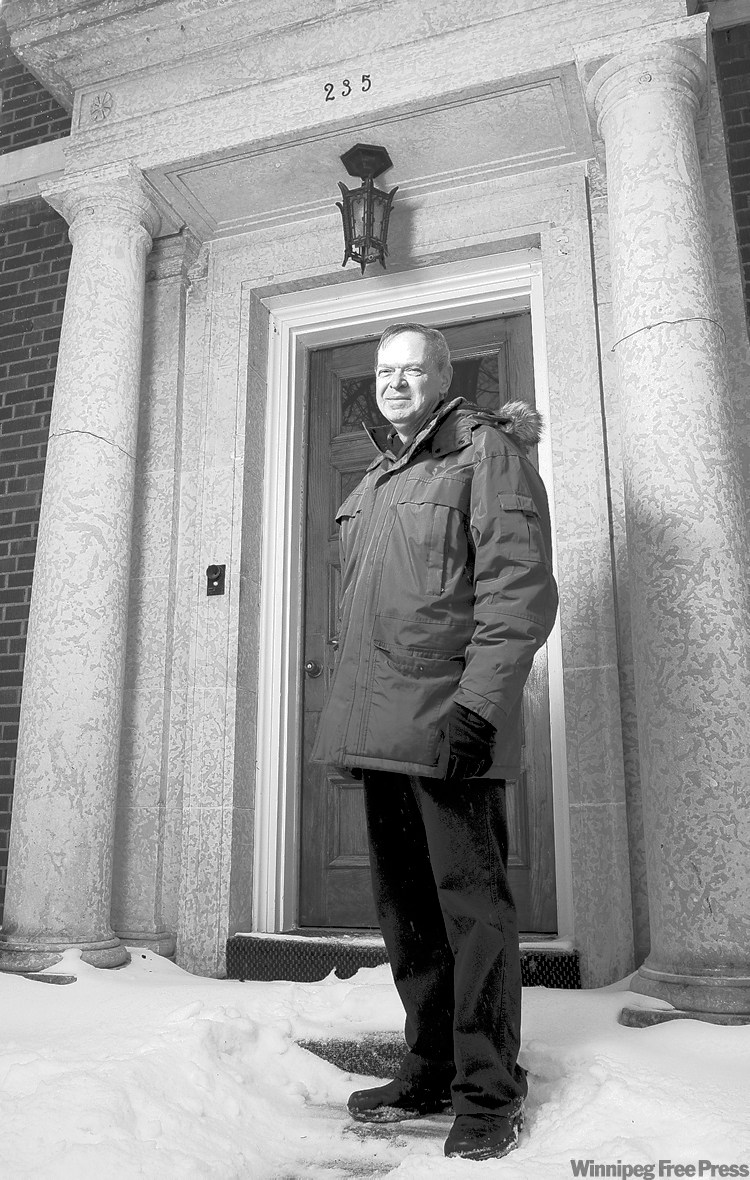
“There are only two or three families left (in some communities) and they can’t physically or financially upkeep the building anymore. We have to face the realities of the population (trends) and the deterioration of some of the church buildings,” he said.
The situation is just as bad in Winnipeg, Bielak said, but shuttering churches isn’t as imminent because of the larger Ukrainian Catholic population base.
“City churches are suffering the same decline in attendance and demographics. We have more funerals than weddings,” he said, noting there are 122 Ukrainian Catholic churches in the province.
Richard Frechette, financial administrator at the Archdiocese of St. Boniface, said he’s seeing much the same situation outside the Perimeter Highway.
“We have some smaller parishes that are really hurting. We’ll have to look at possible closures or amalgamations. They’re having a hard time even paying their hydro (bills) right now and basic maintenance,” he said.
James Buchok, director of communications with the Archdiocese of Winnipeg, which oversees 68 parishes, said demographic trends don’t bode well for the future of many churches outside Winnipeg. Instead of closing some down, many communities have banded together, share a minister between them and use their churches on a part-time basis.
“They’re reduced-service churches. They don’t have a priest necessarily in that town but one will go there to do a mass on a weekly basis,” he said.
The situation is much the same for Winnipeg’s Jewish population. Faye Rosenberg-Cohen, planning director at the Jewish Federation of Winnipeg, said she’s seeing decreased attendance in larger synagogues, which has led to less staffing and funding for extra programming that might have been done otherwise.
“It doesn’t mean fewer religious services but it does impact some of the flexibility they have to do more creative programming,” she said, noting congregations have been stable in the city’s smaller synagogues.
“The trend you can see in North America, and not just in Jewish congregations, is people are getting more creative about how they’re going to act on their religious identity. You see smaller groups forming and new programs that are lower cost. It’s more pot luck and less formal programming. They’re all over North America,” she said.
She said it’s too early to tell if any synagogues will have to join forces but a precedent was set about 10 years ago when three North End synagogues merged to form the Etz Chayim Synagogue.
According to 2008 figures from Statistics Canada, the percentage of Canadians over 15 years of age attending religious services on a regular basis declined from 30 per cent to 21 per cent over the previous 20 years. During the same period, the share of the population that said they never go to religious services increased from 22 per cent to 33 per cent.
But it’s not all bad news. Buchok said churches in growing Winnipeg neighbourhoods and rural communities are bursting at the seams. He said St. Gianna’s Roman Catholic Church, for example, which conducts its services in the Winnipeg Technical College in the south end, has seen its number of worshipping families grow from 90 to 400 in the past five years. Now administrators are looking for real estate on which to build a proper church. St. Peter’s Church on Keewatin Street is another that’s on the rise, he said.
Frechette said Morden has outgrown its current church and plans are underway to build a replacement.
“There’s a larger population base there and there’s a need for a bigger church. When they started out 20 years ago, there were 10 families regularly going to church, now there’s 130. They’ve raised half the funds to build a new one. We’ll be selling the old one,” he said.
“You need to look at the demographics and where the population base of Catholics is. You need to adapt to that.”
Religious administrators also realize that youth are the future and they are making concerted efforts to get more young people through the doors. For example, Buchok said his archdiocese hired a director of youth ministry 18 months ago.
geoff.kirbyson@freepress.mb.ca
Influence fading
CHURCH attendance and financial problems extend beyond Manitoba’s borders. Jeff Pym, director of planned giving for the Evangelical Lutheran Foundation of Eastern Canada, said membership in mainline Protestant churches has been in decline for the last two decades. In addition to churches closing and merging with one another, the church’s influence on society is fading, too, he said.

“With more money and people, the churches were able to represent themselves more vigorously. I think politicians listened more closely to what churches had to say when they represented more people,” he said.
To back up his point, he cited the recent decision by the federal government to cut off funding for KAIROS Canada, the social justice arm of major churches in Canada.
“They wouldn’t have tried that if they hadn’t thought they could get away with it,” he said.
Pym said churches are attempting to stem the tide by encouraging parishioners to consider leaving a gift to the church in their wills, including life insurance policies, shares in public companies and straight cash.
But for every one that does, another nine die who don’t.
The Free Press is committed to covering faith in Manitoba through our Religion in the News project. This reporting continues because readers like you step forward to fund it.
Donate now to support our reporting on religion.
Your donation is eligible for a charitable tax receipt.
BECOME A FAITH JOURNALISM SUPPORTER
The Free Press acknowledges the financial support it receives from members of the city’s faith community, which makes our coverage of religion possible.