Religion in no danger of disappearing

Advertisement
Read this article for free:
or
Already have an account? Log in here »
To continue reading, please subscribe:

Digital Subscription
One year of digital access for only $205*
- Enjoy unlimited reading on winnipegfreepress.com
- Read the E-Edition, our digital replica newspaper
- Access News Break, our award-winning app
- Play interactive puzzles
*First annual payment billed as $205.00 + GST for one year. This annual subscription will automatically renew at $233.00 + GST every 52 weeks (10% off the regular annual price of $259.35). Offer available to new and qualified returning subscribers only. Cancel any time.
To continue reading, please subscribe:
Add Free Press access to your Brandon Sun subscription for only an additional
$1 for the first 4 weeks*
- Enjoy unlimited reading on winnipegfreepress.com
- Read the E-Edition, our digital replica newspaper
- Access News Break, our award-winning app
- Play interactive puzzles
*Your next Brandon Sun subscription payment will increase by $1.00 and you will be charged $17.95 plus GST for four weeks. After four weeks, your payment will increase to $24.95 plus GST every four weeks.
Read unlimited articles for free today:
or
Already have an account? Log in here »
Hey there, time traveller!
This article was published 20/06/2015 (4123 days ago), so information in it may no longer be current.
For a long time, people have been predicting the end of religion. But a new report indicates that faith will be with us for a long time yet.
Titled The Future of World Religions, the report was produced by the Pew Research Center, a U.S.-based non-partisan “fact tank.”
Although many have made predictions about the future of religion, Pew says this report is the first to use demographic data from 234 countries and territories to make projections about practitioners of the world’s major religions — Buddhists, Christians, Hindus, Jews, Muslims, adherents of folk religions, adherents of other religions and the unaffiliated.
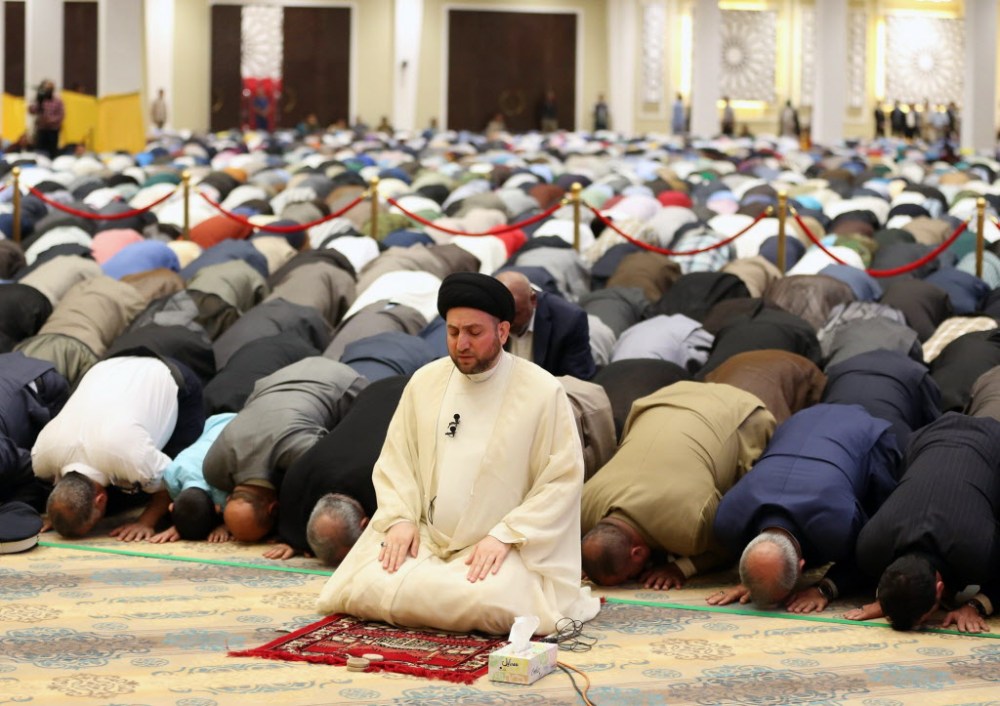
Among the findings, the report indicates that Christianity will remain the largest religion in the world, growing from 2.17 billion today to 2.92 billion by 2050.
At the same time, Islam — the world’s fastest growing religion — will grow from 1.6 billion to 2.76 billion, nearly equalling Christianity for perhaps the first time in history. And if the trend continues, by 2100 Islam would surpass Christianity.
As for other religions, the global Buddhist population will stay about the same, while the Hindu and Jewish populations will increase.
What about atheists? There has been a lot of attention given to the rising number of people who are leaving religion today. The report indicates that while that is true for Europe, the U.S. and Canada, globally, the number of religiously unaffiliated is expected to decrease.
One of the bases for Pew’s predictions is fertility and mortality rates, and the age of people in each religious group.
In other words, one of the main reasons Islam is expected to grow so dramatically is that Muslims have larger families than other religious groups, retain more of their members and currently have more young people than other faiths — more than a third of Muslims are under 15.
The report also takes into account people who switch religions. This is where you’d think Christianity, with its emphasis on evangelism, would have an advantage. But the report suggests that the group that is likely to benefit the most from switching is the unaffiliated, or people with no religion.
And where will most of those newly religiously unaffiliated people come from? Christianity. The report predicts that 106 million people will leave that faith over the next 35 years.
The report also breaks down its predictions by regions. In North America, Christians are projected to still remain the largest group, but the religiously unaffiliated population is expected to grow from 59 million in 2010 to 111 million in 2050.
In the meantime, the number of Muslims in Canada and the U.S. is expected to nearly triple from more than three million to more than 10 million, while Hindu and Buddhist populations are also expected to grow, reaching around six million each by 2050. The Jewish population, on the other hand, is projected to decrease slightly to six million.
Other highlights from the report include that sub-Saharan African will be home to 40 per cent of the world’s Christians by 2050, and that Nigeria will have more Christians than any other country except for the United States and Brazil.
As well, India will have the largest Muslim population in the world, passing Indonesia, and more than 10 per cent of Europeans will be Muslim. At the same time, the number of Christians in Europe will drop by 100 million.

Of course, nobody knows what will happen in the future — trends that are current today could change, and cataclysmic wars, pandemics, natural disasters and changing birthrates could alter the projections.
But one thing seems certain: Religion isn’t going to disappear any time soon. As Conrad Hackett, the report’s primary researcher put it: “There is a long history of people predicting the demise of religion, but religion has proven more resilient than many people anticipated.”
The full Pew report can be found at www.pewforum.org.
jdl562000@yahoo.com
The Free Press is committed to covering faith in Manitoba through our Religion in the News project. This reporting continues because readers like you step forward to fund it.
Donate now to support our reporting on religion.
Your donation is eligible for a charitable tax receipt.
BECOME A FAITH JOURNALISM SUPPORTER
Our newsroom depends on a growing audience of readers to power our journalism. If you are not a paid reader, please consider becoming a subscriber.
Our newsroom depends on its audience of readers to power our journalism. Thank you for your support.
The Free Press is committed to covering faith in Manitoba through our Religion in the News project. This reporting continues because readers like you step forward to fund it.
Donate now to support our reporting on religion.
Your donation is eligible for a charitable tax receipt.
BECOME A FAITH JOURNALISM SUPPORTER
Our newsroom depends on a growing audience of readers to power our journalism. If you are not a paid reader, please consider becoming a subscriber.
Our newsroom depends on its audience of readers to power our journalism. Thank you for your support.
Advertisement Advertise With Us
Advertisement Advertise With Us
History
Updated on Sunday, June 21, 2015 5:27 PM CDT: Replaces photo.
The Free Press acknowledges the financial support it receives from members of the city’s faith community, which makes our coverage of religion possible.