Holy places offer sanctuary to all
Advertisement
Read this article for free:
or
Already have an account? Log in here »
To continue reading, please subscribe:

Digital Subscription
One year of digital access for only $205*
- Enjoy unlimited reading on winnipegfreepress.com
- Read the E-Edition, our digital replica newspaper
- Access News Break, our award-winning app
- Play interactive puzzles
*First annual payment billed as $205.00 + GST for one year. This annual subscription will automatically renew at $233.00 + GST every 52 weeks (10% off the regular annual price of $259.35). Offer available to new and qualified returning subscribers only. Cancel any time.
To continue reading, please subscribe:
Add Free Press access to your Brandon Sun subscription for only an additional
$1 for the first 4 weeks*
- Enjoy unlimited reading on winnipegfreepress.com
- Read the E-Edition, our digital replica newspaper
- Access News Break, our award-winning app
- Play interactive puzzles
*Your next Brandon Sun subscription payment will increase by $1.00 and you will be charged $17.95 plus GST for four weeks. After four weeks, your payment will increase to $24.95 plus GST every four weeks.
Read unlimited articles for free today:
or
Already have an account? Log in here »
Hey there, time traveller!
This article was published 21/06/2019 (2659 days ago), so information in it may no longer be current.
Those of us who value holy places — churches, synagogues, temples and mosques — know they provide sanctuary in many different ways.
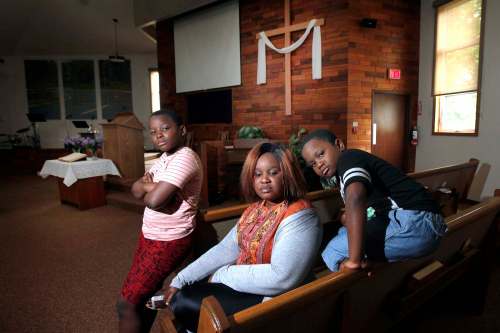
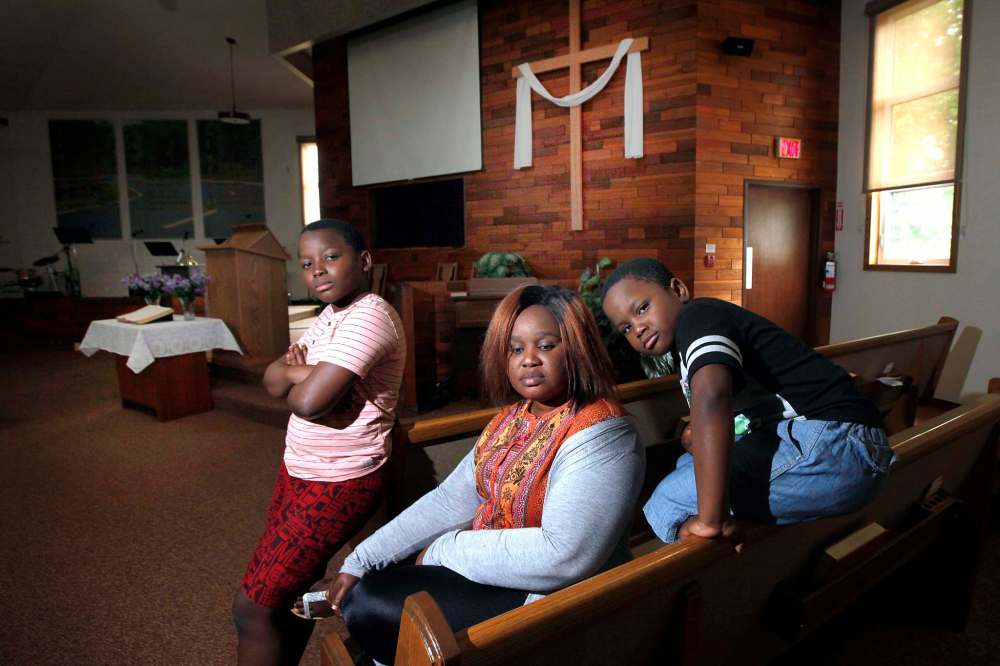
One type of sanctuary that made headlines this week is the age-old practice in which a place of worship offers shelter to someone in trouble with legal or military authorities. This is rarely used in Manitoba these days, but a 60-member Mennonite congregation, Crestview Fellowship Church in Winnipeg, is currently housing in its basement a woman and her two sons, aged 12 and six. The church took them in on April 11, two hours before the family was to be deported back to their Sierra Leone home, which they say would have put the family in danger.
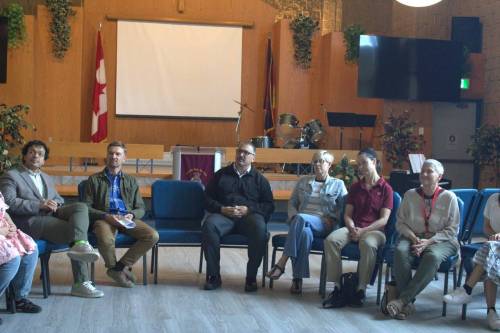
The definition of sanctuary can arguably be stretched to include a place where many Manitobans find refuge for an hour or two a week. They’re not on the lam from the law. The sanctuary they seek is a refreshing break from a secular world that judges people on money, status and physical appearance. They want a fertile space to undergo the difficult inner work of dismantling their self-centredness and attempting universal compassion.
At their best, these houses of transformation offer a safe haven of acceptance. They are communities where people remember your name, where people invite you out for coffee, where people deliver a casserole when you’re sick, where people join you in commemorating the important milestones of your family, including weddings, births and deaths.
In an age when people are isolated in their technological cocoons to the point where many feel alienated, the wide-smile fellowship offered by these places is worth the price of admission (just joking, it’s free to get in).
But these institutions are more than social clubs. These spaces are sacred. They provide supportive sanctuary as people try to be open to the ethereal nudging of their deities, trying to shed such handicaps as vanity, greed, lust and envy that block them from experiencing the present moment, the present place, in all its divine-infused glory. People attempt this metamorphosis through prayer, rituals and disciplines that have proven successful — although neither quick nor easy — over thousands of years.
In these sanctuaries, one has access to very smart people who find ancient texts so fruitful as to warrant extensive study. They are staking their lives on the eternal truths contained in these sacred books.
All that said, it’s a mistake to expect such sanctuaries will be peopled by saints wearing halos. The doors are open to everyone, including people who are troubled. I was in a Winnipeg church when a pastor announced that people shouldn’t leave valuables in the cloakroom because there had been thefts on recent Sundays. He said, “And to the thief, I’d like to say that you’re in the right place.”
This all-are-welcome inclusivity is a wonderful dynamic, but it also means people are at different stages of transformation, and some remain susceptible to ego-driven agendas on matters that are of little import in the big picture. I know of churches’ members driven to hard feelings by arguments over whether to use the old or new versions of a hymnal, whether worshippers can wear blue jeans, and whether electric guitars are an acceptable accompaniment to sacred music. Some disagreements are more serious, such as whether to bless same-sex couples, a debate which has caused several churches in Manitoba to leave their denominations.
It’s unsurprising a community where people hold fervent beliefs can get messy, although the strengths of such communities greatly outweigh the inevitable irritants.
Another type of sanctuary offered by religious groups is to the greater community. Space is made available, usually for free, to groups that are not necessarily associated with the faiths. Many religious buildings are busy all week, hosting after-school programs for children, soup kitchens, conferences, clubs of neighbourhood seniors, Boy Scouts and Girl Guides, and a wide range of self-help groups such as Alcoholics Anonymous.
A Canadian study called the Halo Project measured in monetary terms the value that neighbourhood congregations offer to a community’s social infrastructure. The concept was phrased like this: “If this congregation disappeared tomorrow and we had to replace everything, including all of the social supports, programs, care and so on, what would that cost?”

The conclusion was that the value of work done by a congregation is four to five times the value of the congregation’s annual budget.
The project, by the think tank Cardus, offers an online Halo calculator to monetize individual cities. The 710 religious organizations in Winnipeg had combined annual budgets of $323 million in 2016, but offered a “Halo benefit” of common-good services of $1.54 billion.
Those are 1.54 billion more reasons why Manitoba should appreciate and preserve its places of sanctuary.
Carl DeGurse is a member of the Free Press editorial board.
carl.degurse@freepress.mb.ca
The Free Press is committed to covering faith in Manitoba through our Religion in the News project. This reporting continues because readers like you step forward to fund it.
Donate now to support our reporting on religion.
Your donation is eligible for a charitable tax receipt.
BECOME A FAITH JOURNALISM SUPPORTER
The Free Press acknowledges the financial support it receives from members of the city’s faith community, which makes our coverage of religion possible.