‘Welcome home:’ More than 2,000-year-old bison skull returned to Blackfoot
Advertisement
Read this article for free:
or
Already have an account? Log in here »
To continue reading, please subscribe:

Digital Subscription
One year of digital access for only $205*
- Enjoy unlimited reading on winnipegfreepress.com
- Read the E-Edition, our digital replica newspaper
- Access News Break, our award-winning app
- Play interactive puzzles
*First annual payment billed as $205.00 + GST for one year. This annual subscription will automatically renew at $233.00 + GST every 52 weeks (10% off the regular annual price of $259.35). Offer available to new and qualified returning subscribers only. Cancel any time.
To continue reading, please subscribe:
Add Free Press access to your Brandon Sun subscription for only an additional
$1 for the first 4 weeks*
- Enjoy unlimited reading on winnipegfreepress.com
- Read the E-Edition, our digital replica newspaper
- Access News Break, our award-winning app
- Play interactive puzzles
*Your next Brandon Sun subscription payment will increase by $1.00 and you will be charged $17.95 plus GST for four weeks. After four weeks, your payment will increase to $24.95 plus GST every four weeks.
Read unlimited articles for free today:
or
Already have an account? Log in here »
Hey there, time traveller!
This article was published 15/11/2019 (2498 days ago), so information in it may no longer be current.
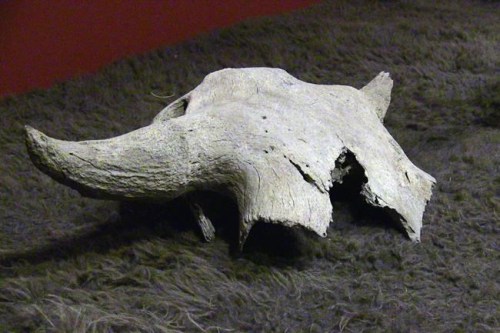
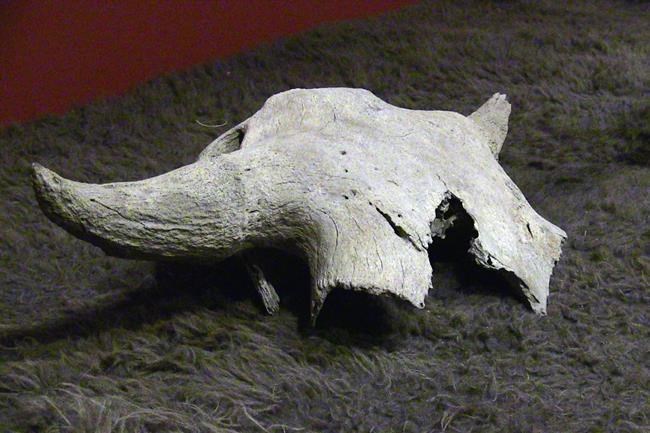
SIKSIKA, Alta. – A more than 2,000-year-old bison skull unearthed during utility work in downtown Banff, Alta., has been returned to a southern Alberta Indigenous community.
“It’s like a welcome home to the buffalo skull,” Siksika Nation councillor Eldon Weasel Child said Friday.
The skull was given a traditional blessing at the Blackfoot Crossing Historical Park east of Calgary, which was the site of the signing of Treaty 7 in 1877. Members of the Siksika Nation then sang Blackfoot honour songs accompanied by drums and rattles.
“Any prayer we are involved with is first and foremost to give thanks for life and the gifts that we receive,” said Weasel Child.
“Today was to acknowledge the significant gift that the buffalo skull represents.”
Weasel Child said bison have been important to the Blackfoot people for time immemorial and their skulls are used in sacred ceremonies.
Though the Siksika Nation lies on the prairie some 200 kilometres west of Banff, Weasel Child said the Rocky Mountains are part of the Blackfoot’s traditional territory. He added his people used to have winter camps and harvest timber there for tipis.
The First Nation is planning to display the skull at Blackfoot Crossing so that visitors from inside and outside the community can see it.
Sixteen-year-old Annie McMaster, this year’s Miss Teen Siksika Nation Princess, said the artifact would help youth learn about the significance of the buffalo to her people.
“It felt really powerful,” she said of the ceremony.
Contractors for Fortis Alberta were installing LED street lights in the scenic Banff National Park townsite in February, said company spokesman Kevin Haslbeck.
They were blasting the ground with high-pressure water at the time of the discovery.

“They thought something caught their eye there, so they stopped and checked it out and sure enough it was something that normally they wouldn’t find during the course of their business,” he said, adding that coming across archaeological discoveries is rare.
“They knew enough to just stop and contact Fortis Alberta and we made sure that Parks Canada was informed and went from there.”
Parks Canada contacted the Siksika Nation about the skull, which was found 1.2 metres underground. Carbon dating suggests it’s about 2,400 years old.
“I was quite happy with it and I think there’s a whole lot of gratitude amongst leadership,” said Weasel Child.
This report by The Canadian Press was first published Nov. 15, 2019.
The Free Press acknowledges the financial support it receives from members of the city’s faith community, which makes our coverage of religion possible.